Breeding Populations of Threatened Birds in Human Care
The National Aviary works to establish breeding populations of threatened birds from the Mariana Islands in human care. Breeding populations in human care serves as a kind of insurance against extinction of the species as a result of problems associated with the introduction of the brown tree snake to wild habitats; and any possibility of long-term failure of established satellite populations. If satellite populations for any species established in the Mariana archipelago fail to be self-sustaining or otherwise fail as a result of unforeseen events inherent to the region (like volcanic eruptions or typhoons), then populations of those species in zoos will be available to save the species from extinction.
The members of the Mariana Avifauna Conservation (MAC) Program, including the National Aviary, work to develop techniques to capture, acclimate, hold, transport, and breed in human care all of the bird species found in the CNMI. Together, we work to develop populations of selected species in human care that can be used as a source population for possible reintroduction back to Guam or islands in the CNMI where brown tree snakes have been controlled or eradicated.
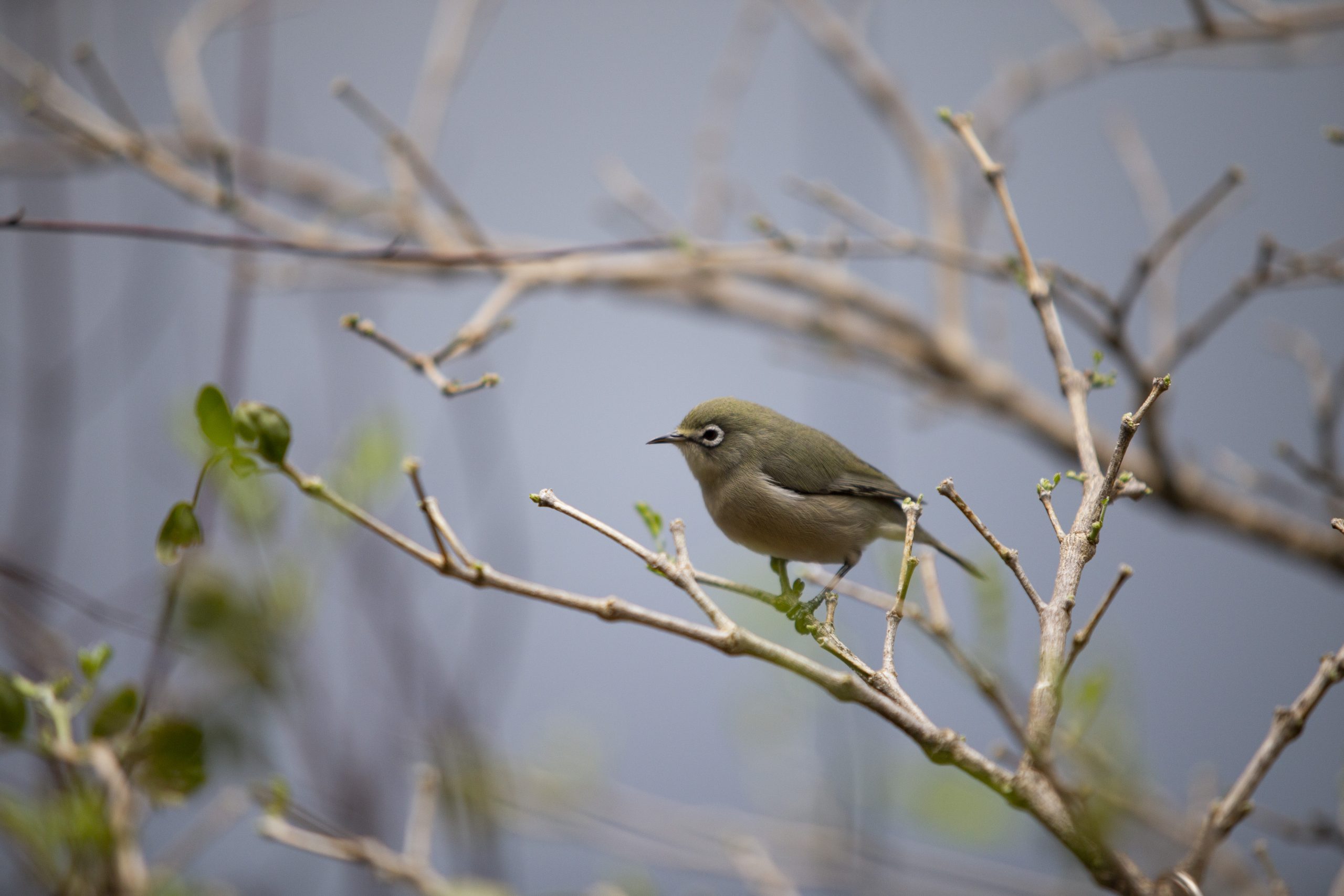
Cooperating with MAC and the Association of Zoos and Aquariums (AZA) since 1984 when the National Aviary first received Guam Rails for breeding purposes, the National Aviary has participated in cooperative management programs for four MAC Program species. These include the Saipan White-eye (Zosterops conspicillatus) also known as the Bridled White-eye, Golden White-eye (Cleptornis marchei), Mariana Fruit-Dove (Ptilinopus roseicapilla) and White-throated Ground-Dove (Gallicolumba xanthonura).
In particular, National Aviary is focusing efforts and has made considerable progress in developing and documenting sustainable breeding protocols and husbandry techniques for the Saipan White-eye in our Endangered Bird Breeding Center. Since March 2015, the Saipan White-eyes at the National Aviary have displayed strong nest building, laying, and incubation behaviors, with a majority of the eggs being incubated to full or near-full term. We have had seven chicks hatch, which has resulted in 2 offspring being successfully parent-reared to fledging.
We are investigating the White-eyes’ preference when it comes to flock composition by monitoring them in groups of varying sizes and in pairs. We have separated birds during the non-breeding season to see if the same birds would re-pair with each other when given the opportunity. We’ve also given pair-bonded females the opportunity to pair with new mates, which they proved willing to do. In addition to careful documentation of these management techniques, we have implemented a system of motion-sensitive cameras to record behaviors even when humans are not on-site (e.g., overnight). This video record has allowed us to observe intra-species interactions, nest building, nesting material preferences, territoriality, incubation, and chick care and chick feeding behavior by adults (including the variety and sizes of food items offered to nestlings). The careful documentation of this experience will be used to make recommendations for other zoos hoping to breed Saipan White-eyes. By sharing our progress and working together with accredited zoos, we can build the knowledge base of how to sustainably breed this species, if conditions in the wild require husbandry in zoos to save the species from extinction.