
Eastern Loggerhead Shrikes
The Eastern Loggerhead Shrike, one of Canada’s most endangered songbirds, has fewer than 25 breeding pairs left in Ontario. This unique subspecies, named for its disproportionately large – or “logger” – head, is in dire need of support. One of the ways in which organizations like ours, and others, are helping is by working tirelessly behind the scenes to help ensure an increase in healthy populations for the species within expert care, with the hope that future chicks will be reintroduced into the wild.
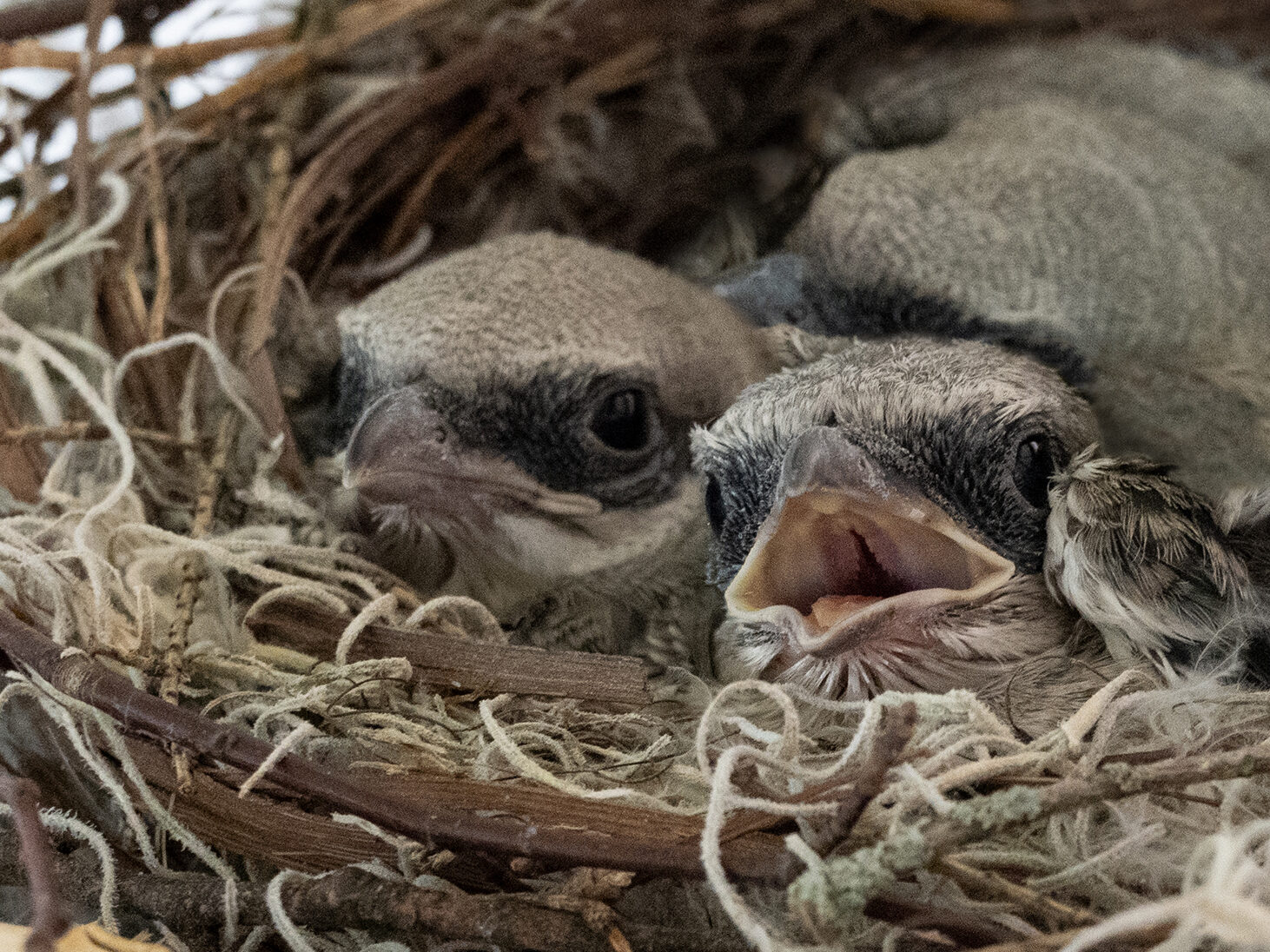
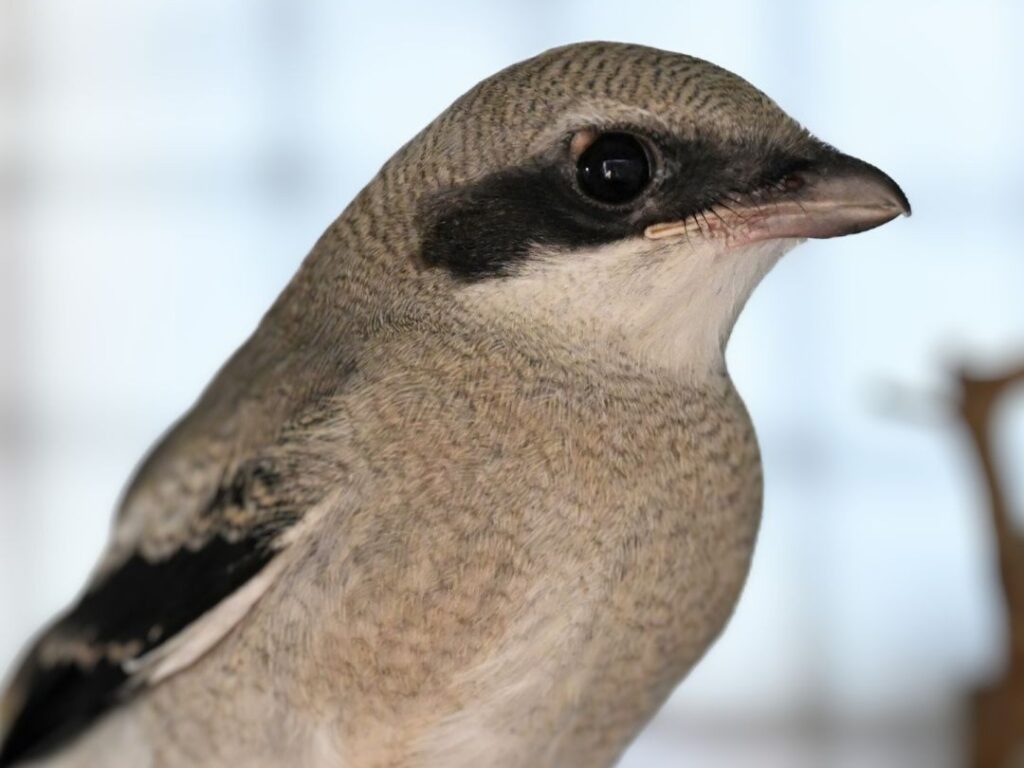
In partnership with Wildlife Preservation Canada, a conservation organization whose work supports multiple species’ recovery efforts across Canada, we were able to successfully breed new Eastern Loggerhead Shrike chicks. This exciting collaboration, which began in 2022, culminated to the long-awaited and recent reintroduction of a chick brood to the open grasslands of Ontario.
In the fall of 2022, we welcomed an adult Eastern Loggerhead Shrike pair in a behind-the-scenes naturalistic habitat that provided optimal shrike nesting. The pair successfully hatched and parents reared three chicks that were safely transported to a specially crafted habitat at the African Lion Safari based in Ontario by our very own Senior Director of Animal Care and Conservation Programs, Kurt Hundgen.
Prior to the transfer, the juvenile shrikes underwent thorough health examinations by our experienced veterinary team to help ensure they would thrive in other zoos or potentially in the wild. “The three, 11-month-old shrikes had preshipment health assessments before traveling to Canada,” says Dr. Shannon Smith, Associate Veterinarian. “During these exams, we checked for signs of infections or other conditions that may need treatment before their journey and looked for all symptoms, beak to tail!”
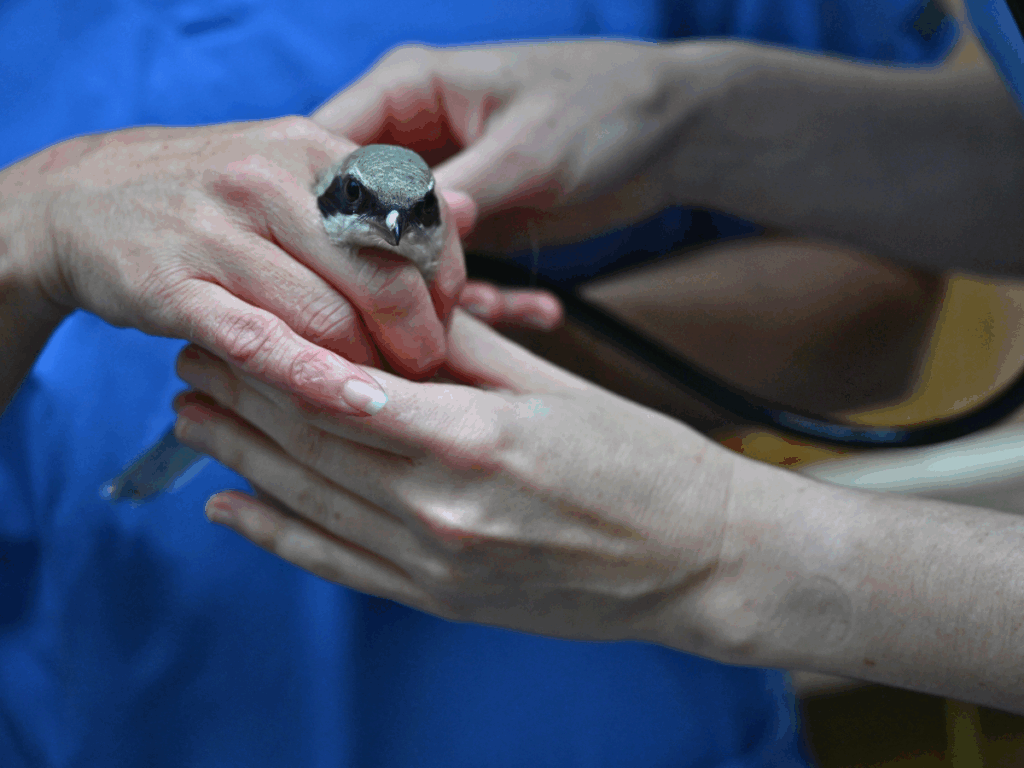
Dr. Smith further explained, “Before potentially being introduced to other birds at other zoos or in the wild, it was important for them to have a clear health screen to make sure that they were free from infectious diseases like Avian Influenza. With normal exams and negative test results in hand, we were able to sign their health certificates so that they could travel from the US into Canada!” Eastern Loggerhead Shrikes are very susceptible to West Nile Virus, but vaccination provides protection; thus the three chicks were also given West Nile Virus vaccine boosters and a dose of antiparasitic as a preventative before their travels.
After residing in the Safari habitat for some time, it was determined that our shrike chicks were of ideal genetic viability for placement into fellow AZA-accredited institutions. There, the chicks will continue to grow and develop in expert care and potentially produce even more chicks to help continue to reestablish their wild population in Ontario in the near future. In the meantime, the National Aviary obtained a second shrike pair for this program in 2025.
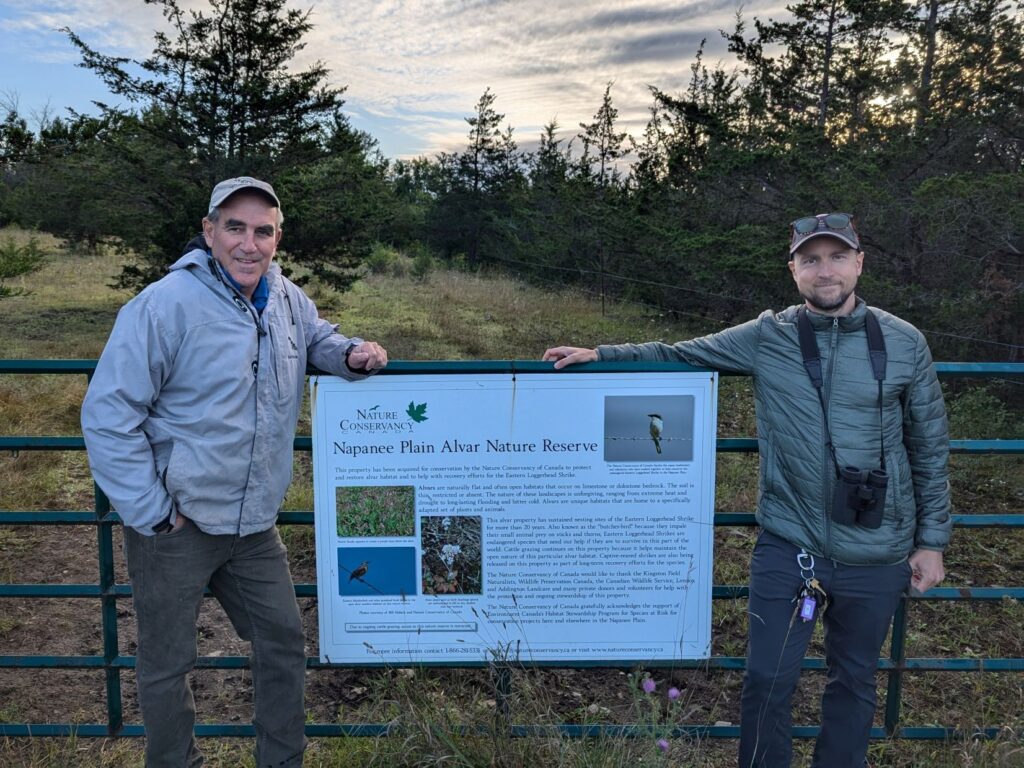
In addition to caring for two adult breeding pairs, the Aviary sent our experts to Canada in 2024 and again in 2026 to assist with these wild releases. This past September, Director of Animal Care and Conservation Programs Kurt Hundgen and Senior Aviculturist Brandon Hose traveled to Ontario to participate in the release of about two dozen Eastern Loggerhead Shrikes onto the Carden Plain. Additional releases occurred about 150 miles away on the Napanee Limestone Plain. In 2026 alone, 88 juvenile shrikes have been released into the wild at the two sites, marking the largest release since before 2020!
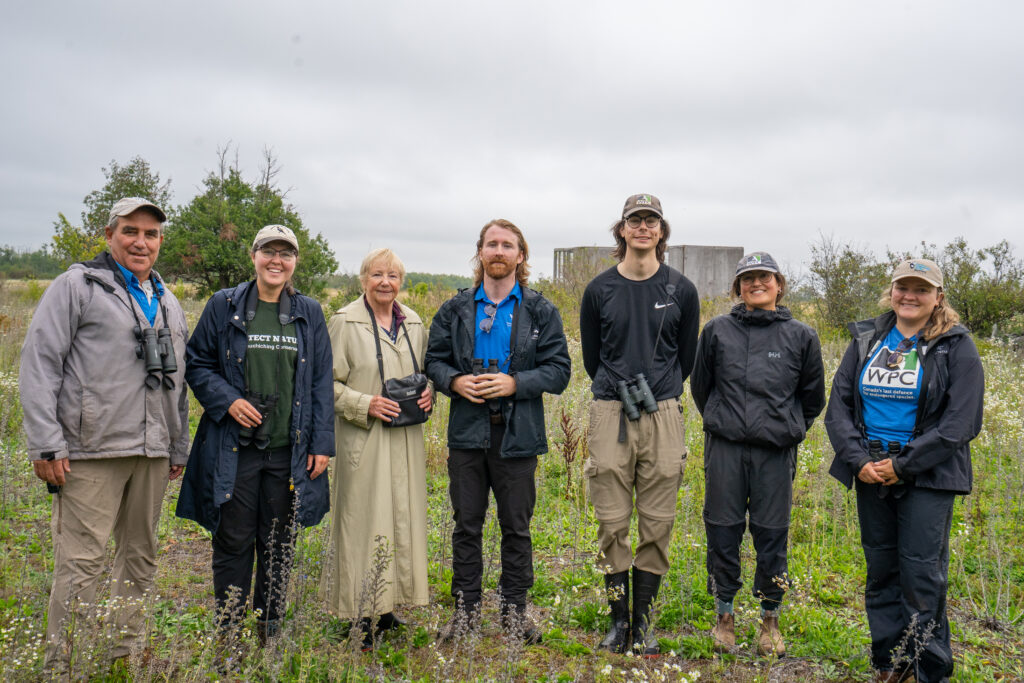
According to Brandon, “The release site was surrounded by open pastures with many Hawthorn Trees and Cedar Trees present, which is great for shrikes! The cedar provides great cover for shrikes, while a Hawthorn Tree’s thorns are important for how they consume their prey.”
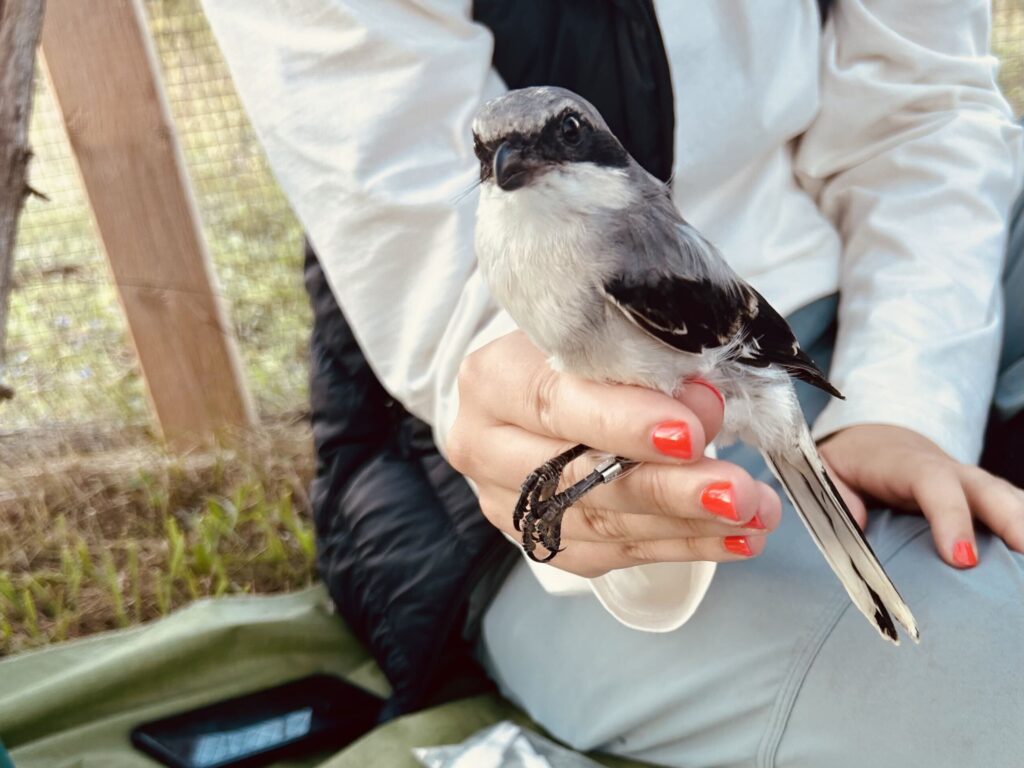
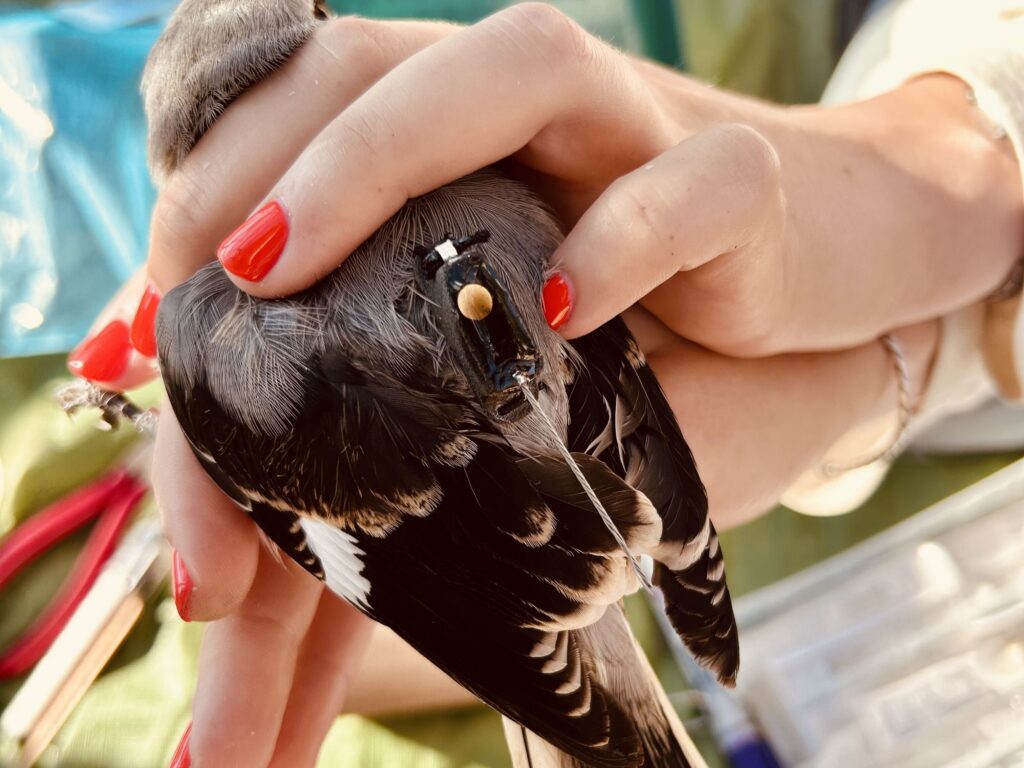
Although no Aviary hatched-bird was part of this year’s release, the Aviary purchased and donated four state-of-the-art Cellular Tracking Technologies BluBirdTransmitters – devices that are the weight of a single grain of rice (because they were originally designed to track Monarch butterflies!). Unlike battery-operated transmitters, these are solar-powered and will remain active and operational for the life of the animal they’re gently attached to. This allows ornithologists to gain a deeper understanding of the species’ movements, which further contributes to future planning for this multi-country conservation effort.
In just a few short months, the transmitters we provided have already produced valuable migration data. One bird donning a National Aviary-funded transmitter even made its way from Ontario, Canada down through Springville and Salamanca, New York in early September, then further along to Southern Ohio. This flight path shows this particular individual passed right by Pittsburgh (and the Aviary) along its migration path! Other tag detections show birds passing along the northern shores of the Great Lakes, with one individual making it to Kentucky.