Eastern Loggerhead Shrikes
The Eastern Loggerhead Shrike, one of Canada’s most endangered songbirds, has fewer than 25 breeding pairs left in Ontario. This unique subspecies, named for its disproportionately large – or “logger” – head, is in dire need of support. One of the ways in which organizations like ours and others are helping is by working tirelessly behind the scenes to help ensure an increase of healthy populations for the species within expert care, with the hope that future chicks will be reintroduced into the wild.
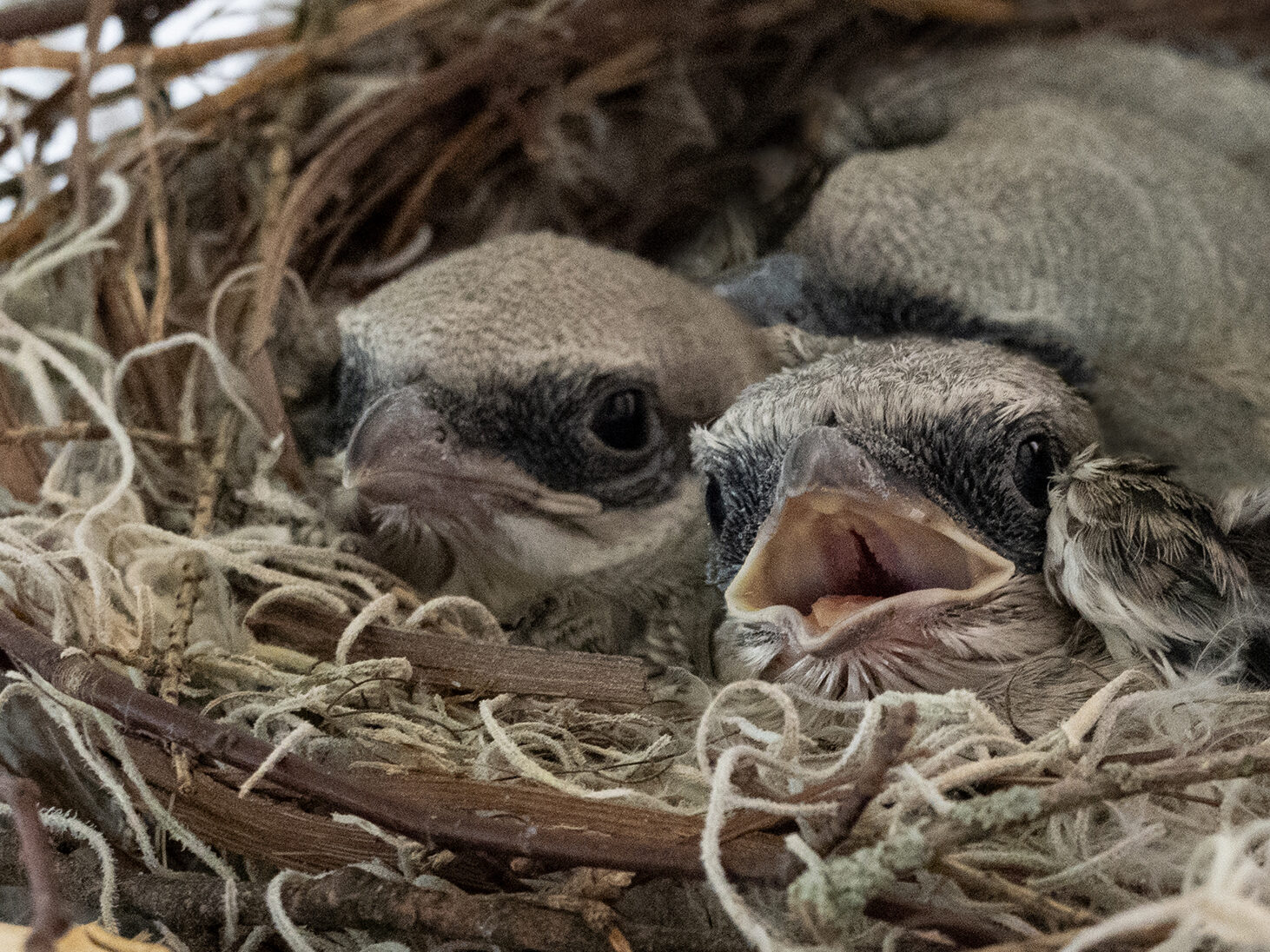
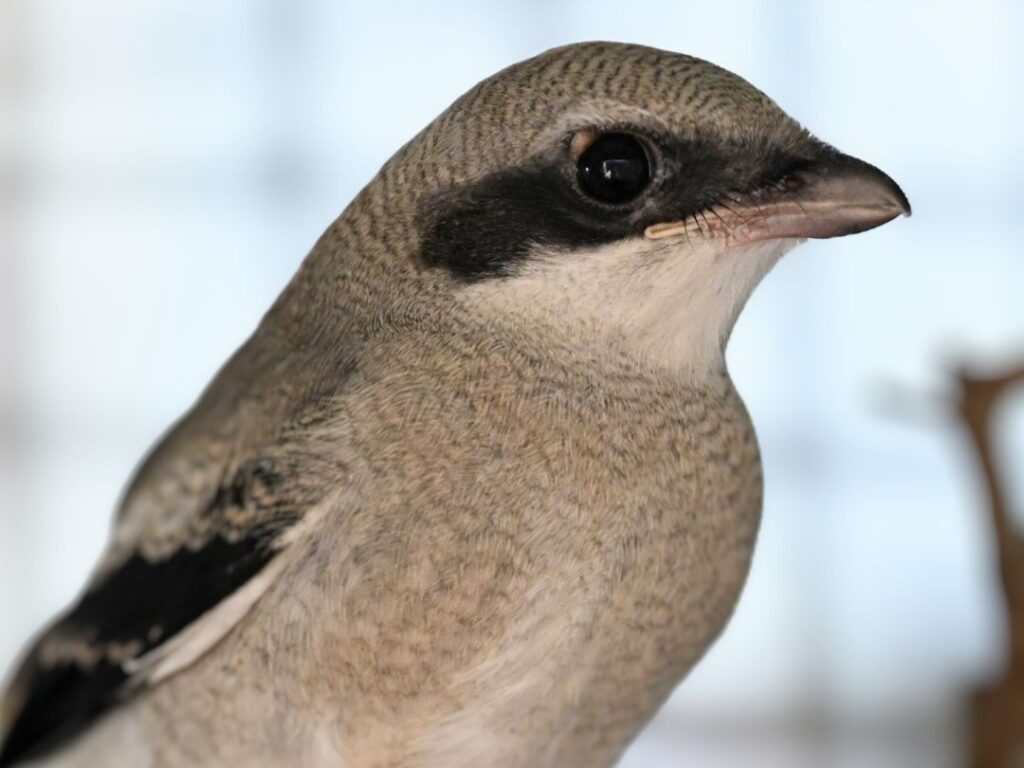
In partnership with Wildlife Preservation Canada, a conservation organization whose work supports multiple species’ recovery efforts across Canada, we were able to successfully breed new Eastern Loggerhead Shrike chicks. This exciting collaboration, which began in 2022, culminated to the long-awaited and recent reintroduction of a chick brood to the open grasslands of Ontario.
In the fall of 2022, we welcomed an adult Eastern Loggerhead Shrike pair in a behind-the-scenes naturalistic habitat that provided optimal shrike nesting. The pair successfully hatched and parents reared three chicks that were safely transported to a specially crafted habitat at the African Lion Safari based in Ontario by our very own Senior Director of Animal Care and Conservation Programs, Kurt Hundgen.
Prior to the transfer, the juvenile shrikes underwent thorough health examinations by our experienced veterinary team to help ensure they would thrive in other zoos or potentially in the wild. “The three, 11-month-old shrikes had preshipment health assessments before traveling to Canada,” says Dr. Shannon Smith, Associate Veterinarian. “During these exams, we checked for signs of infections or other conditions that may need treatment before their journey and looked for all symptoms, beak to tail!”
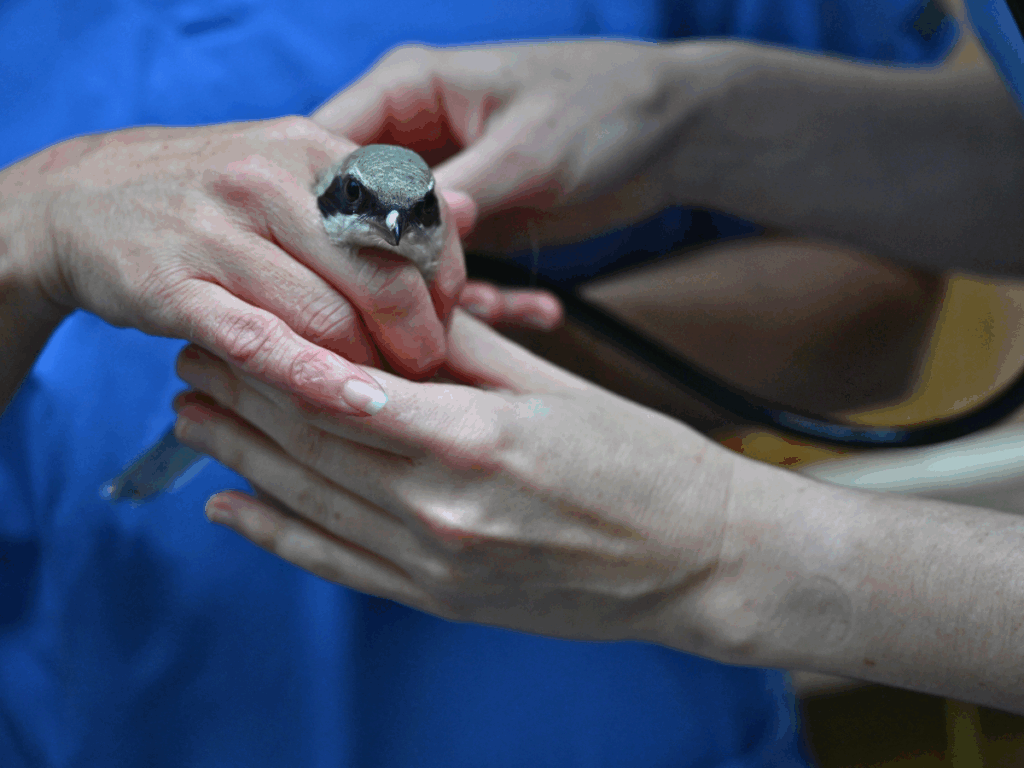
Dr. Smith further explained, “Before potentially being introduced to other birds at other zoos or in the wild, it was important for them to have a clear health screen to make sure that they were free from infectious diseases like Avian Influenza. With normal exams and negative test results in hand, we were able to sign their health certificates so that they could travel from the US into Canada!” Eastern Loggerhead Shrikes are very susceptible to West Nile Virus, but vaccination provides protection; thus the three chicks were also given West Nile Virus vaccine boosters and a dose of antiparasitic as a preventative before their travels.
After residing in the Safari habitat for some time, it was determined that our shrike chicks were of ideal genetic viability for placement into fellow AZA-accredited institutions. There, the chicks will continue to grow and develop in expert care and potentially produce even more chicks to help continue to reestablish their wild population in Ontario in the near future. In the meantime, the National Aviary obtained a second shrike pair for this program and expects to contribute offspring from both pairs for possible reintroduction in 2025.