Nesting in Namibia
The rapid decline of wild African Penguins and the National Aviary’s conservation work to help here in Pittsburgh and on the African continent they call home.
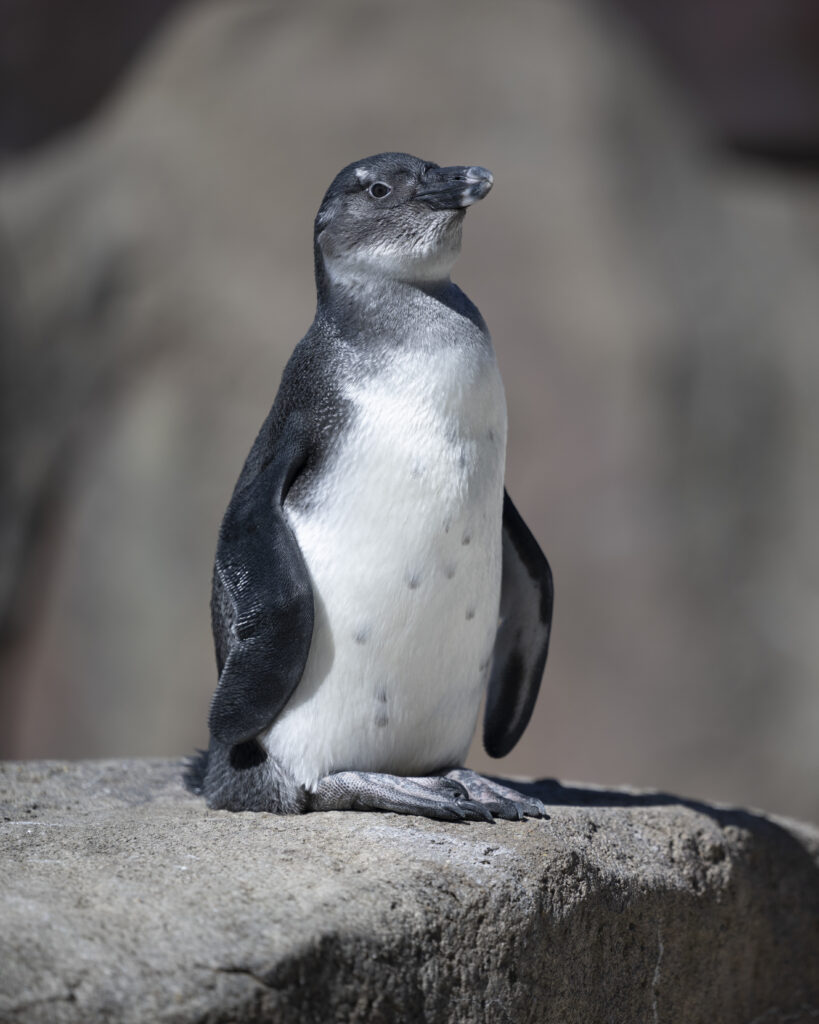
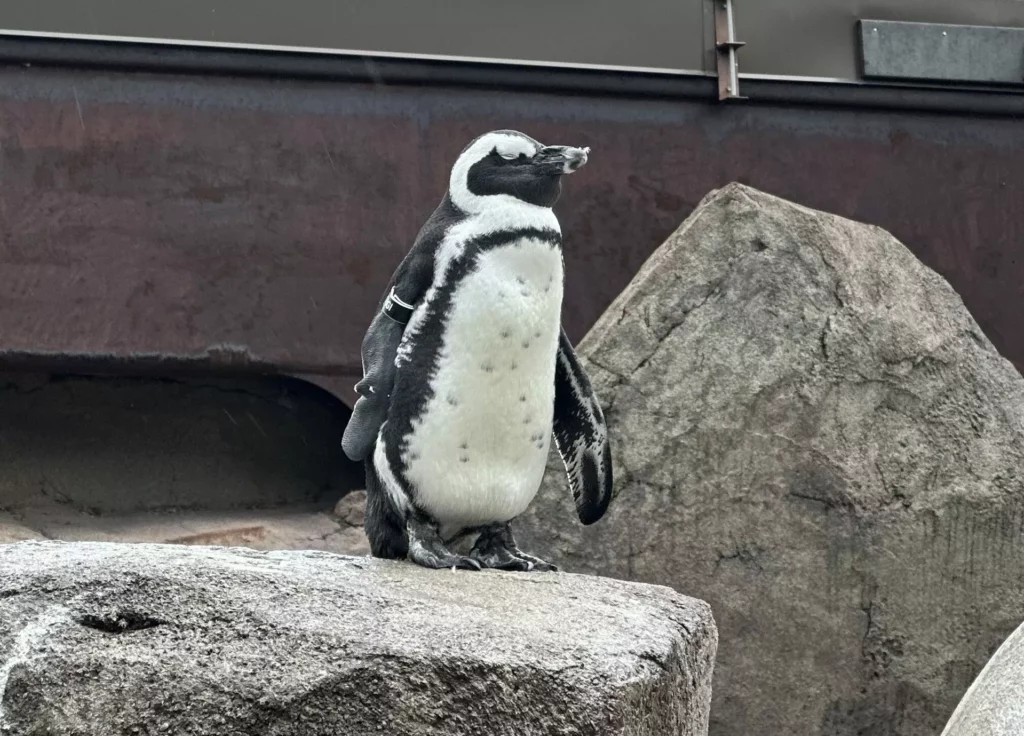
Fewer than 10,000 African Penguin pairs remain in South Africa and Namibia. In 2021, there were more than 50,000 individual penguins recorded. That’s why, in October 2024, the International Union for the Conservation of Nature (IUCN) uplisted the species from Endangered to Critically Endangered.
It is estimated that African Penguins will be functionally extinct in South Africa and Namibia by 2035.
The Problems Plaguing Penguins
As the IUCN was announcing its list change, National Aviary Senior Conservation Scientist, Dr Patty McGill and Senior Director of Animal Care and Conservation Programs, Kurt Hundgen, were on the ground in Namibia, deploying artificial nest burrows for declining penguin colonies living on the island of Possession.
Historically, African Penguins used seabird guano to make their nests. As the Namibian climate is warm, windy, and sandy, guano offered them the ability to build protective burrows for their offspring.
Unfortunately, unsustainable harvesting of guano for fertilizer forced penguins to nest in less-than-ideal places, often out in the open utilizing unstable sand. This has caused nesting success rates to plummet quickly.
The Aviary at Work
The National Aviary is the leader of the Association of Zoos and Aquariums (AZA): Saving Animals From Extinction® (SAFE) Program for African Penguins. The program is coordinated by Dr. McGill, who works with Aviary colleagues and others around the world to identify and address short-and-long-term challenges plaguing the species.
The National Aviary works with the South African Foundation for the Conservation of Coastal Birds (SANCCOB) and the Namibian Foundation for the Conservation of Seabirds (NAMCOB) to help sustain existing wild penguin population. This includes determining the kind of artificial nest burrow wild colonies would take to, which took time and a few iterations.
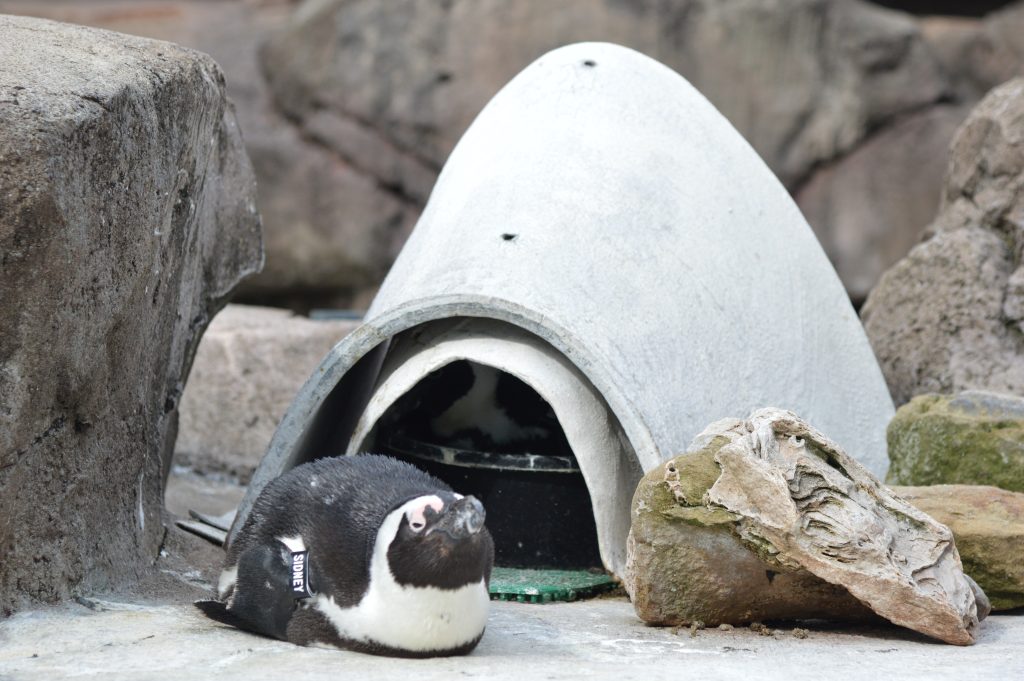
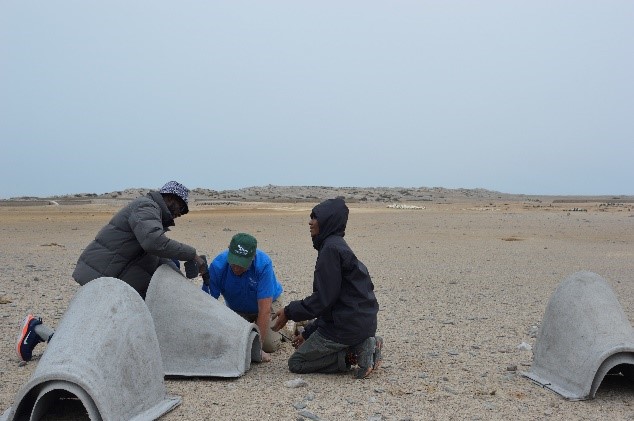
Burrow testing took place at several SAFE program sites, including the National Aviary. This most recent design keeps penguins cool and prevents access by predators. It is inexpensive and simple to create, deploy, and assemble. Most importantly, penguins at SAFE sites have taken well to the burrows: in 2022, one such nest was used at the National Aviary to welcome Pierogi into the world!
And so, with penguin-approved artificial nest burrows in tow, Kurt and Dr. McGill were able to provide Namibian colonies with twenty-five artificial nest burrows. The island of Possession was once the site of a large guano harvesting factory, now abandoned. Now, it will hopefully become the future of healthy, growing African Penguin populations.
Continued Efforts
Nearly a year later, Kurt journeyed to the island of Halifax alongside Chris Gaus, the Vice Chair of the African Penguin SSP® Program and the National Aviary’s Assistant Manager of Animal Care—who experienced the life-changing trip for the first time. With the now realized goal of deploying another batch of 35 artificial nest burrows, in which Kurt reports the Penguins have already been spotted using!
“The day after we deployed the nests onto Halifax we briefly returned and were pleasantly surprised to witness several members of the colony were immediately settling into their new homes,” says Kurt Hundgen. “Seeing that made the entire experience even more rewarding.”
By the spring of 2026, through on the ground and financial support, the National Aviary will have contributed to the deployment of 300 nest burrows across four Namibian Islands with plans for 200 more to be deployed by the end of 2027!
Header photo by Kevin Graham; Dallas Zoo