Flighted Falcon + Friend Encounter
BACK FOR THE FALL!!!
Daily, except Tuesdays at 12:30 pm
Members: $66.60 per person
Non-Members: $74 per person
Includes General Admission
Ages 12+
*Available now through January 4, 2027
All of the same joy that comes during our traditional Falcon Encounter…and then some! For the first time, get DOUBLE the feathered fun during a Flighted Falcon + Friend Encounter.
Book Flighted Falcon + Friend Encounter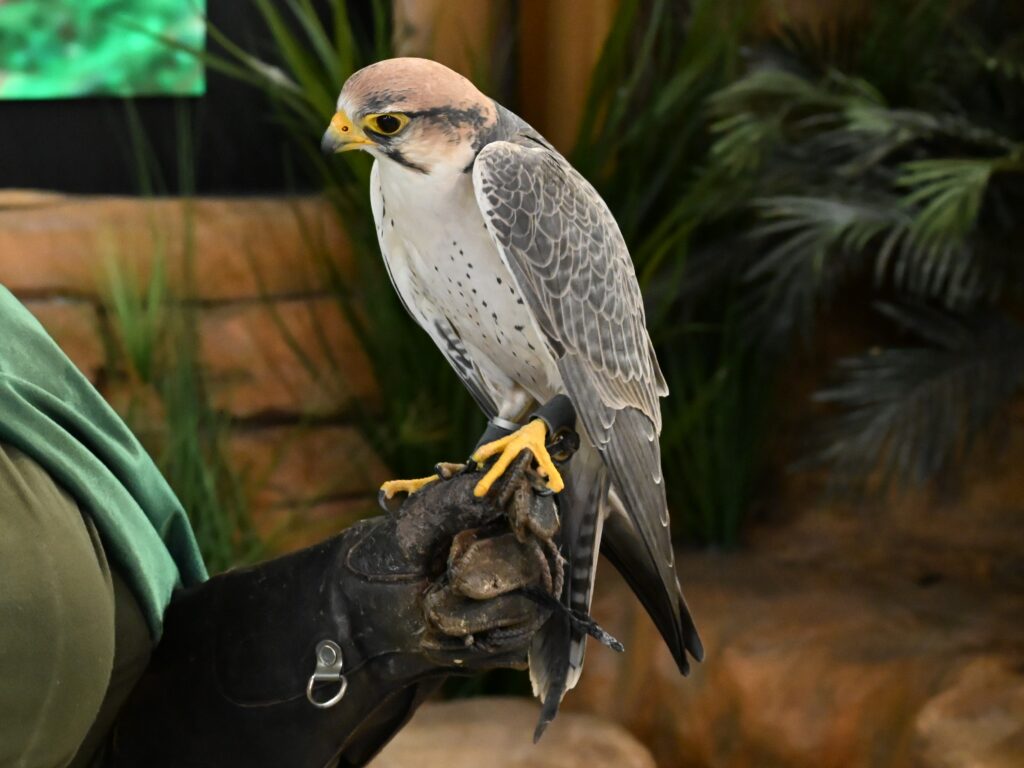
- Experience the thrill of a falcon flying RIGHT TO YOU, landing on your waiting, outstretched, gloved hand (with the help of a National Aviary aviculturist*).
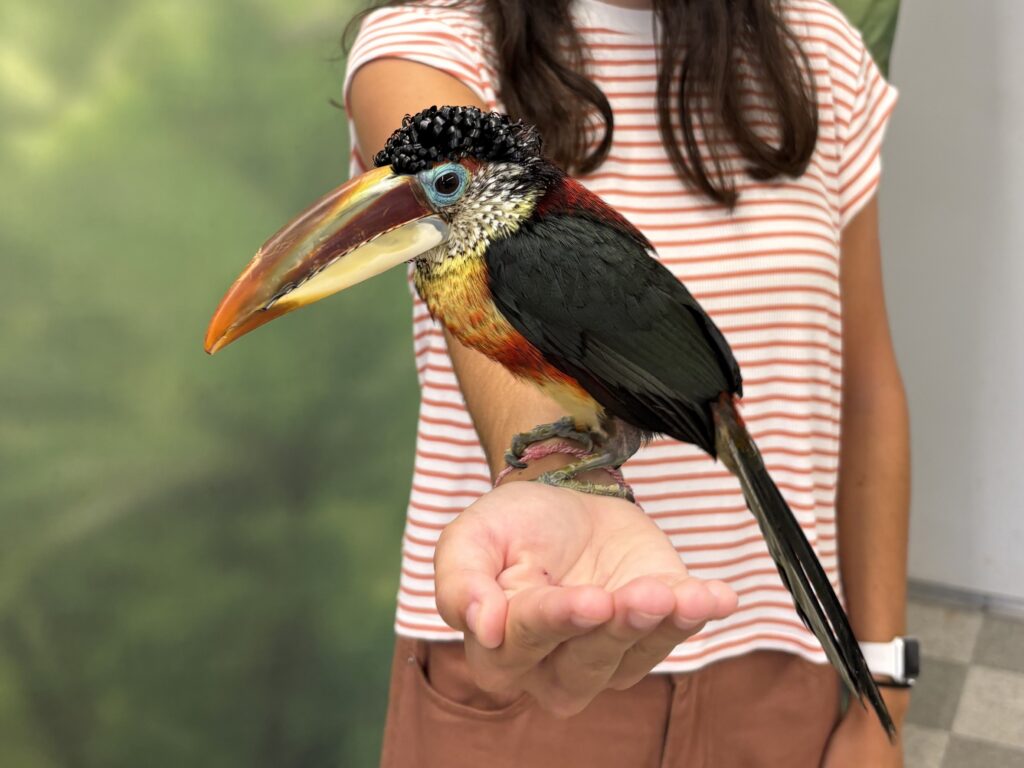
- Enjoy a visit from a SECOND flighted Animal Ambassador, like a bird of prey, a parrot, or even an aracari (pictured above)!
- Snap the perfect social-media-worthy shot with each Animal Ambassador perched on your gloved hand!
- Learn about the fascinating adaptations that make falcons “masters of the sky,” from their aerodynamic wings to their incredible vision – which is eight times better than that of a human!
- Gain a deeper understanding of birds of prey and learn how you can protect them in the wild.
*An aviculturist is a National Aviary expert who provides daily care for our Animal Ambassadors
Additional Information
- This unique experience is designed for those ages 12 and up.
- All children 17 and under must have their release forms signed by a parent or legal guardian.
- Children under the age of 16 must be accompanied by another encounter participant over the age of 18.
- Animal Encounters are non-refundable. Requests to reschedule must be made a minimum of 7 days in advance, based upon availability.
- Book before you visit to guarantee your experience. Same-day registration is based on limited program availability and cannot be guaranteed.
- Please Note: At the National Aviary, we give our animals the choice to participate in interactive experiences with caring guests, like you! As the comfort and safety of our animals and our guests is always our top priority, animals may choose not to participate on any given day. In the event the animal needs a day of rest or chooses not to participate, we will happily reschedule your experience.
Proceeds from Animal Encounters support the National Aviary’s work to save birds and protect their habitats.