
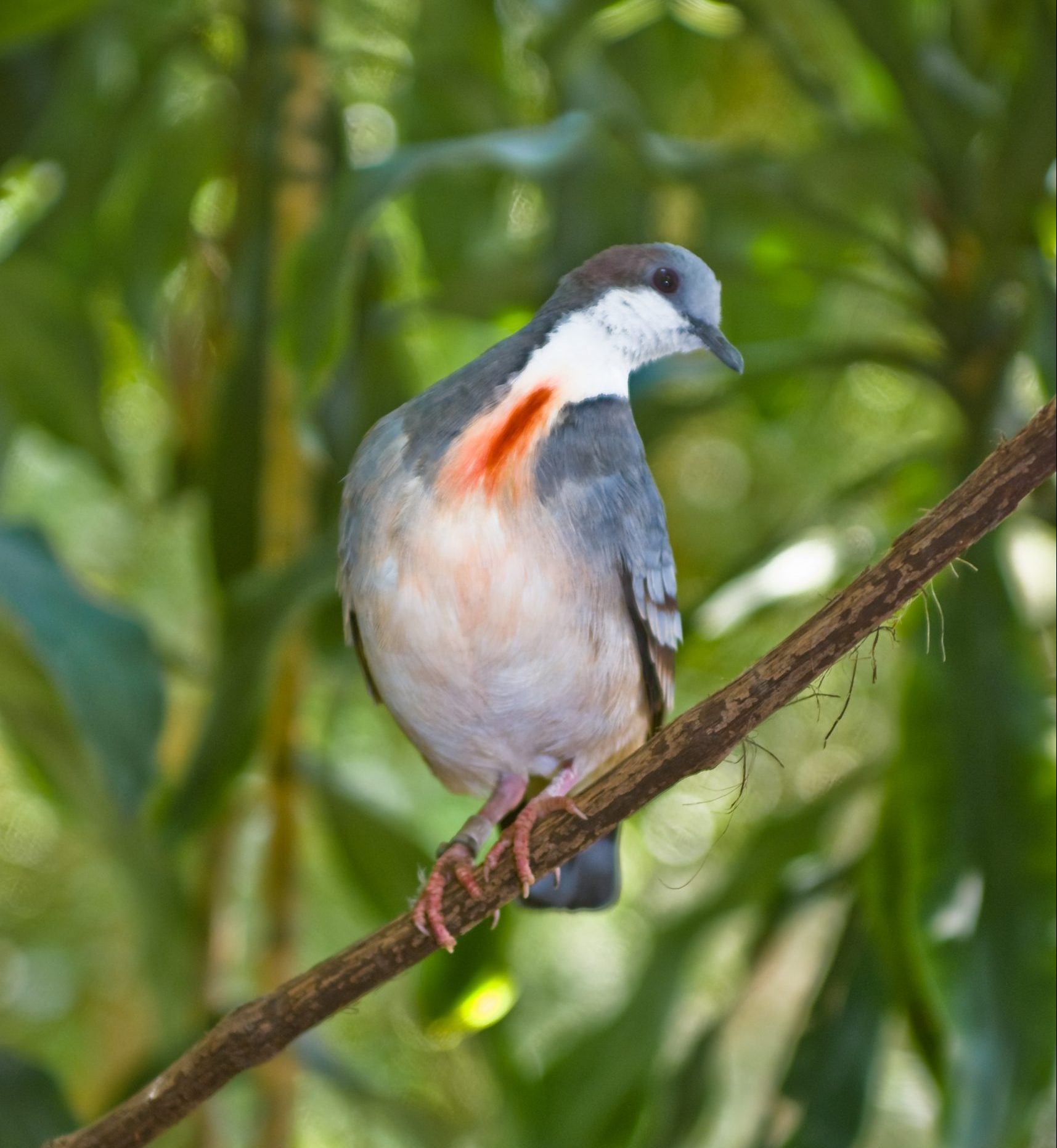
The beautiful Luzon Bleeding-heart gets its name for the scarlet markings on its chest. Found throughout primary and secondary forests in the Philippines, the Luzon Bleeding-heart feeds on seeds, berries, and insects along the forest floor. Their call is a mournful coo. The species is generally considered rare or scarce, and is considered to be…
Read More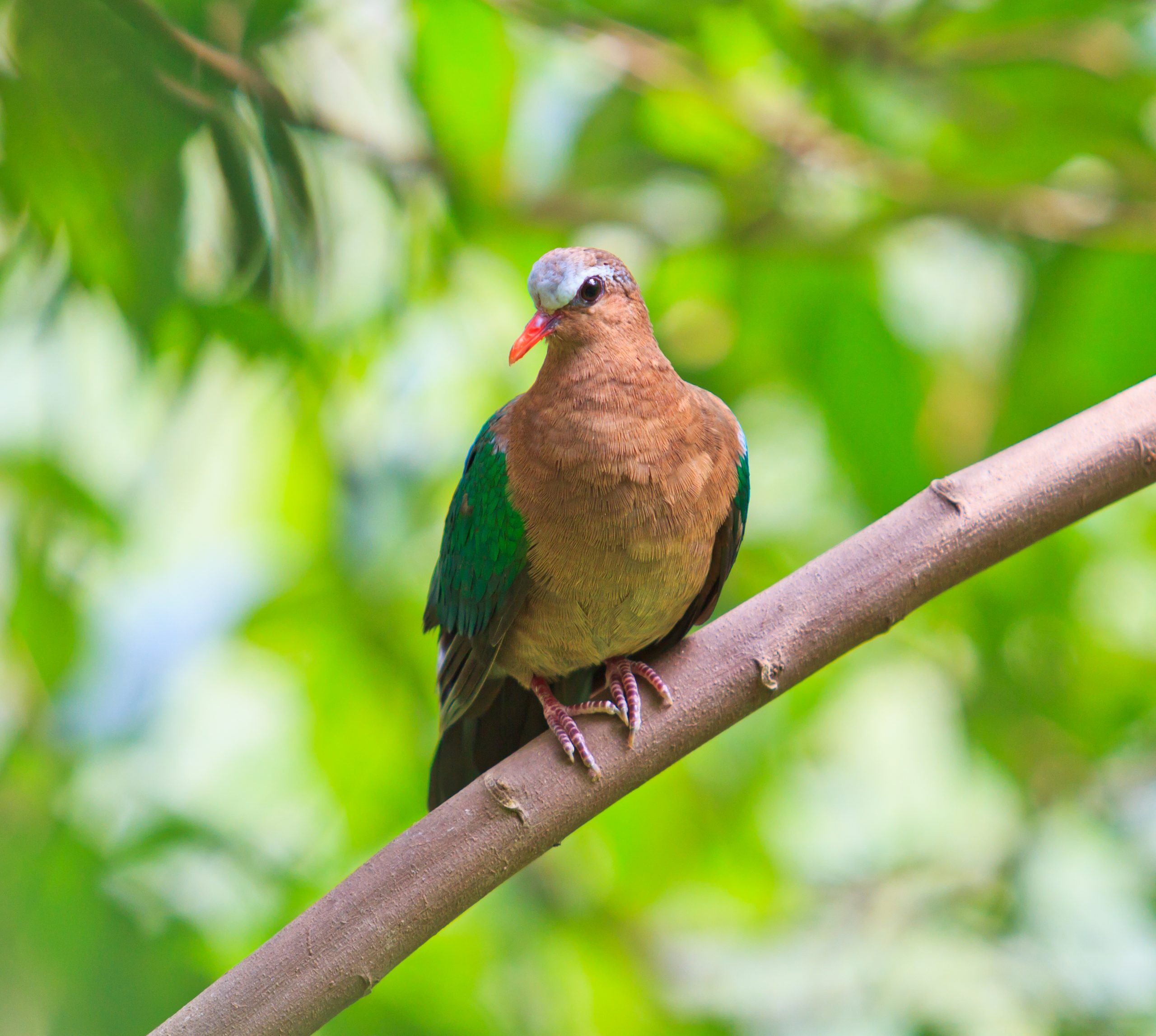
The Grey-capped Emerald Dove, also called the Asian Emerald Dove or the Green-winged Dove, is found in a wide range of forest types, including rainforests, mangroves, and bamboo forests, throughout Southeast Asia. This “pretty pigeon” has very bold, irridescent green wings. Males have a distinctive grey crown and shimmery wings, while females are duller. They…
Read More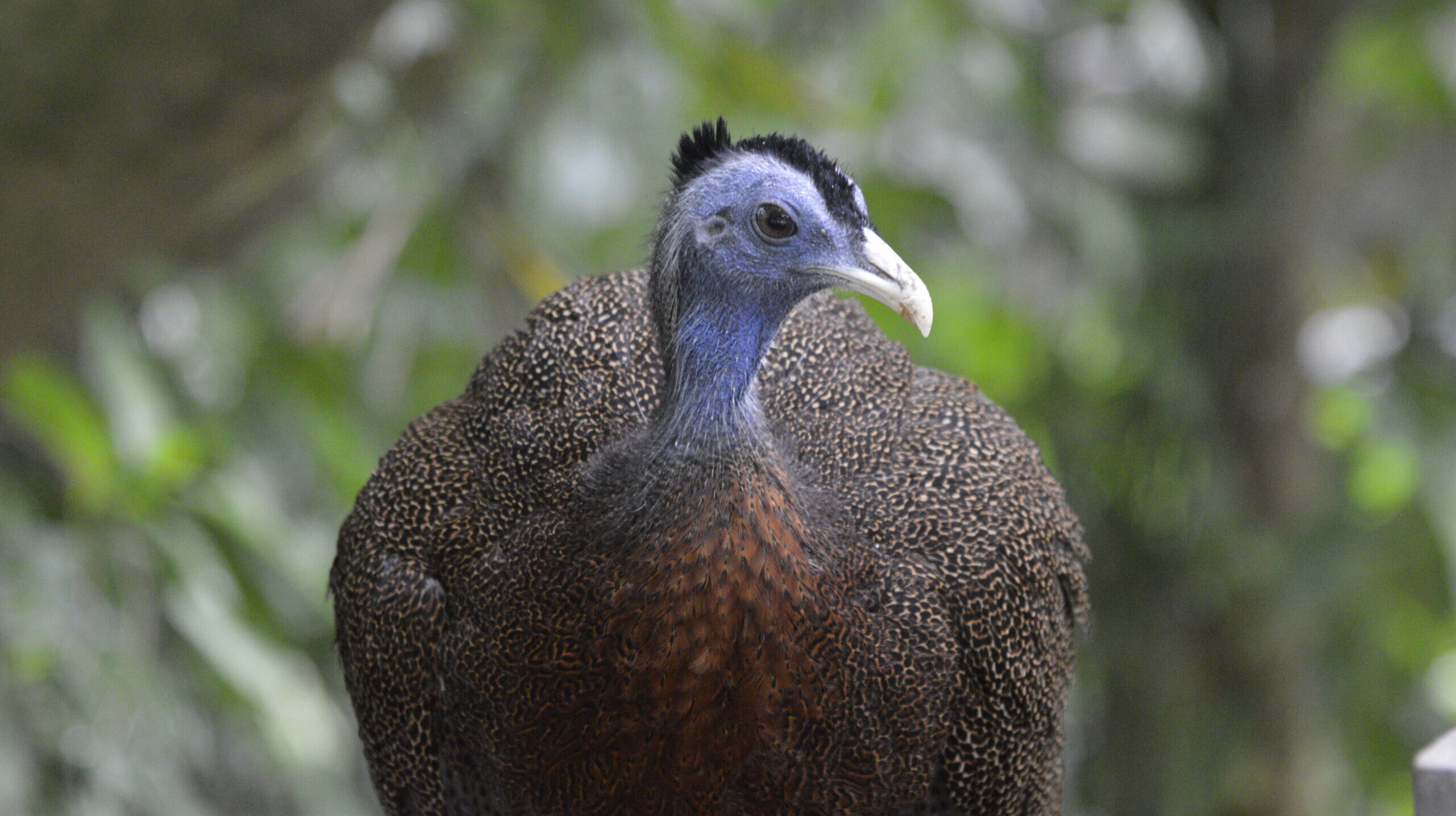
A fabulously majestic resident of tall, dry, primary, and secondary forests of the Indo-Malayan region, the Great Argus forages solitarily for fruit, seeds, flowers, and invertebrates on the forest floor. The bird’s taxonomic and common names both derive from Argus, the hundred-eyed giant, from Greek mythology (a reference to the many eye-like spots on the…
Read More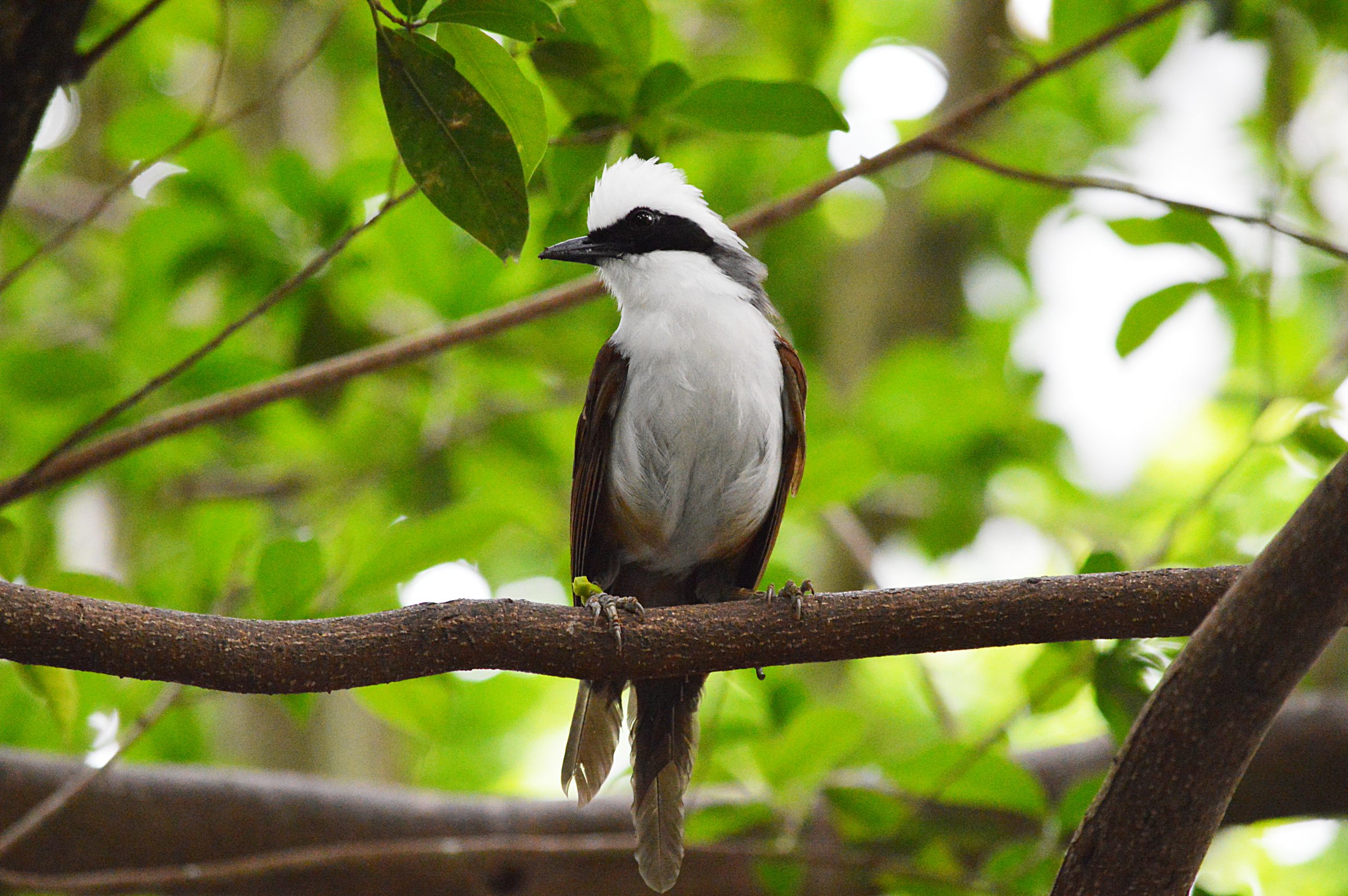
The White-crested Laughingthrush occurs in broadleaf evergreen forest and mixed deciduous forest in Southeast Asia and in the foothills of the Himalayan Mountains. It will also inhabit disturbed forests, secondary forest and gardens. This is a very social and vocal species, often foraging on the ground in groups of 6 to 20 individuals while looking…
Read More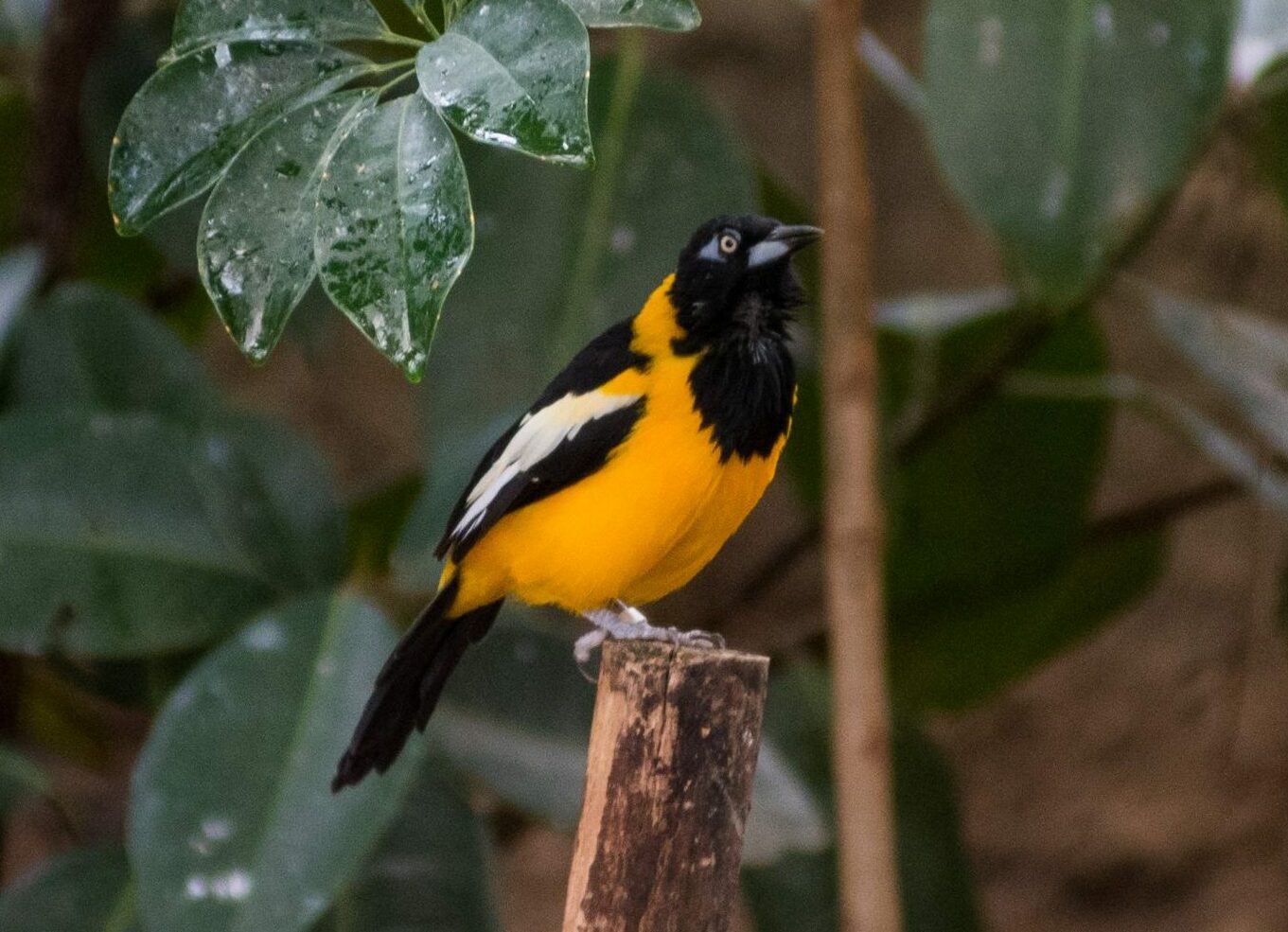
The Venezuelan Troupial is the national bird of Venezuala. It is found in northern South America and several Caribbean islands. It occurs in dry woodland of acacia and tree-like cacti, but also in pastures and savanna, dry or seasonal woodlands, and sometimes old fruit plantations. The Venezuelan Troupial is omnivorous, feeding on nectar, fruits, seeds,…
Read More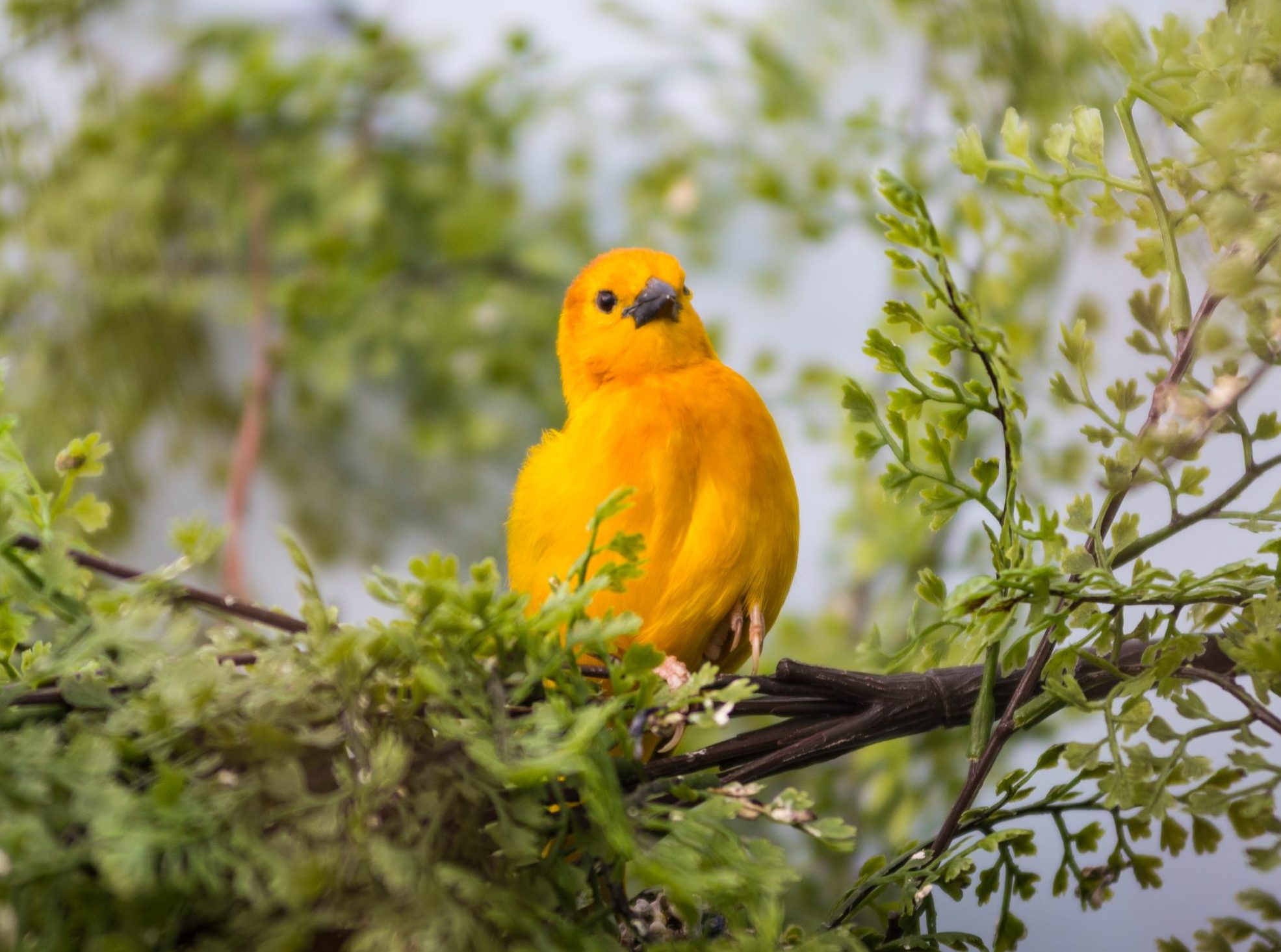
The Taveta Golden Weaver occurs in East African in Kenya and Tanzania. They are found in swampy lowland areas during the breeding season. Outside of the breeding season, they are found in adjacent dry bush country. They build impressive spherical nests hanging over water. The intricately weaving strips of reed leaf blades that make up…
Read More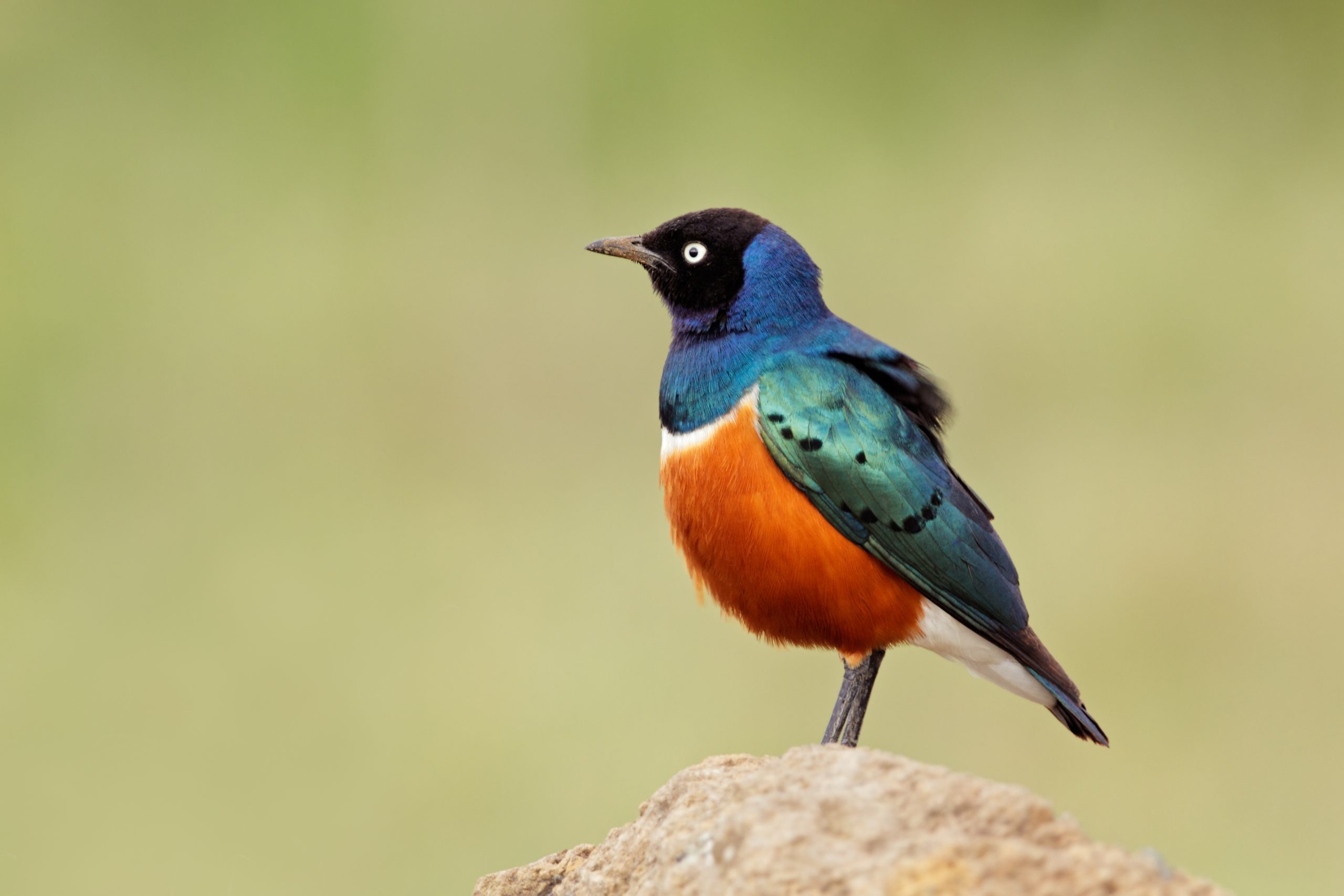
Superb Starlings are dark iridescent blue on the back of their head and chest, a black face that sets off their bright white eyes, metallic blue-green back and wings, and a dark orange belly bounded by bright white under the tail and in a band across the breast. The Superb Starling occurs in open woodland,…
Read More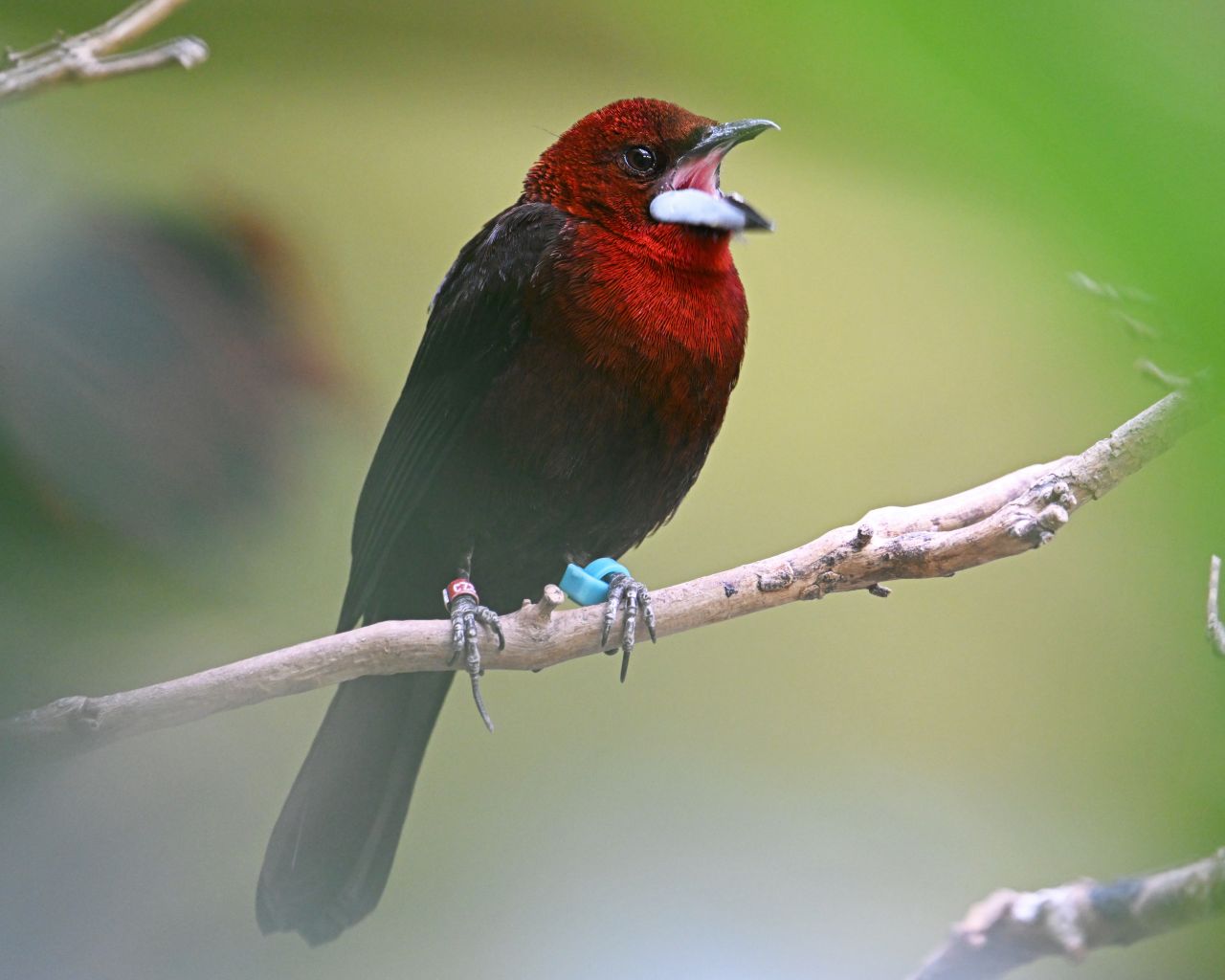
The Silver-beaked Tanager is a striking South American tanager of brushy forest borders, overgrown clearings, second growth, and shrubs around habitations and riverbanks. Often feeding in small groups, this tanager consumes about equal proportions of arthropods and fruit. Nesting birds are sometimes found close together, and it is occasionally a cooperative breeder with helpers attending…
Read More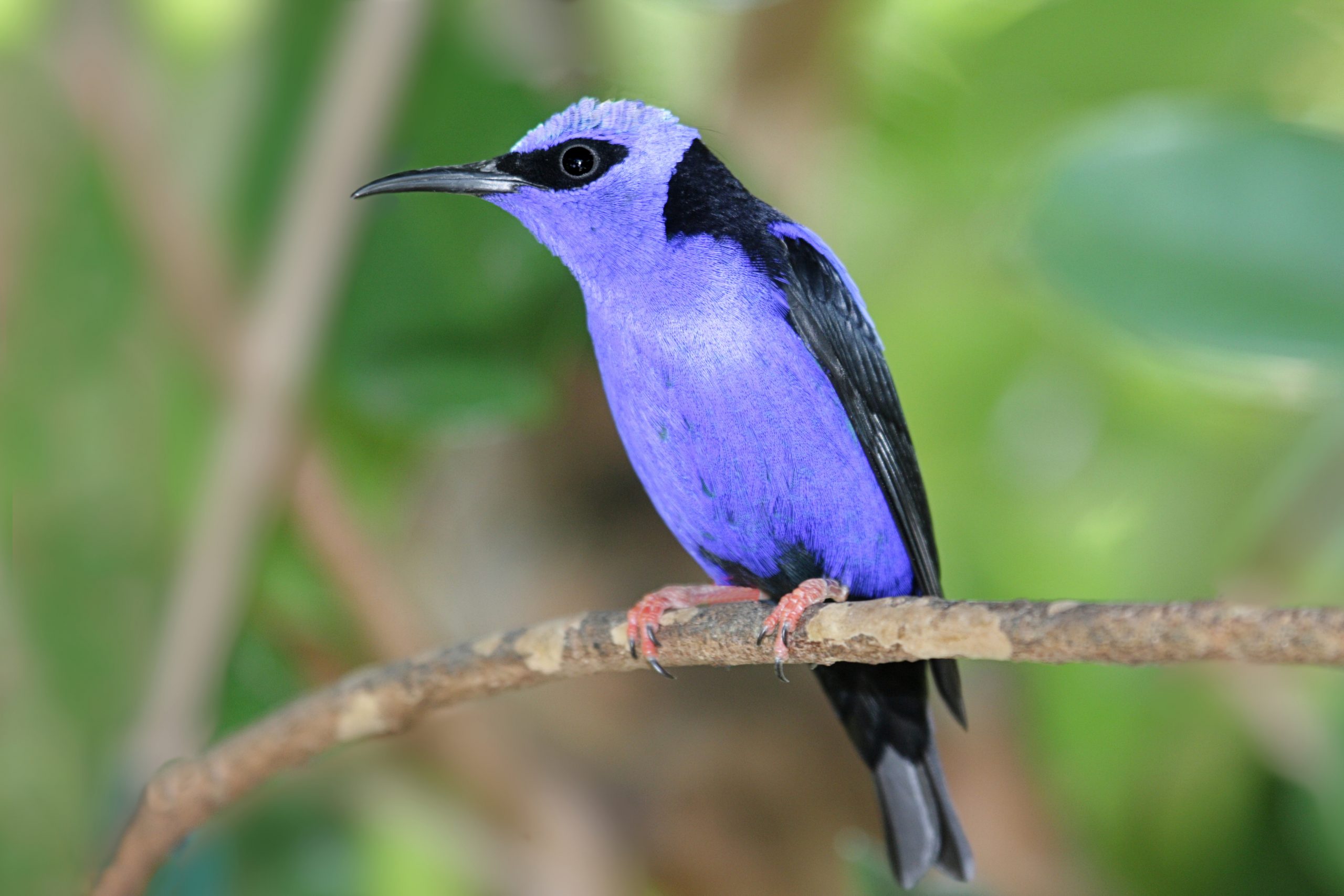
One look at the Red-legged Honeycreeper and it’s easy to see where it gets its name. Largest of the Cyanerpes honeycreepers at about 12 centimeters long, both male and female Red-legged Honeycreepers sport bright, candy-red legs and a long, sharp bill that’s almost as recognizable as their legs. Males in breeding plumage are a brilliant…
Read More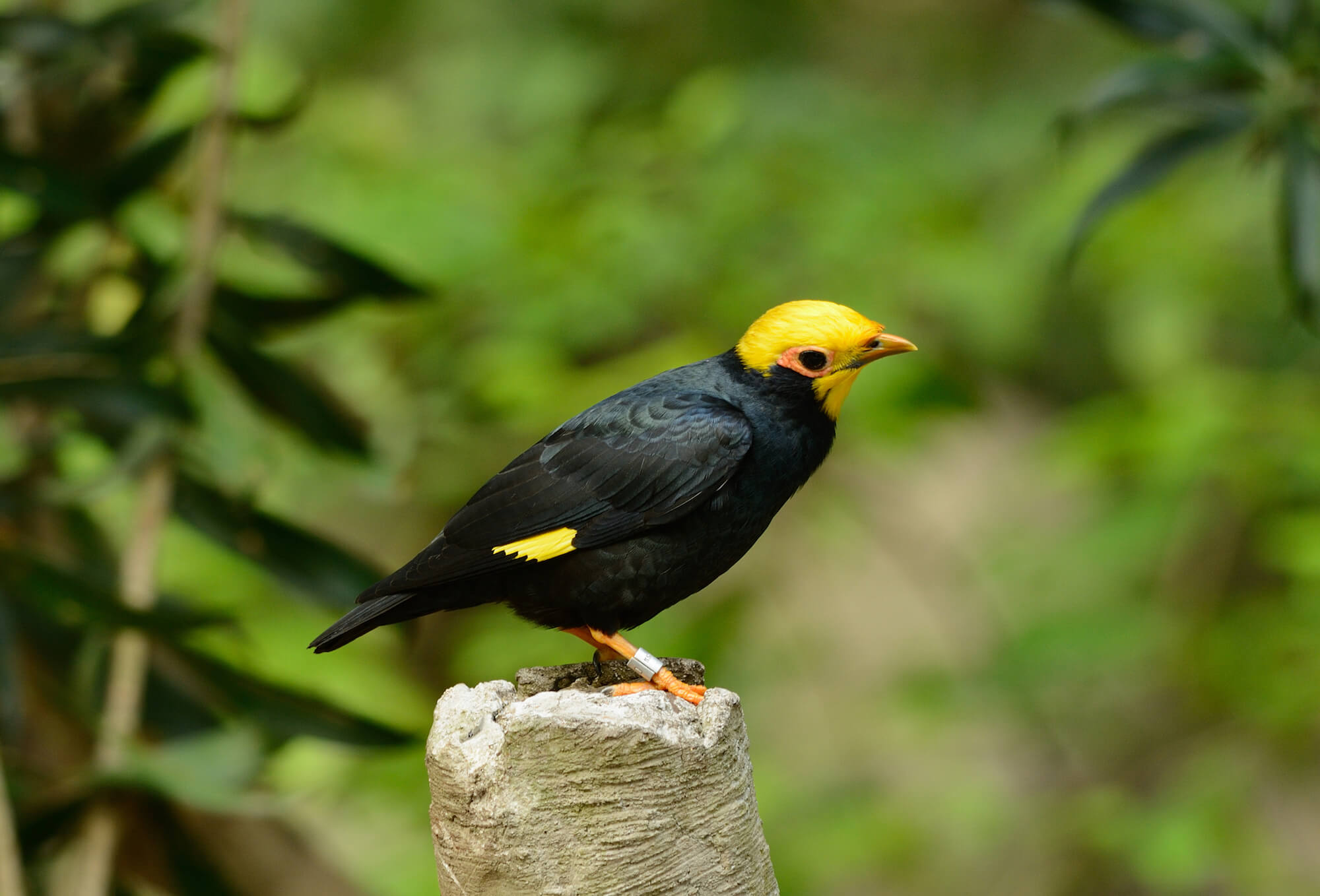
A native of lowland evergreen forest, deciduous and mixed woodland, open forest, and cleared areas with scattered tall trees of India and Indochina, the striking Golden-crested Myna forages for fruit and insects high in the canopy. A cavity nester, this species most frequently utilizes natural holes in trees. Although Golden-crested Mynas are often captured for…
Read More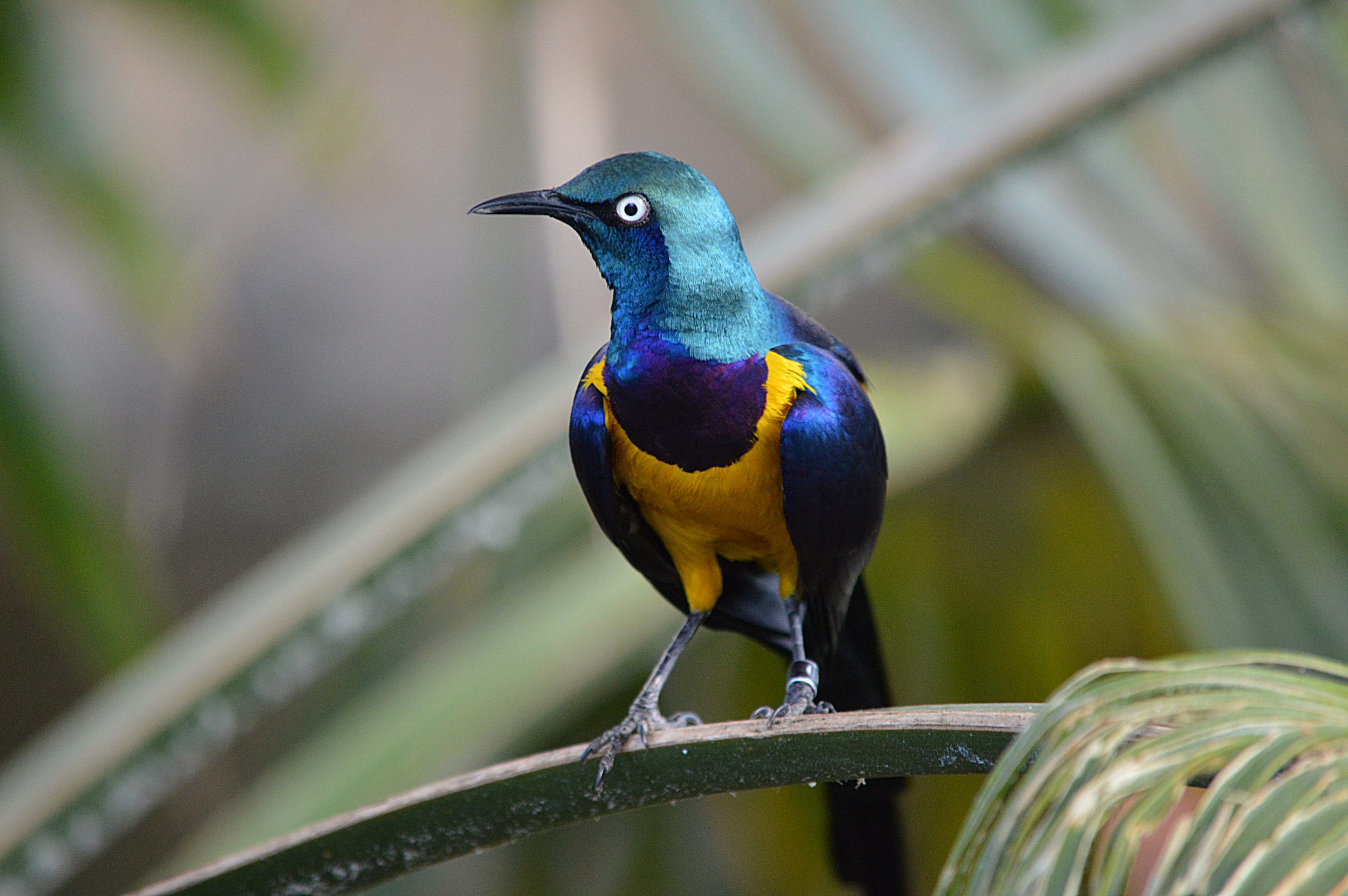
The Golden-breasted Starling is a beautifully colored bird, unmistakable and hard to miss! It inhabits the dry bush and savanna of the arid and semi-arid regions of northeastern Africa. This starling forages mainly on the ground for a variety of insects and some fruits, but termites are a favorite food. This species is a cooperative…
Read More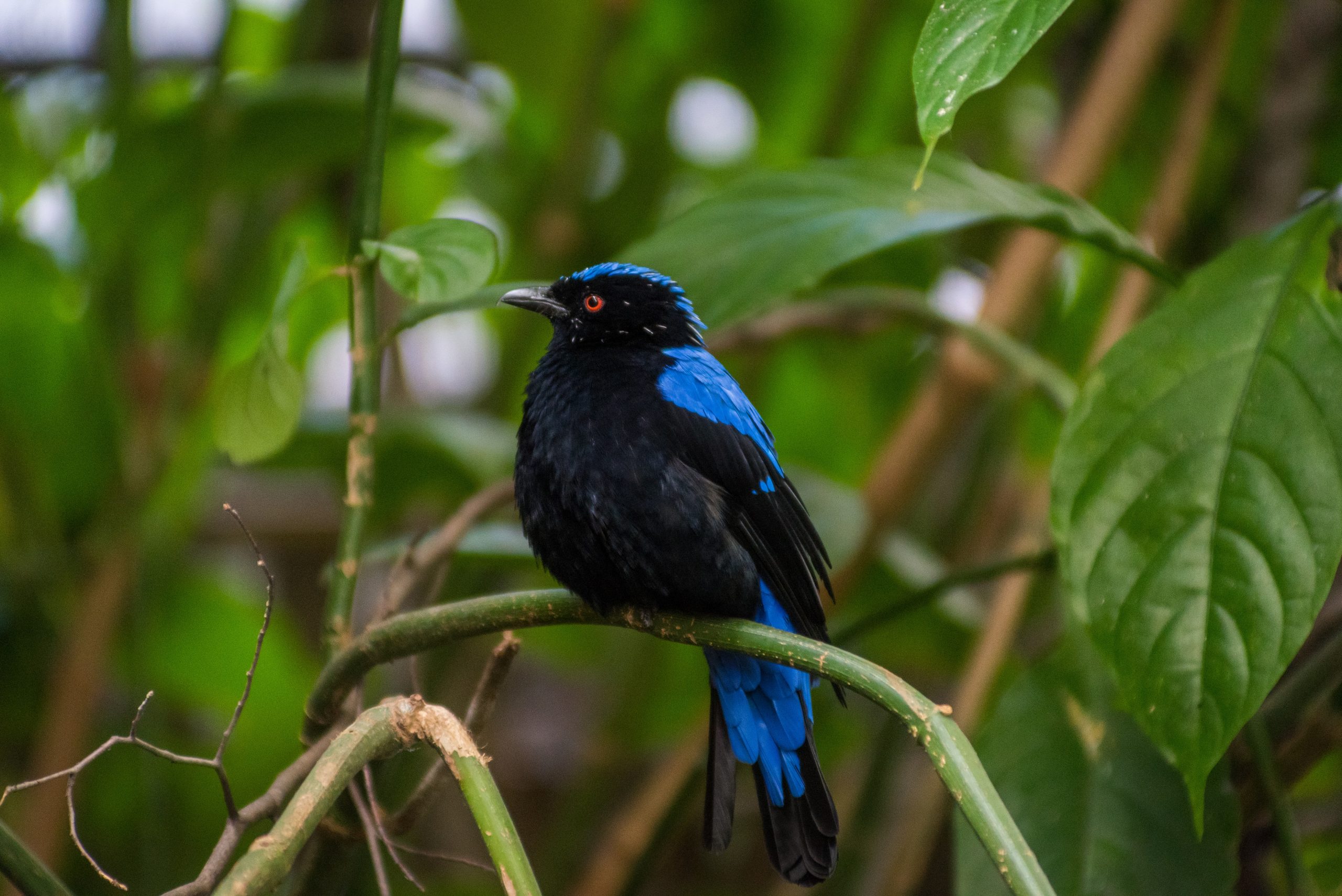
The Asian Fairy-bluebird lives up to its name: this bird’s plumage is a deep, brilliant blue. Males have glossy black feathers on the wings, chest, and tail, and the eyes of both sexes are bright red. Found in tropical forests throughout Southeast Asia, the Asian Fairy-bluebird mainly eats fruit, which it takes while perched or…
Read More Previous Posts