
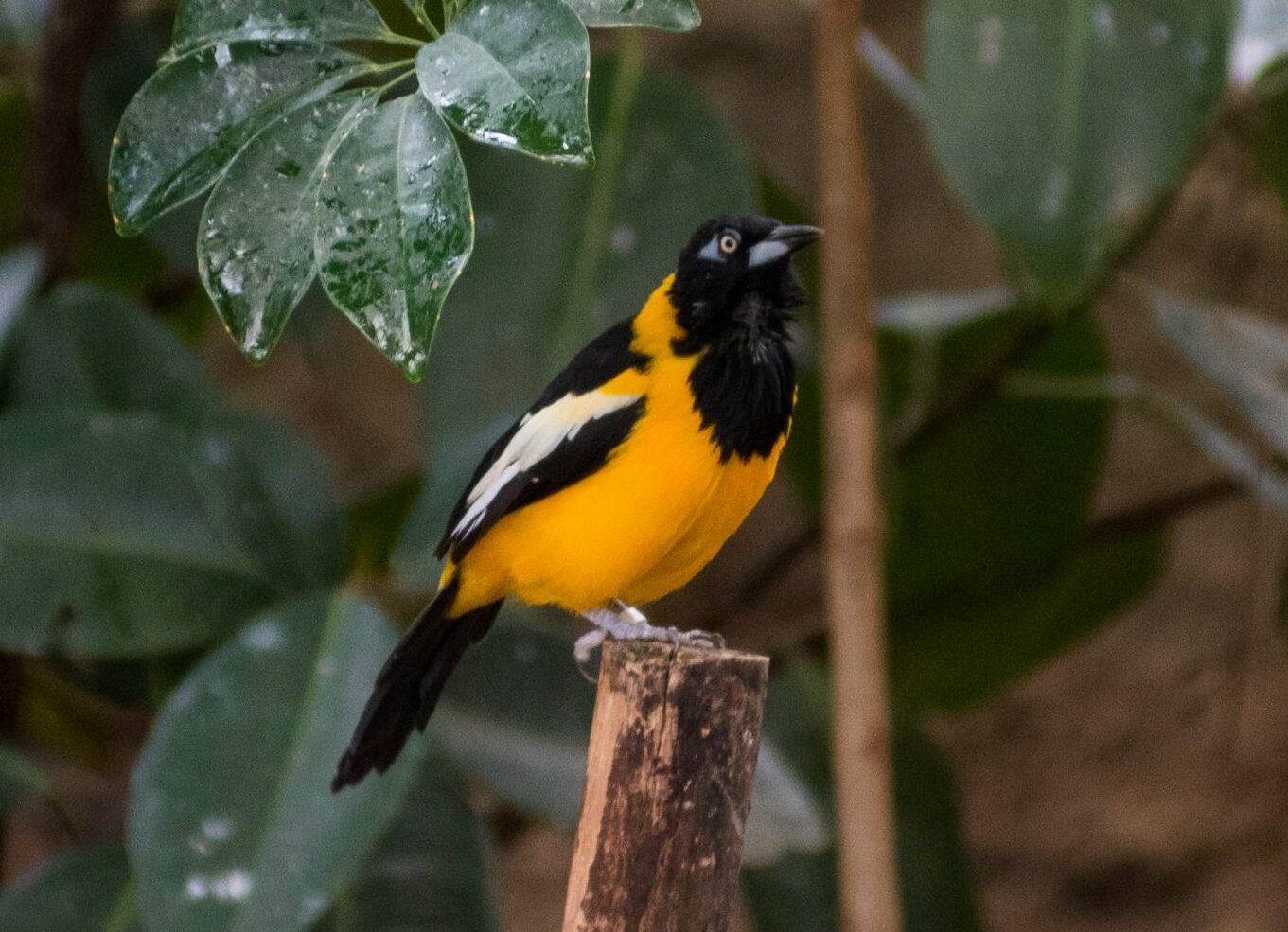
The Venezuelan Troupial is the national bird of Venezuala. It is found in northern South America and several Caribbean islands. It occurs in dry woodland of acacia and tree-like cacti, but also in pastures and savanna, dry or seasonal woodlands, and sometimes old fruit plantations. The Venezuelan Troupial is omnivorous, feeding on nectar, fruits, seeds,…
Read More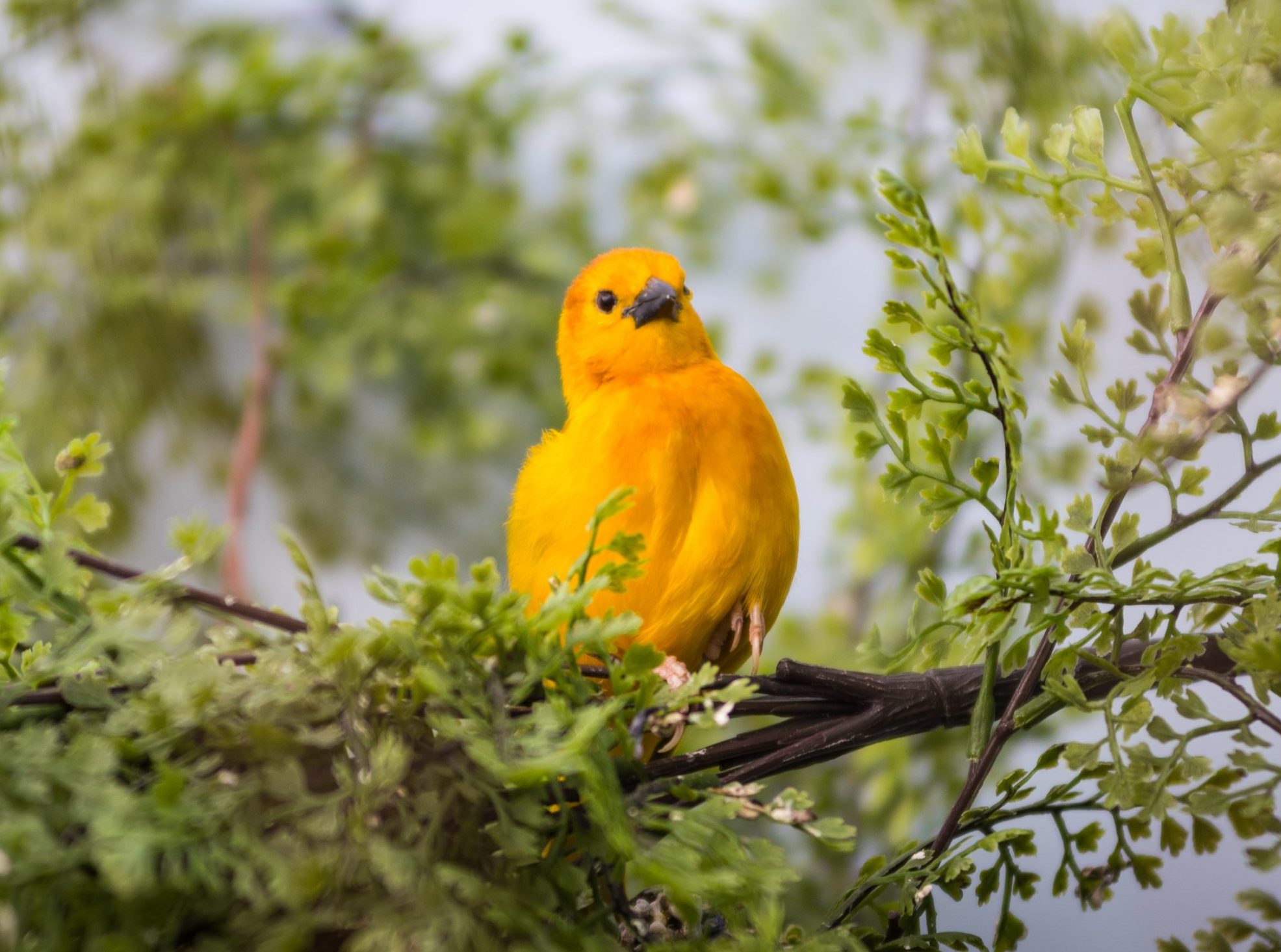
The Taveta Golden Weaver occurs in East African in Kenya and Tanzania. They are found in swampy lowland areas during the breeding season. Outside of the breeding season, they are found in adjacent dry bush country. They build impressive spherical nests hanging over water. The intricately weaving strips of reed leaf blades that make up…
Read More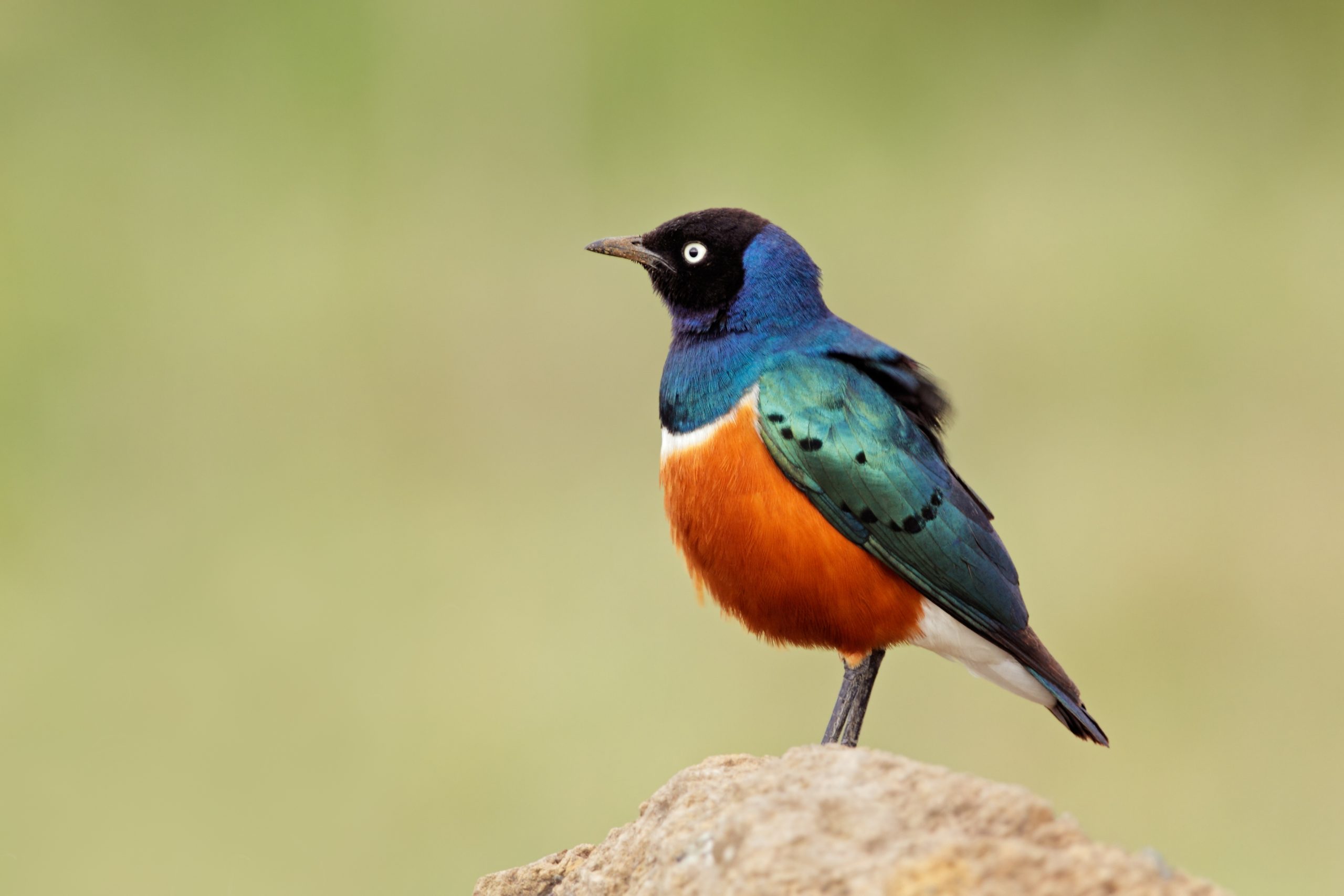
Superb Starlings are dark iridescent blue on the back of their head and chest, a black face that sets off their bright white eyes, metallic blue-green back and wings, and a dark orange belly bounded by bright white under the tail and in a band across the breast. The Superb Starling occurs in open woodland,…
Read More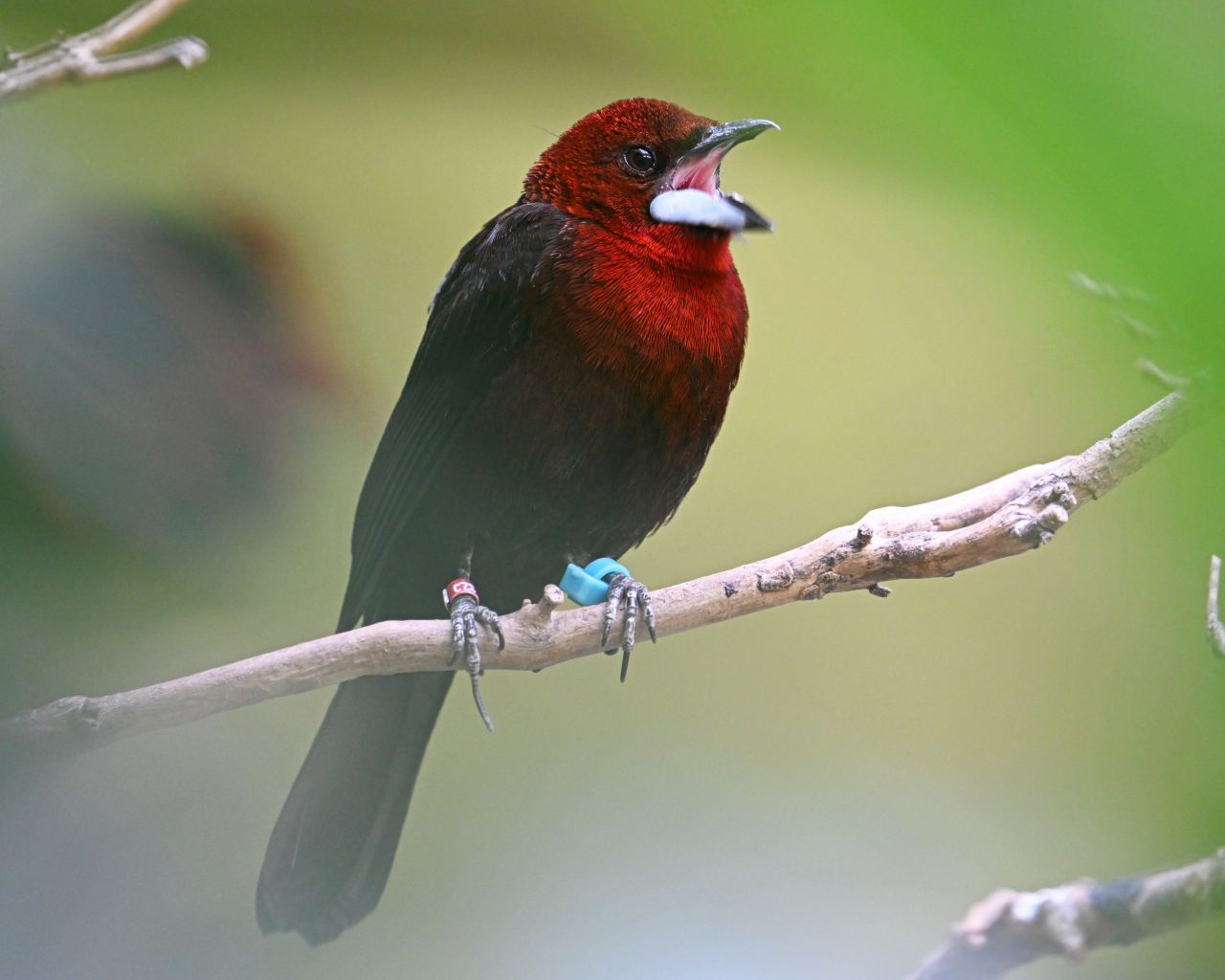
The Silver-beaked Tanager is a striking South American tanager of brushy forest borders, overgrown clearings, second growth, and shrubs around habitations and riverbanks. Often feeding in small groups, this tanager consumes about equal proportions of arthropods and fruit. Nesting birds are sometimes found close together, and it is occasionally a cooperative breeder with helpers attending…
Read More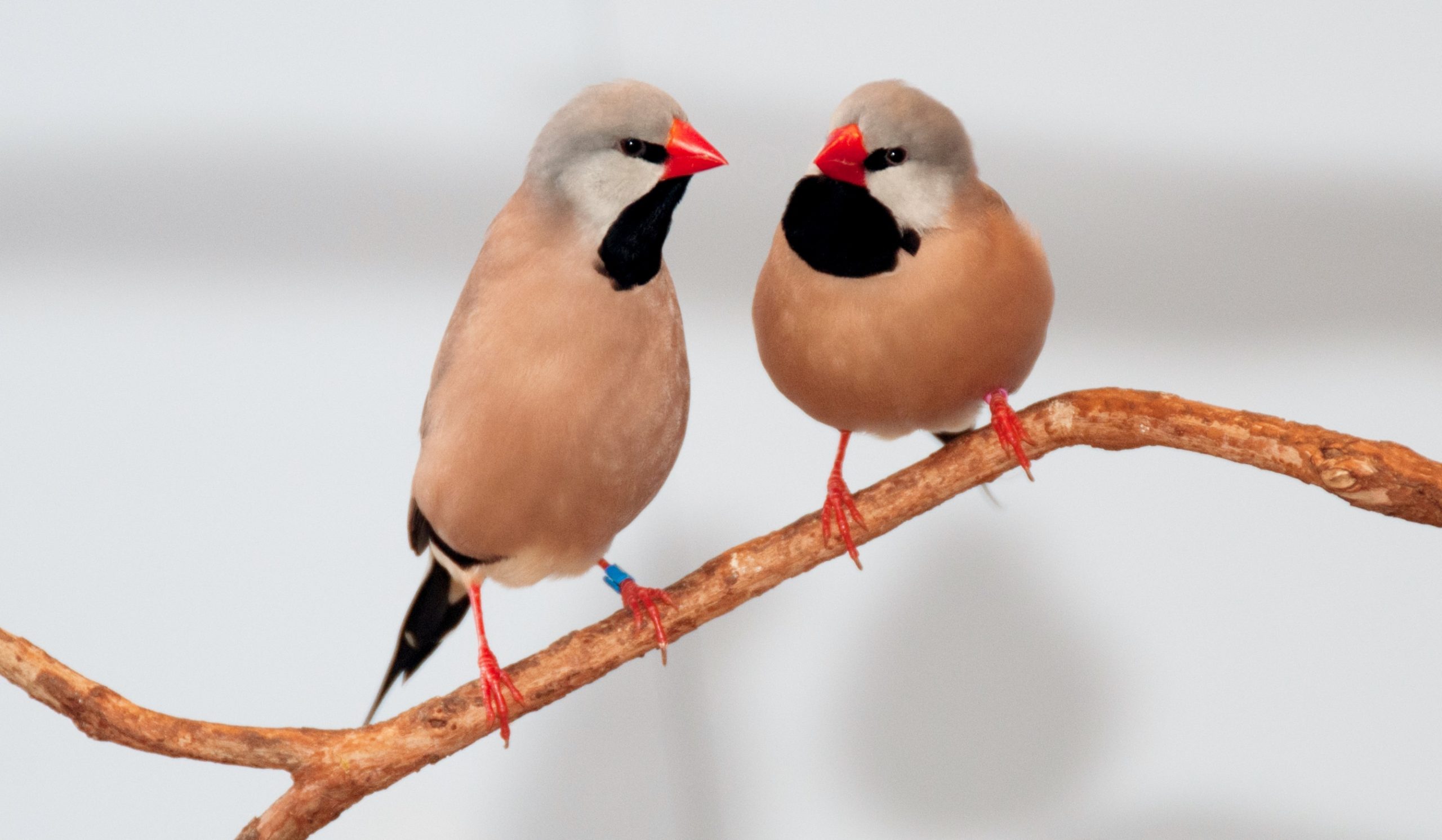
The Shaft-tailed Finch, or Long-tailed Finch, is a handsome bird from northern Australia, where it is found in open woodlands, dry grassy savannas, and grassy brushland especially near water courses. Like similar finches, it feeds on ripe and half-ripe grass seeds on the ground, but during the breeding season will consume more insects off the…
Read More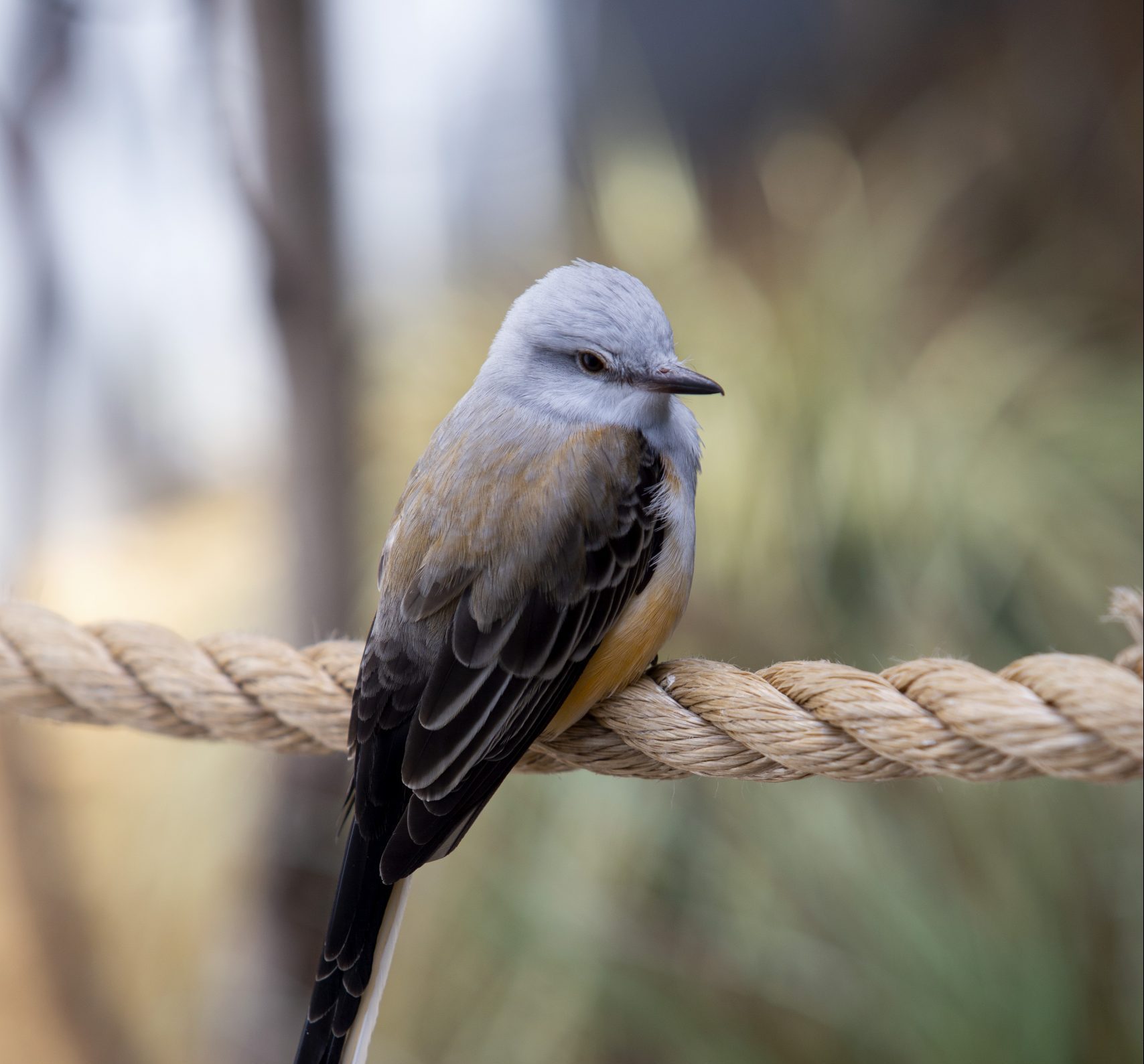
The Scissor-tailed Flycatcher, with its extremely long and distinctive tail, is a resident of savannas, fields, and pastures, as well as landscaped areas where there is a mix of trees, perches, and open areas. This flycatchers breeding range extends across south-central North America, while it winters in southern Mexico south through Panama. The Scissor-tailed Flycatcher…
Read More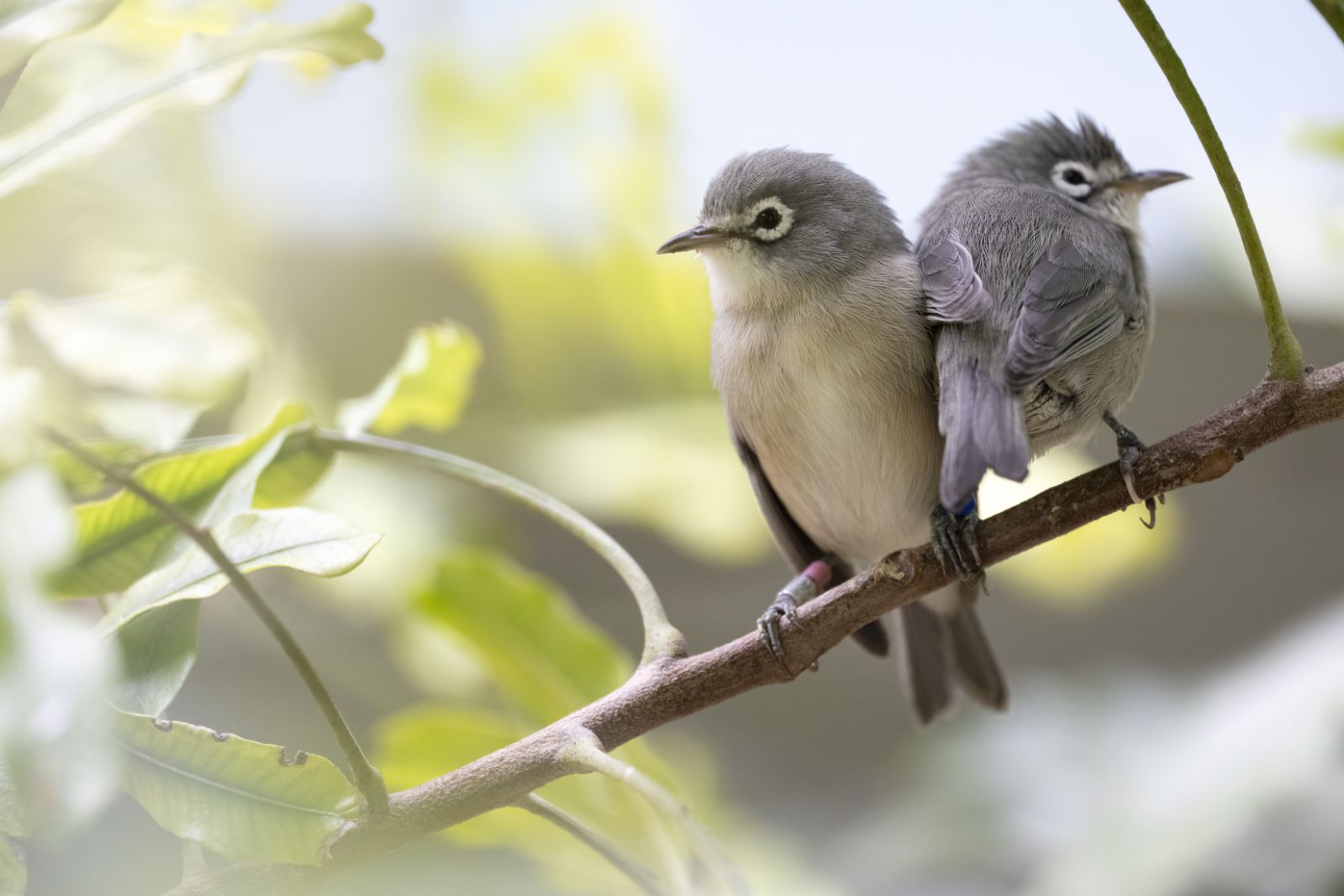
Like the Golden White-eye, the Saipan White-eye, also known as the Bridled White-eye, is a small, understory specialist. Restricted to the island of Saipan in the Northern Mariana Islands, this species occurs in a wide variety of wooded and semi-wooded habitats, including native limestone forest, scrubby secondary growth of disturbed habitats, and even urban areas….
Read More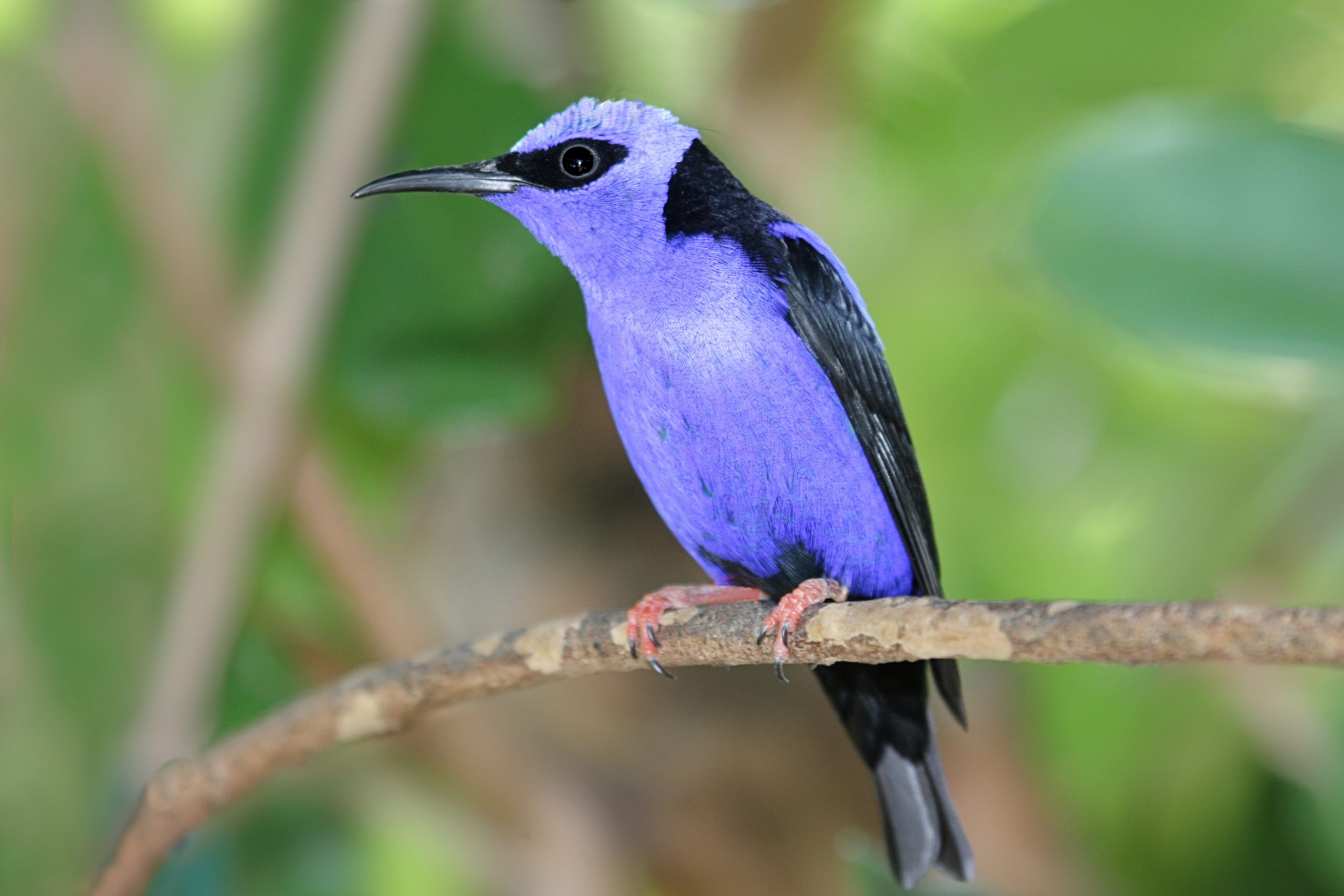
One look at the Red-legged Honeycreeper and it’s easy to see where it gets its name. Largest of the Cyanerpes honeycreepers at about 12 centimeters long, both male and female Red-legged Honeycreepers sport bright, candy-red legs and a long, sharp bill that’s almost as recognizable as their legs. Males in breeding plumage are a brilliant…
Read More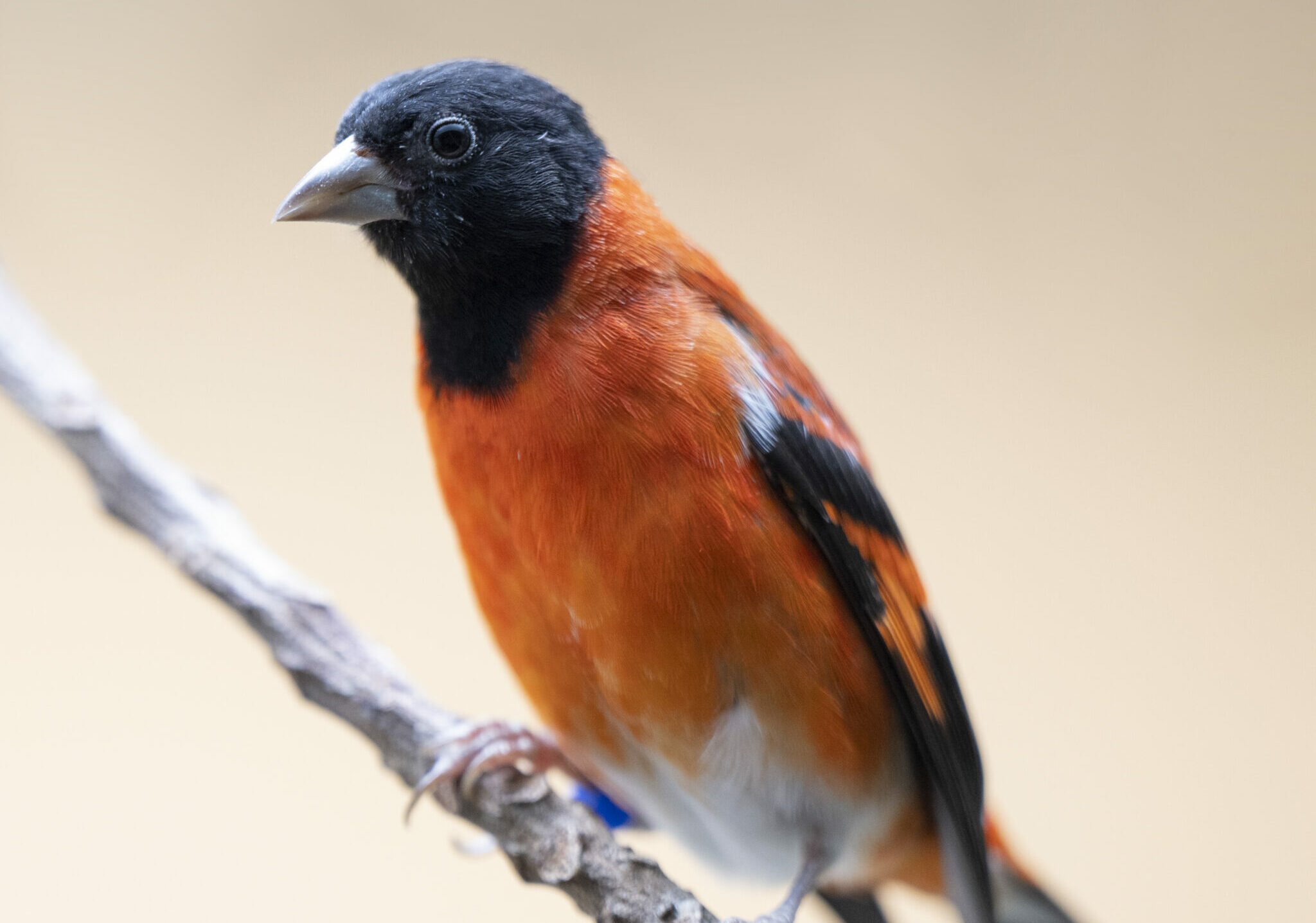
The Red Siskin is an Endangered species owing to its popularity as a cage bird. The Red Siskin is a vibrantly colored finch that was once plentiful in Venezuela and so recognizable that their image is printed on Venezuelan banknotes, written into poetry, and appears in works of art. Native to the northern regions of…
Read More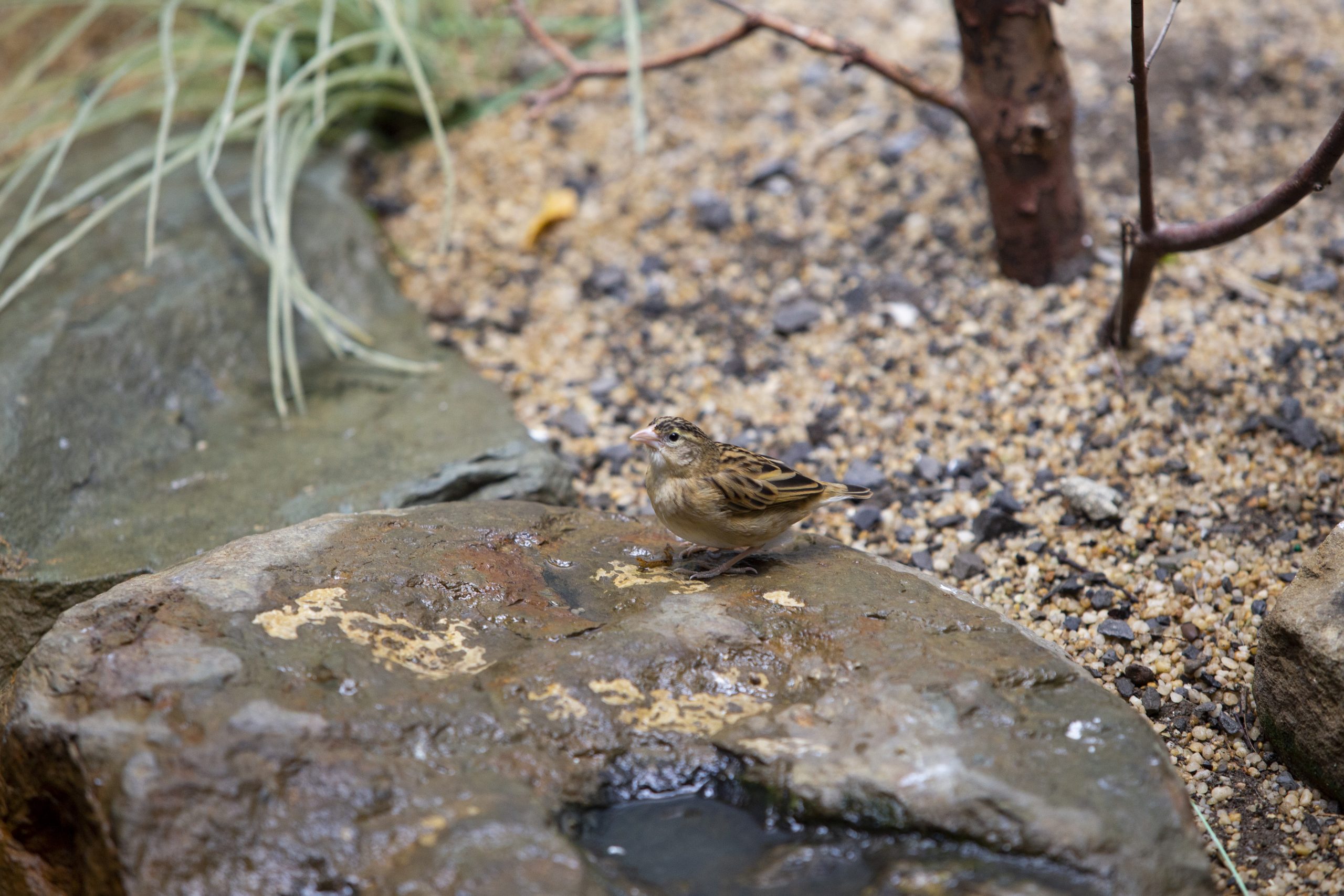
The Northern Red Bishop, sometimes called the Orange Bishop, is a small songbird found in the grasslands and wetlands of Africa. Some populations have become established in other areas, as well. This species forages in small flocks, primarily eating seeds. Males are a stunning orange. Females are less colorful but have beautiful streaking. Their song…
Read More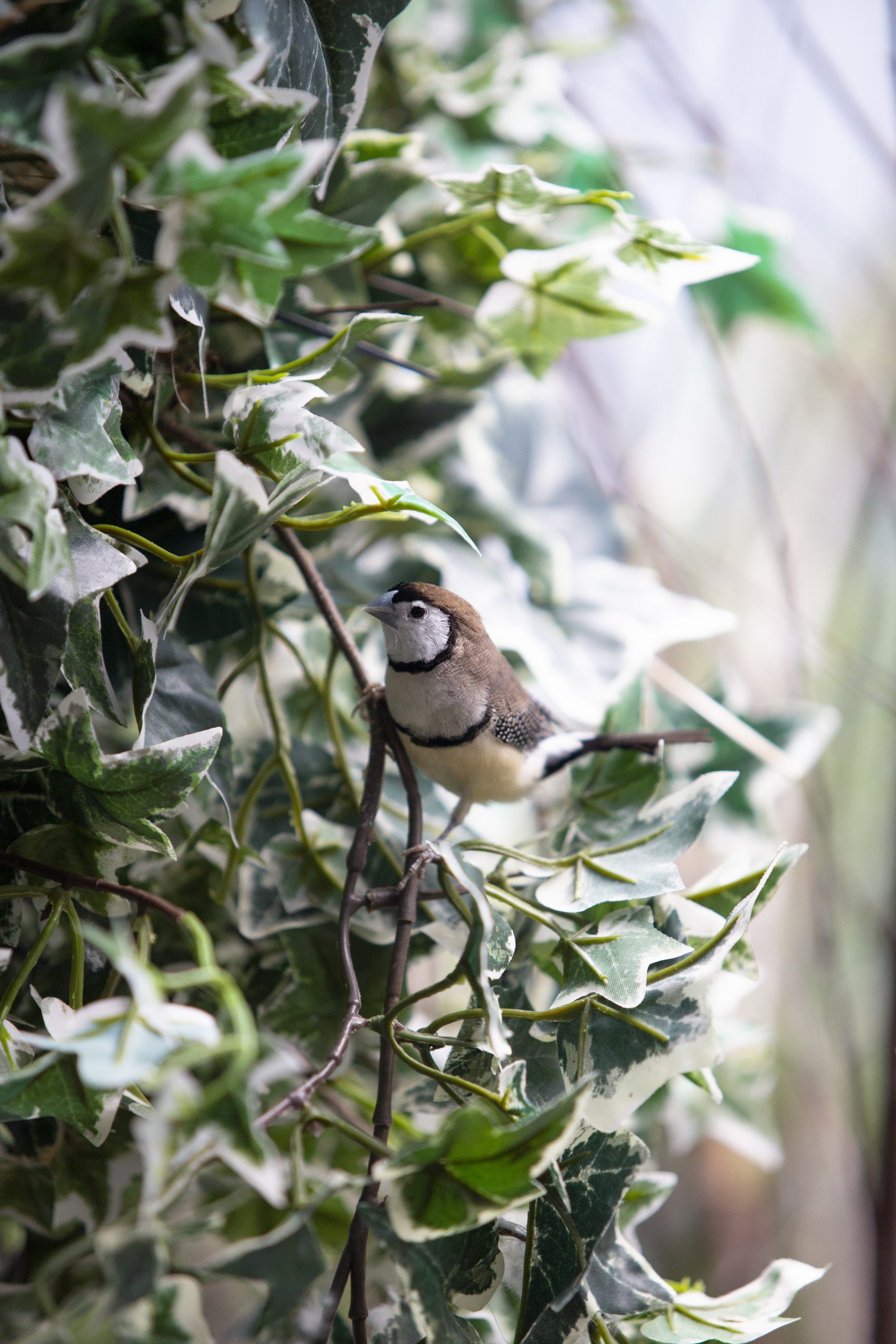
The Owl Finch, or Double-barred Finch, is a handsome bird from northern and eastern Australia, where it is found in open grassy woodlands, scrublands, forest edge, and grassy vegetation along larger watercourses, as well as more anthropogenic habitats such as cane fields, roadsides, and parks and gardens. Like similar finches, the Owl Finch feeds of…
Read More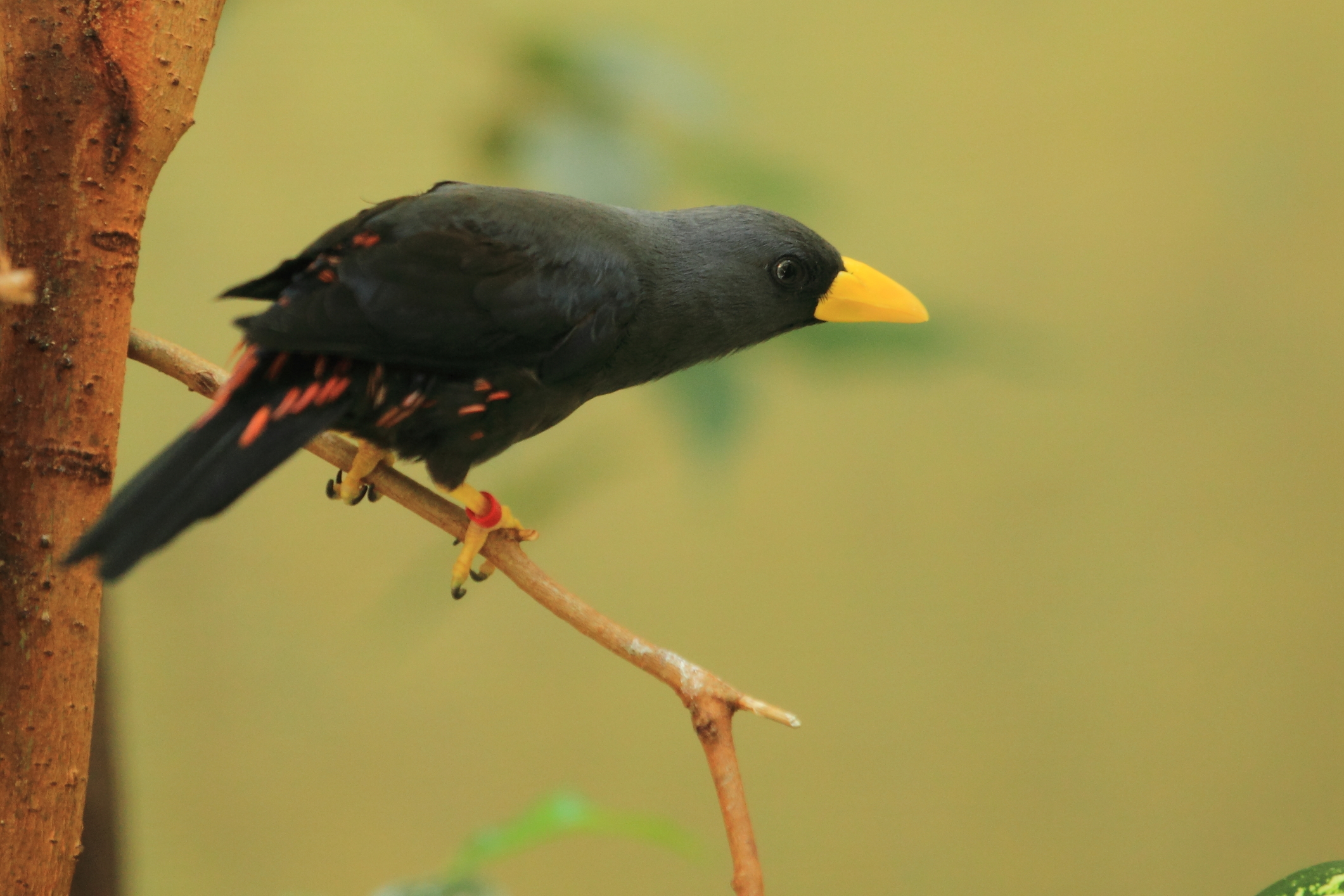
The Grosbeak Starling, also known as the Finch-billed Myna, is endemic to the island of Sulawesi, Indonesia where it inhabits forest edge and open woodlands. It is also very common in modified habitats such as plantations. The Grosbeak Starling often forages in large groups with other Grosbeak Starlings high in the canopy where it consumes…
Read More Previous Posts