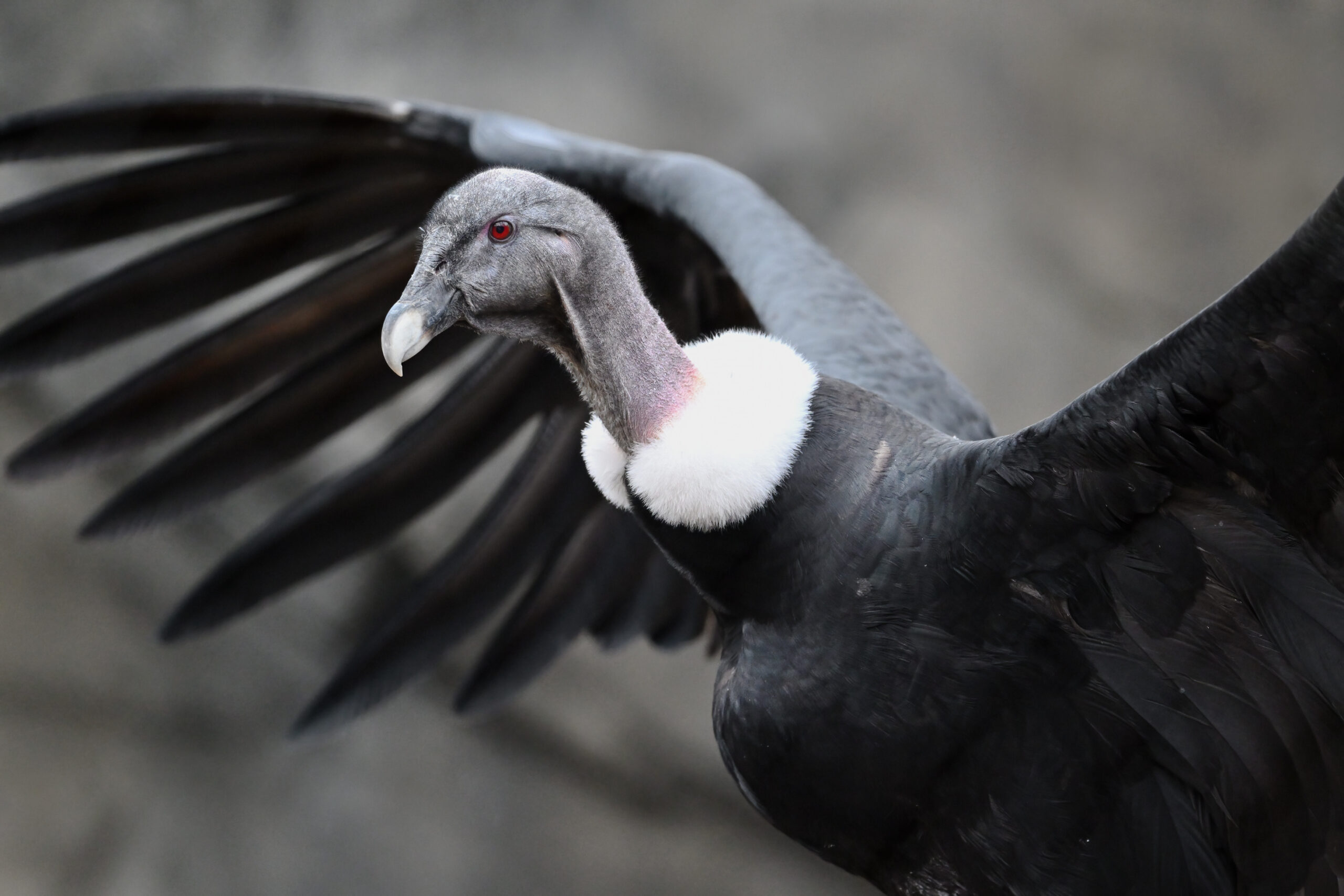
Andean Condors are among the largest flying birds, with a body weight of up to 30 pounds and a wingspan of over 10 feet. They are mostly black with large white patches on their wings and the distinctive bald head for which vultures are known. Condors have no feathers on their heads which facilitates cleaning…
Read More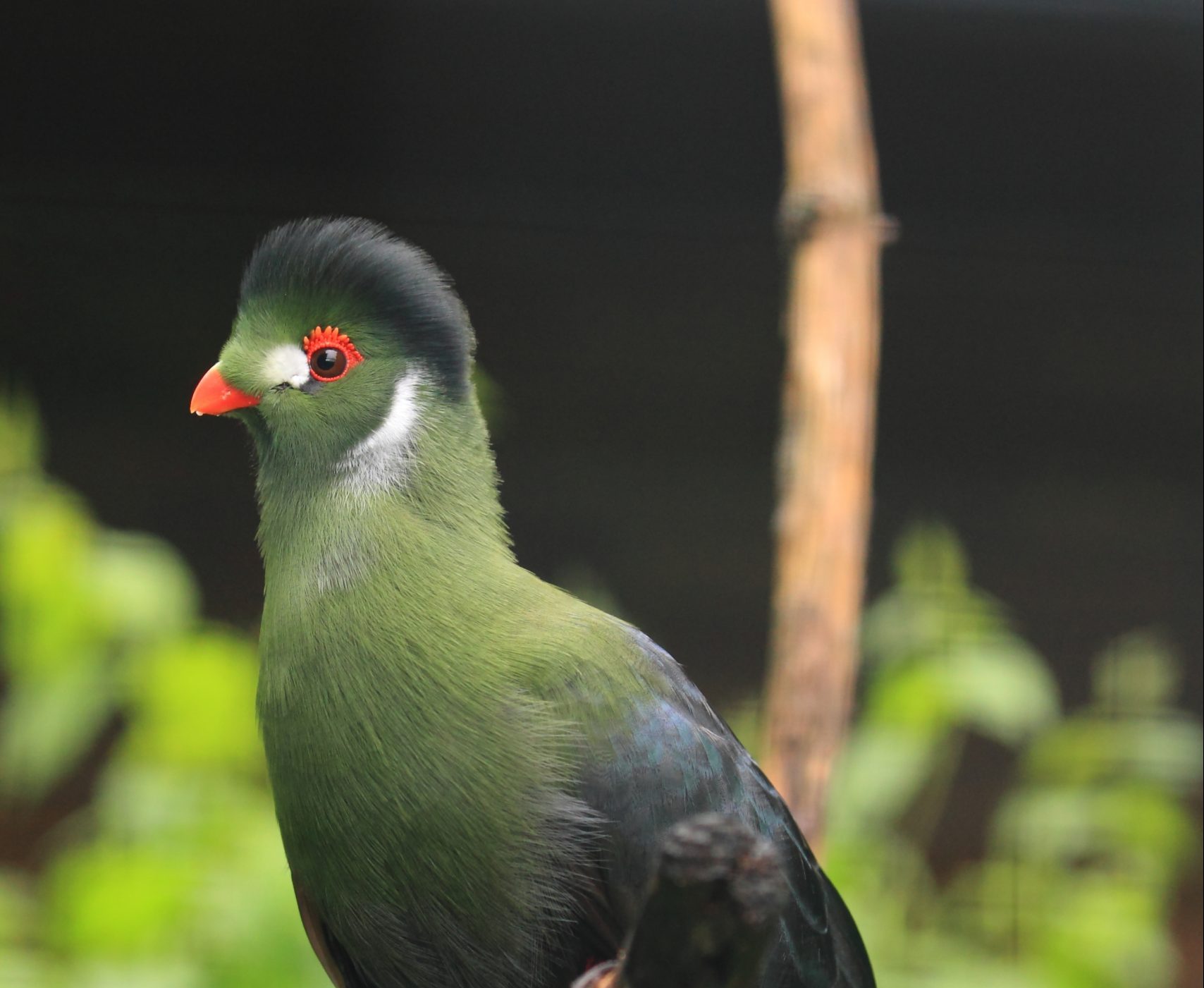
A beautiful multicolored bird with flashy white cheeks, the White-cheeked Turaco is native to Sudan, South Sudan, Ethiopia and Eritrea, where they inhabit higher elevation Podocarpus and juniper forests, as well as tall gallery trees and thick bush along watercourses at lower elevations. Here the turaco favors the fruits and berries of Podocarpus trees and…
Read More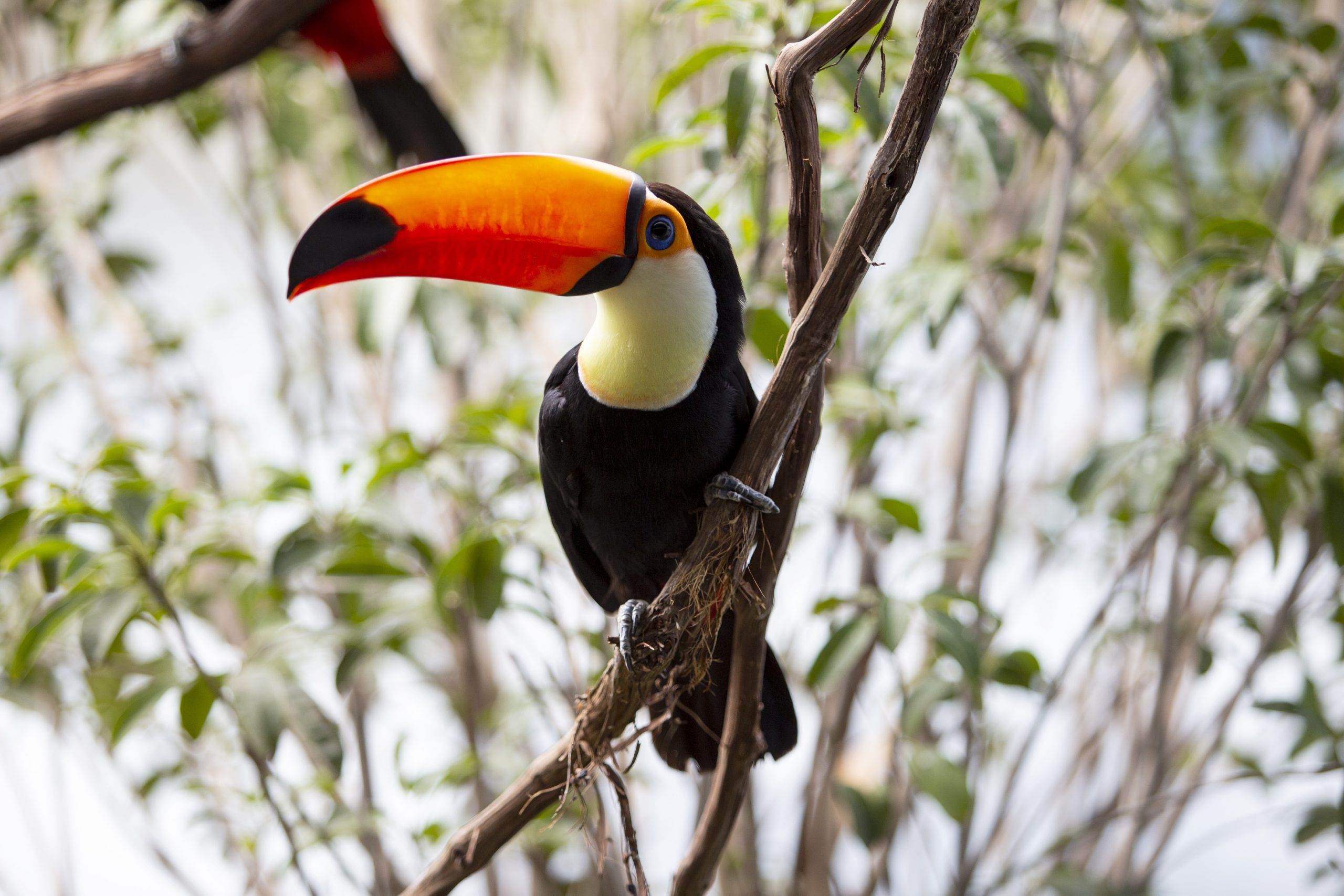
One of a number of species of toucans, popular for their enormous, colorful beaks, the Toco Toucan is the only one which is adapted to drier, more open habitats. These include a mosaic of natural forested, agricultural, and successional habitats, including gallery forests, palm groves, open woodlands, secondary forest, savanna and thorn-forest, plantations, and orchards….
Read More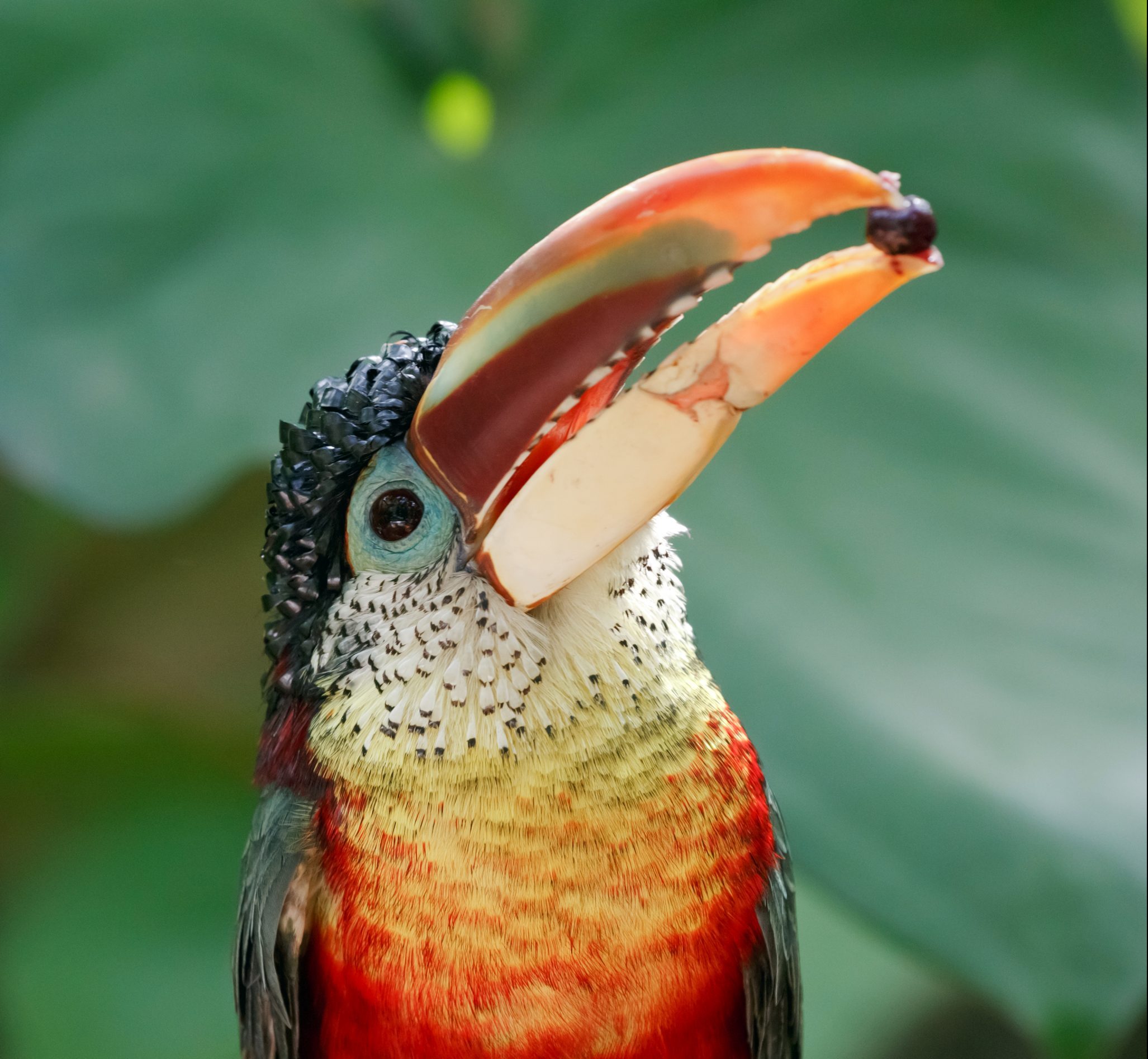
The Curl-crested Aracari is an eye-catching small toucan found in lowland forests in parts of Peru, Brazil, and Bolivia. It is very colorful, with bright yellow, red, and green feathers and a multi-colored bill. Its most distinctive feature is the glossy black curlicue feathers atop its head. They eat mostly fruits but occasionally will eat…
Read More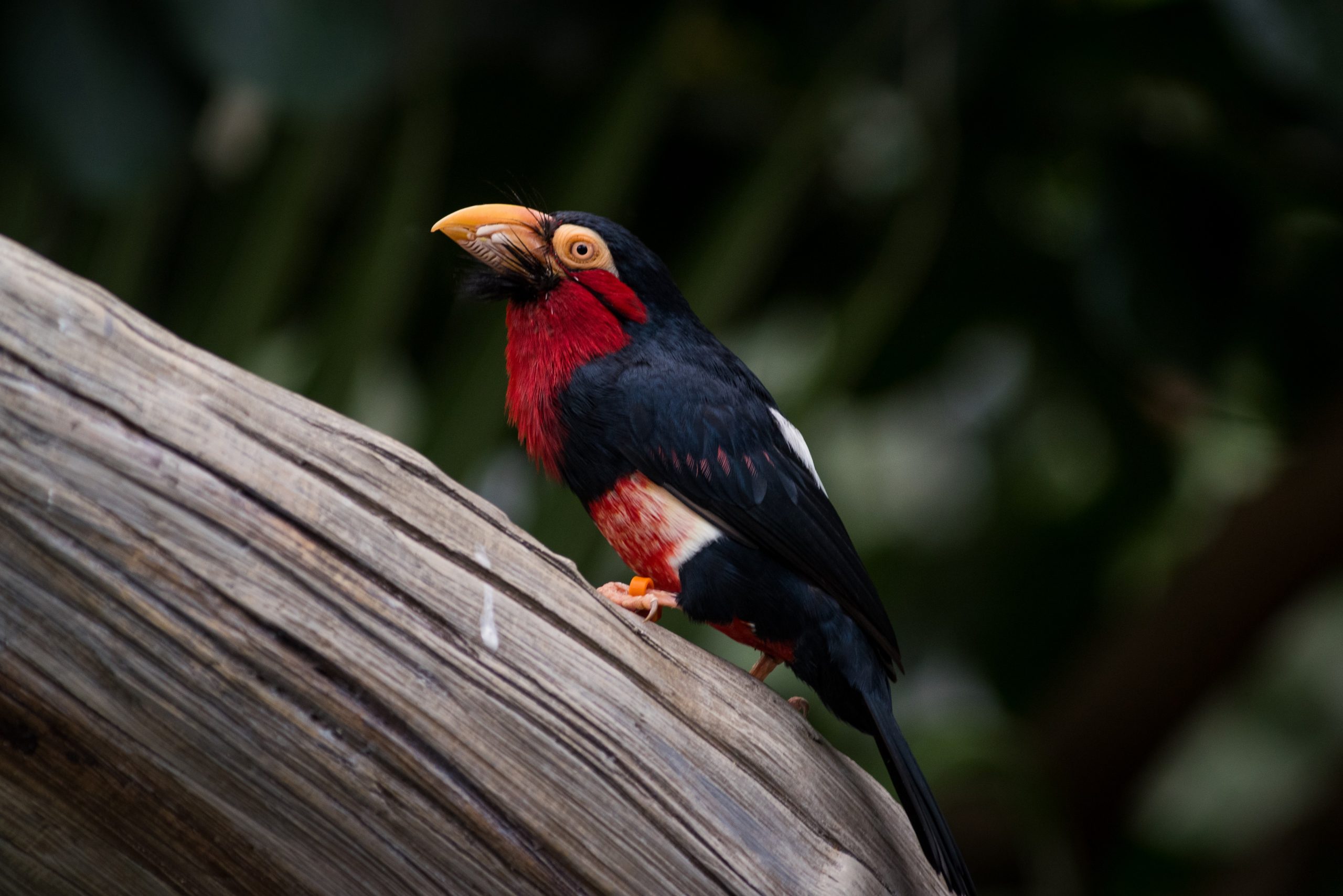
The Bearded Barbet derives its name from the distinctive bristles that sit at the base of its bill, which both males and females possess. This handsome bird, with bright red underbelly and glossy black feathers on its back, is native to the tropical habitats of western Africa. Bearded Barbets are often found in groups, moving…
Read More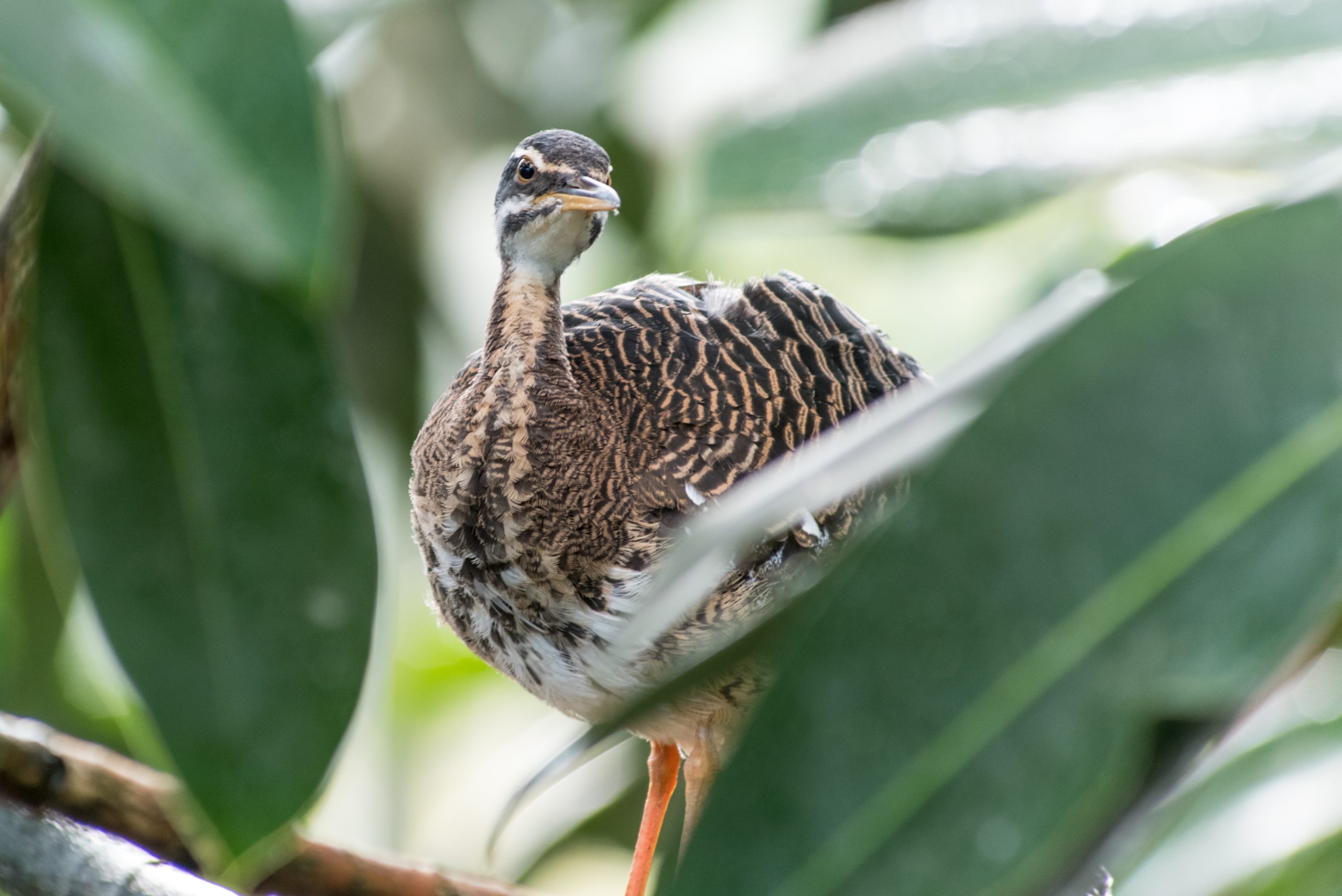
The Sunbittern is an unusual bird of forested streams of Central and South America. This species is perhaps best known for a characteristic display involving large “eyespots” in the plumage of their wings. Sunbitterns have a characteristic “Frontal Display” that they use when they are threatened. The spread and tilt their wings forward, exposing two…
Read More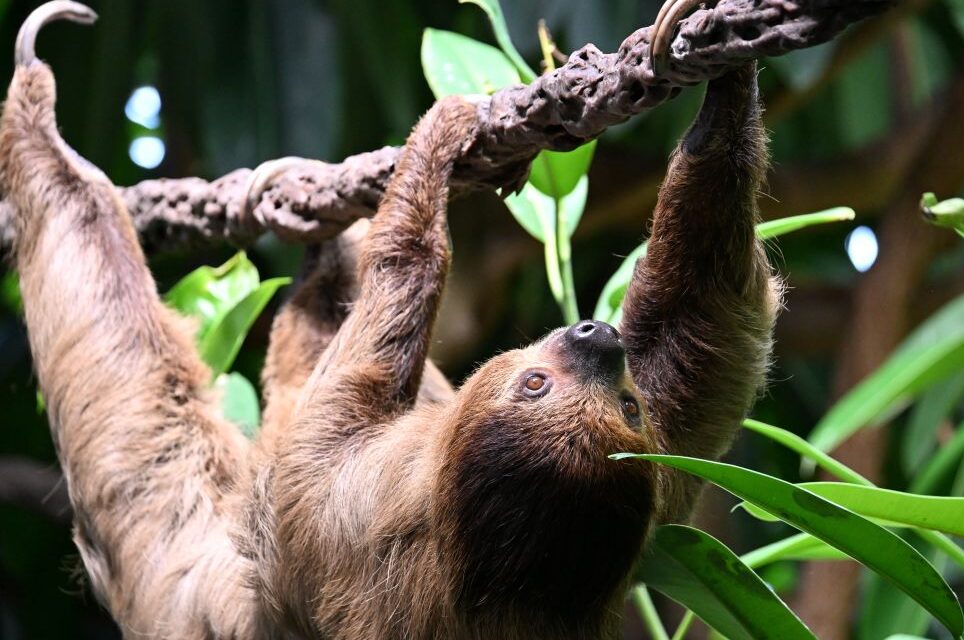
Linnaeus’s Two-toed Sloths are expert climbers. When you visit the Tropical Rainforest, you may catch Wookiee hanging upside down high in the canopy, or moving slowly along branches and vines. They have two claws on their hands and three claws on their feet, all measuring about 4 inches in length, that help them to hang….
Read More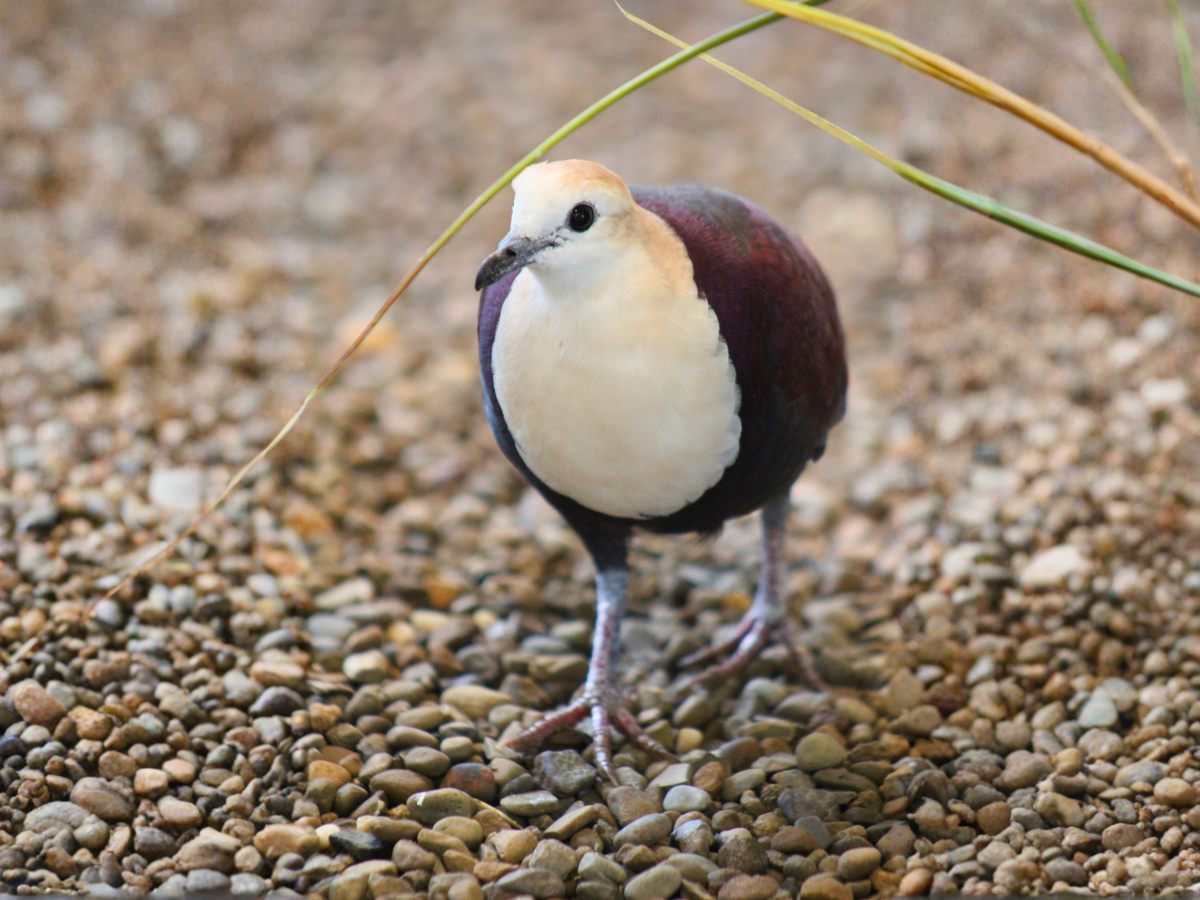
The White-throated Ground Dove is a little known species from the Northern Mariana Islands of the Pacific Ocean. It occurs in all types of forested habitats on several islands in the Mariana Islands chain, and is most abundant on the island of Rota. This species is frugivorous, meaning it primarily eats fruits. Unlike other birds…
Read More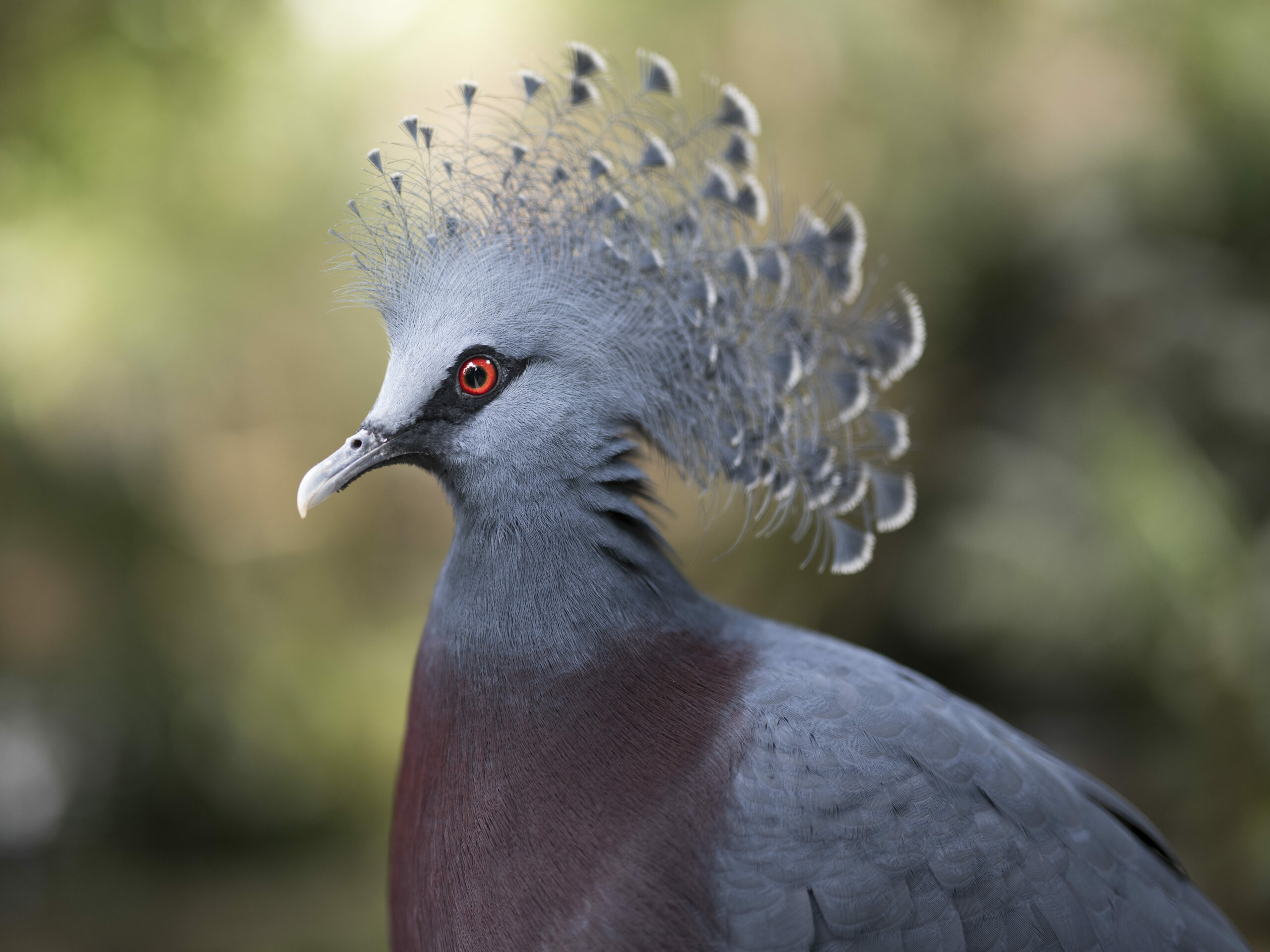
Named for the British Monarch Queen Victoria, the Victoria Crowned Pigeon is without doubt a royal bird. Its dusty blue-grey feathers may remind one of the pigeons found on any city street, but the Crowned Pigeon’s elegant blue lace crest, scarlet eyes, and rakish black mask are unlike anything you’ll find pecking around in the…
Read More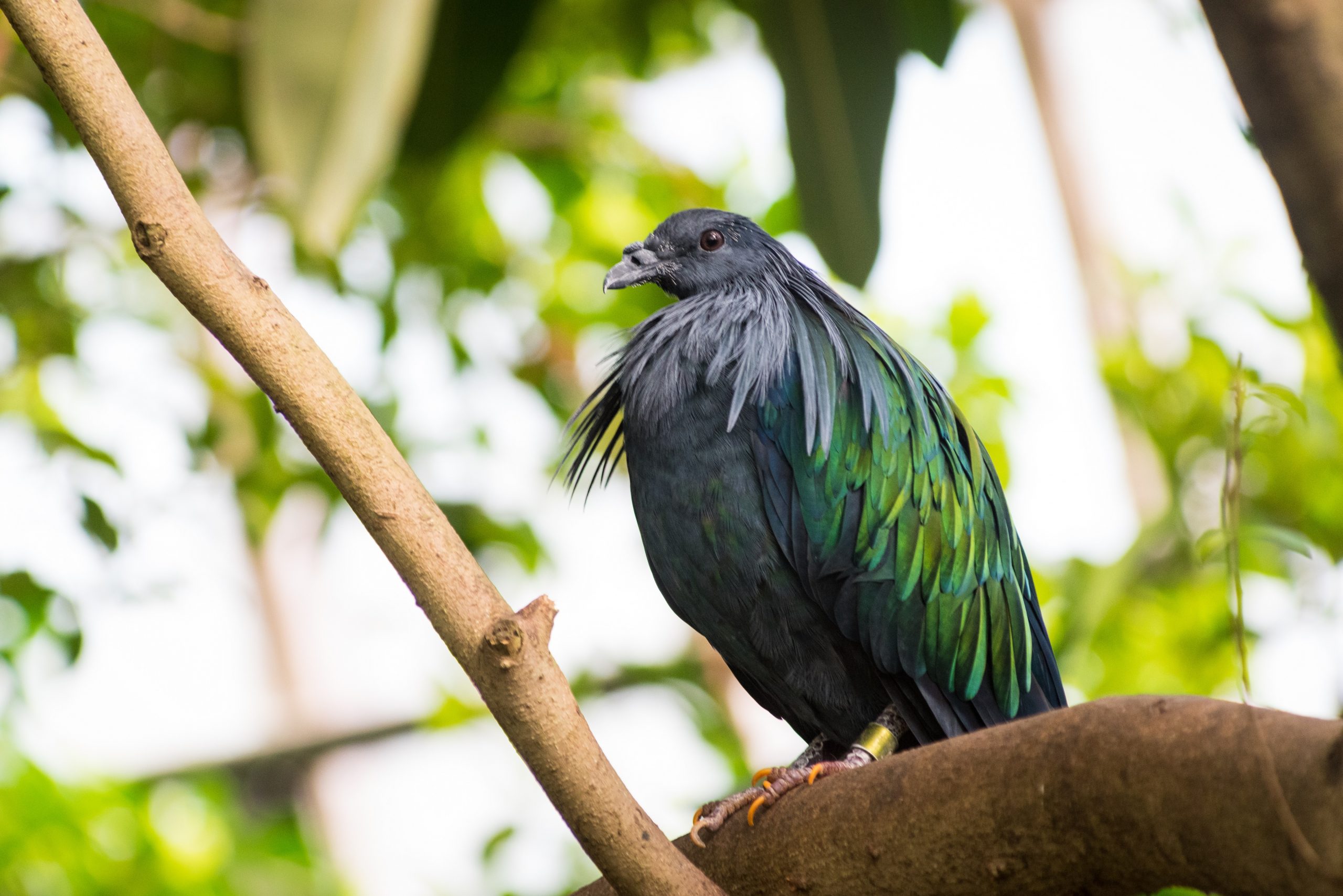
The closest living relative to the now extinct Dodo, the Nicobar Pigeon occurs only on small wooded, often uninhabited islands of the Indo-Malayan region, where it favors lowland habitats such as mangroves, scrub, and lowland and foothill forests. It may also occur in some forests which have been selectively logged. This species nests colonially, with…
Read More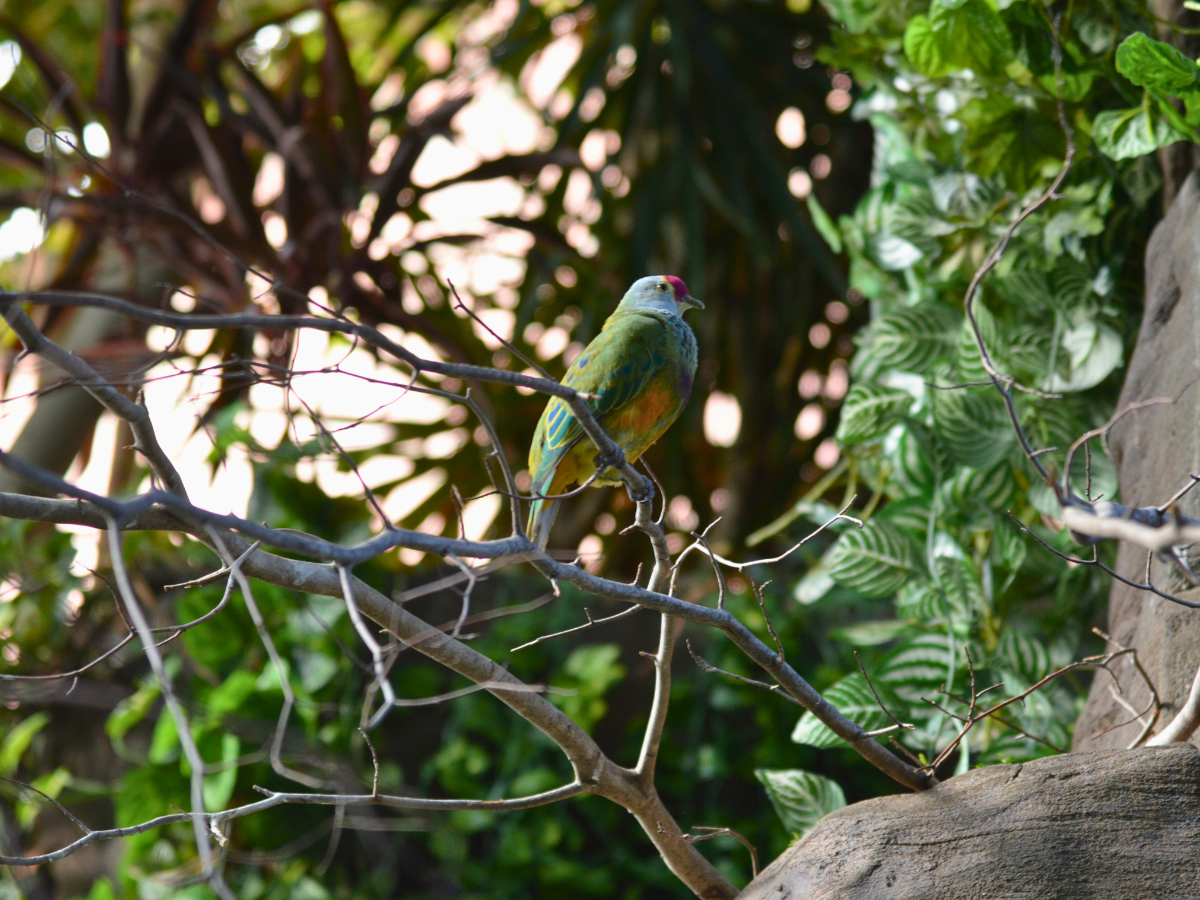
The Mariana Fruit-Dove is a beautiful bird from the Pacific islands. This species is found in various types of forested habitat, but prefers mature native forest where it typically feeds on fruits in the canopy, but may descend to feed in bushes, or even on the ground. They are a secretive species, rarely spotted, and…
Read More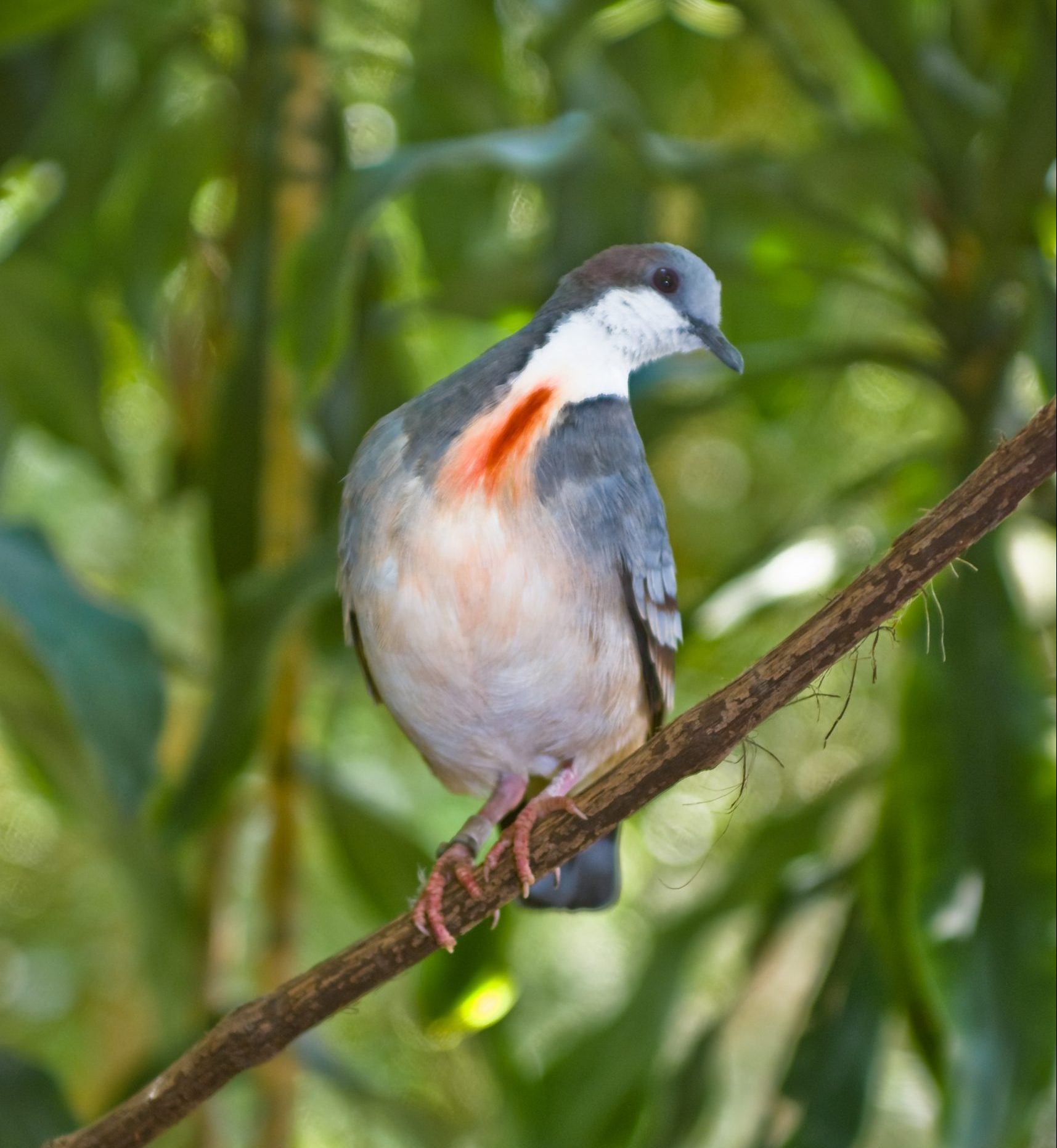
The beautiful Luzon Bleeding-heart gets its name for the scarlet markings on its chest. Found throughout primary and secondary forests in the Philippines, the Luzon Bleeding-heart feeds on seeds, berries, and insects along the forest floor. Their call is a mournful coo. The species is generally considered rare or scarce, and is considered to be…
Read More Previous Posts