Building Vet Clinics and Careers: Advancing veterinary medicine cooperatively
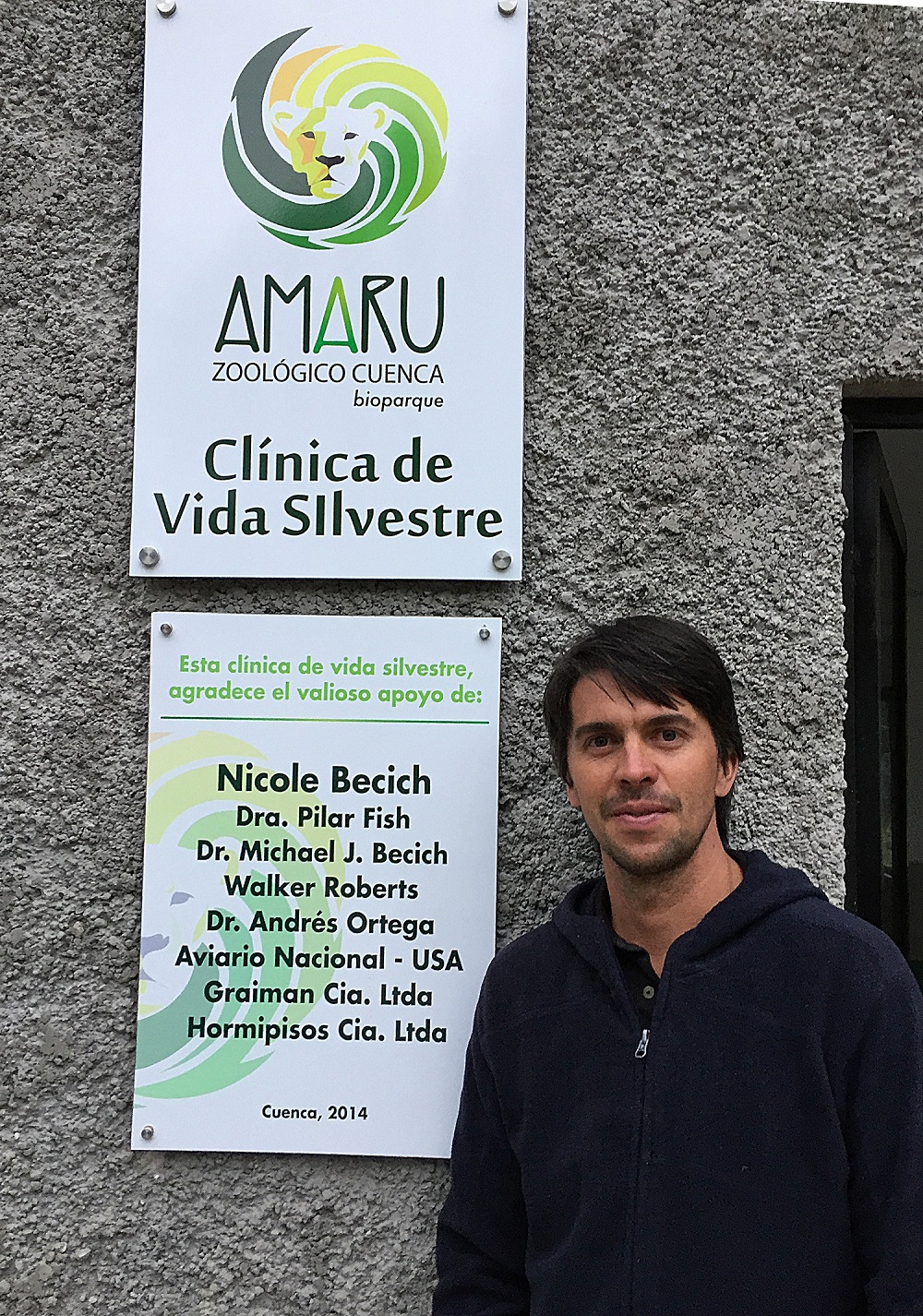
At Bioparque Amaru, the National Aviary has supported the construction of a new veterinary hospital that serves the needs of this critically important rehabilitation facility and zoo. Bioparque Amaru and the National Aviary have also developed a professional exchange and intern training program that has benefited both institutions and many student veterinarians as well.
With National Aviary support, Bioparque Amaru recently completed construction and equipping of a new veterinary hospital at the zoo in Cuenca, Ecuador. Together we developed floor plans and material lists, raised the needed funds for construction, and secured the donation of thousands of dollars’ worth of medical equipment and supplies to complete the hospital.
In addition to the material support, numerous National Aviary staff, former interns, and Research Associates have each devoted several months to working in Ecuador as interns at Bioparque Amaru. There they learned how to perform physical examinations, collect blood samples, and administer treatments on wild birds such as macaws, toucans, eagles, owls, and even an Andean Condor. Exposure to real-life medical situations is an essential step in learning the necessary skills to become an avian veterinarian. The results of these sorts of specialized educational programs are far-reaching as we train and mentor the next generation of avian vets to care for birds in zoos and wildlife centers throughout the U.S. and internationally.
National Aviary interns at Bioparque Amaru have developed a series of protocols and other new programs at the zoo. Interns have developed protocols for Bioparque Amaru’s quarantine area to protect and improve animal health, and they have defined new practices for cleaning and feeding animals. Another started a “Meet-a-Patient” program at Amaru modeled after a similar program at the National Aviary. Visitors to the zoo can meet some of the animals that live “behind the scenes” because they require extra medical attention. Visitors can see firsthand how staff take care of animals harmed by the illegal wildlife trade and, at the same time, learn about Amaru’s conservation efforts.
Students who want to become avian veterinarians and veterinary technicians can have challenges finding opportunities to train in wildlife and zoo medicine, but the National Aviary offers a unique internship program that benefits students as well as the National Aviary and Bioparque Amaru.