A Future for Neotropical Migratory Birds
The ecology of Neotropical migratory birds has attracted considerable attention following the documentation of continent-wide declines in many migratory species. These declines may be the result of events (or a combination of events!) during the breeding season, the overwintering period, or the two long migrations between breeding and wintering grounds.
Whereas most research attention was initially directed toward breeding-ground events in North America, several studies of migrants during the non-breeding season focused on habitat-specific, demographic, and site fidelity data to assess habitat preferences of overwintering migrants on their Central American and Caribbean wintering grounds. Other researchers pursued studies of birds during migration, and especially events at key migratory stopover sites.
To fully understand what factors determine population size for a species, we need to build detailed models of the full annual cycle of a focal migratory species. These models require habitat- and age-specific data from the breeding grounds, overwintering sites, and both spring and fall migrations. When data from a single species can be pooled together, we can identify where in the annual cycle managers can best impact a species so as to target population recovery and conservation efforts.
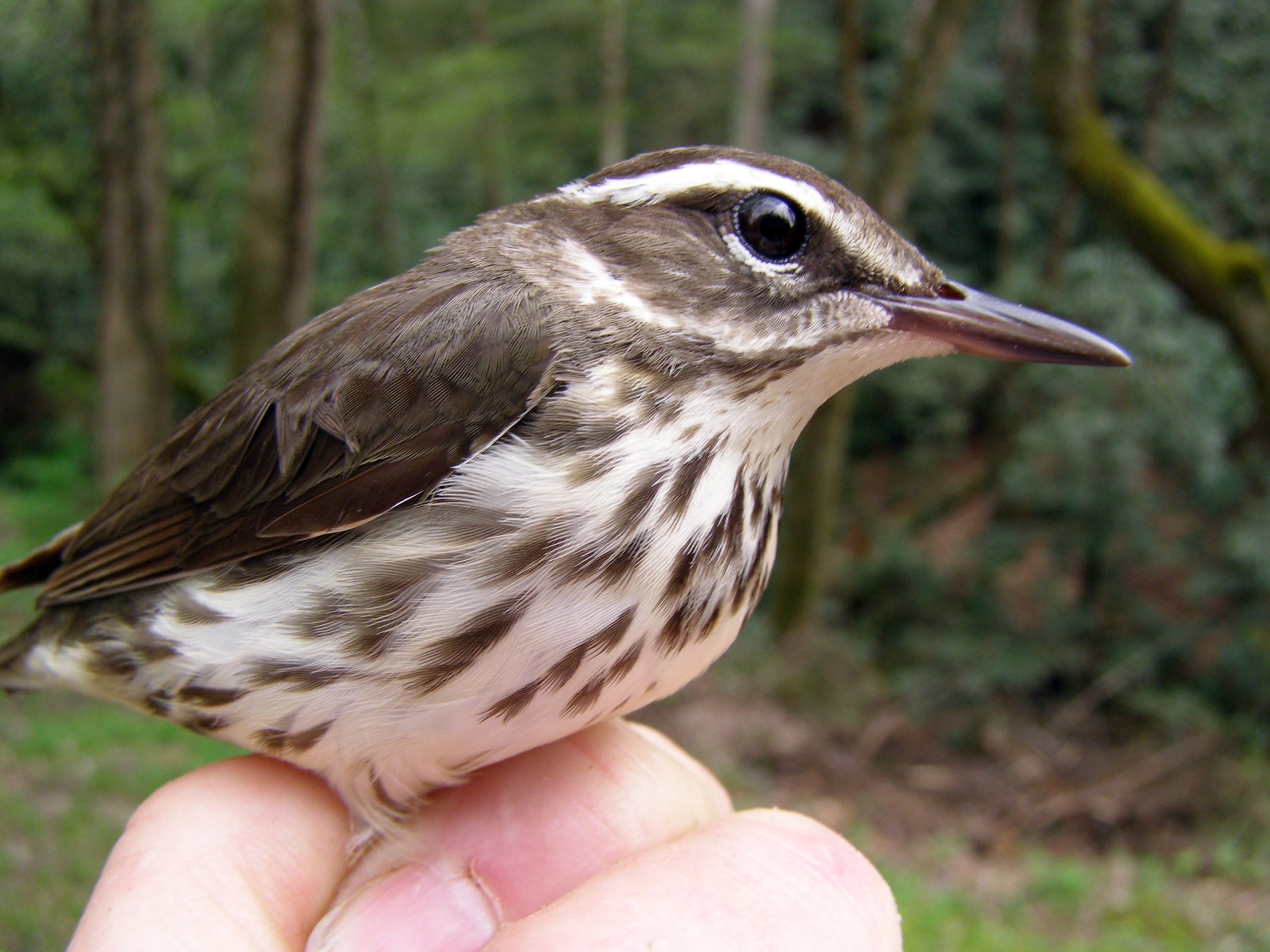
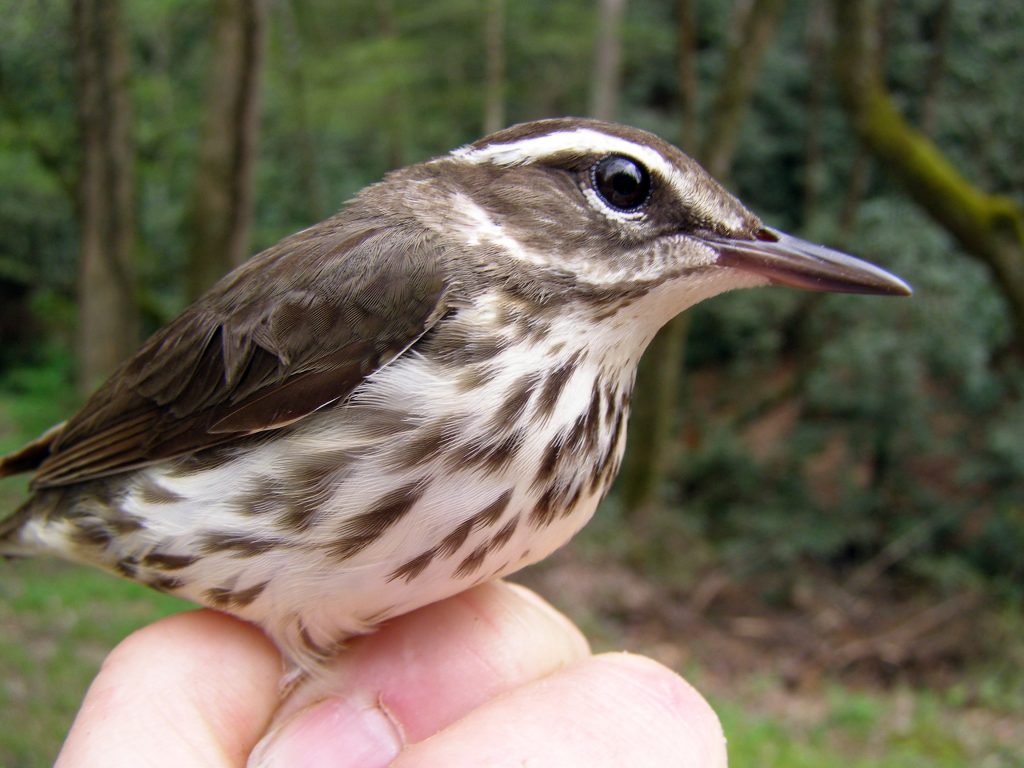
At the National Aviary, we have selected the Louisiana Waterthrush (Parkesia motacilla) as our focal species and completed more than 20 years of fieldwork on both the breeding and wintering grounds. The waterthrush – the only stream-dependent songbird in eastern North America – is also a forest-interior specialist and occupies linear territories along headwater streams where it depends primarily on aquatic macroinvertebrates for food. Waterthrushes have been suggested as an important indicator of the ecological integrity of these forested riparian ecosystems. The Louisiana Waterthrush is considered a species of conservation concern and is listed as a priority species for several Bird Conservation Regions because of its dependence on a specialized habitat threatened by a number of environmental stressors.
Because of their role as bioindicators, birds like the Louisiana Waterthrush are important ambassadors to educate the public about public health and human welfare. Our studies of the Louisiana Waterthrush in Pennsylvania and in the Dominican Republic have shown that this species depends on clean water in high-quality riparian systems. Clean water is also vitally important for human communities and human health. In response, the National Aviary developed a popular educational program about the importance of clean water not only for waterthrushes and other wildlife but for humans, too.