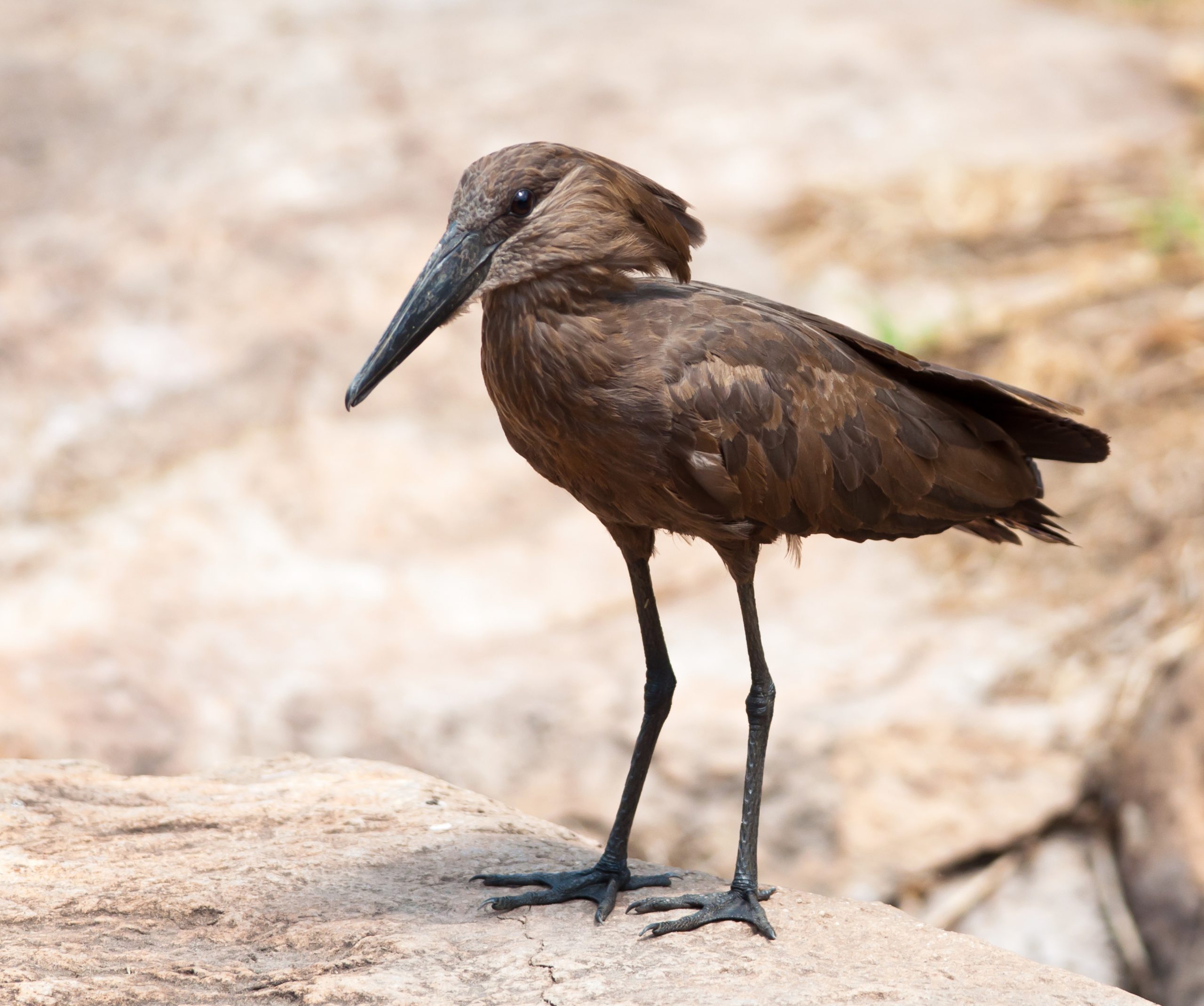
The Hamerkop is a mostly brown bird of the wetlands of Africa and Madagascar, and are known for the huge stick nests which they build – sometimes make several or more each year! Hamerkops are found in a variety of wetlands, including estuaries, and lake margins, but they also require nearby trees important for roosting…
Read More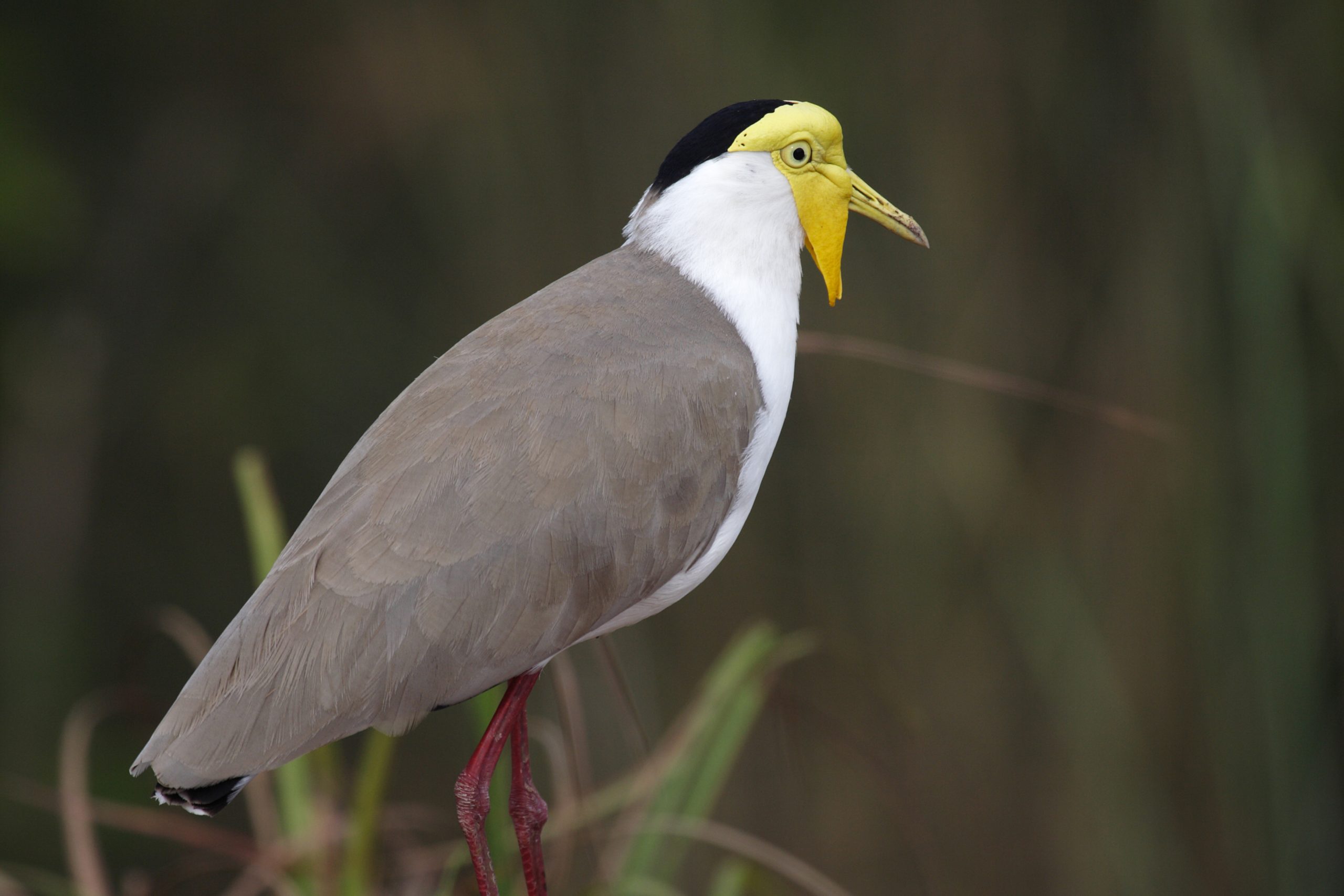
The Masked Lapwing is also known as the Spur-winged Plover because of a unique feature: each of its wings has a yellow spur at the “elbow” (carpal joint) used to keep predators away from nests and chicks. Masked Lapwings are common throughout Australia, Indonesia, New Guinea, and New Zealand, where they inhabit marshes, mudflats, beaches,…
Read More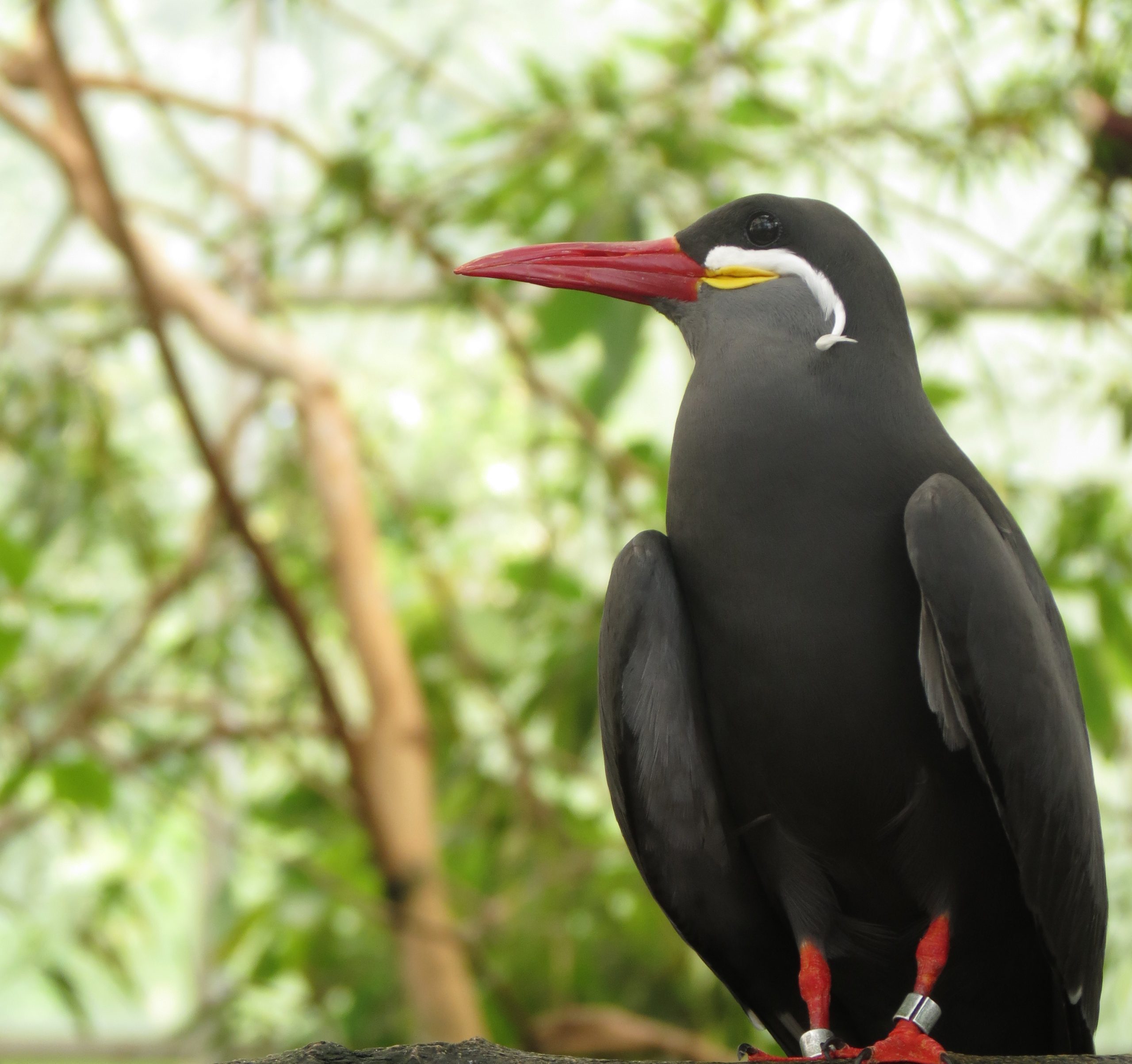
This dark tern with its reddish-orange beak and feat, and striking white moustache, is a resident of the coasts of Peru and Chile where it catches fish in the Humboldt Current. The Inca Tern nests along the Pacific coast on rocky cliffs or guano islands, sometimes utilizing the old nest of a Humboldt Penguin. Reduction…
Read More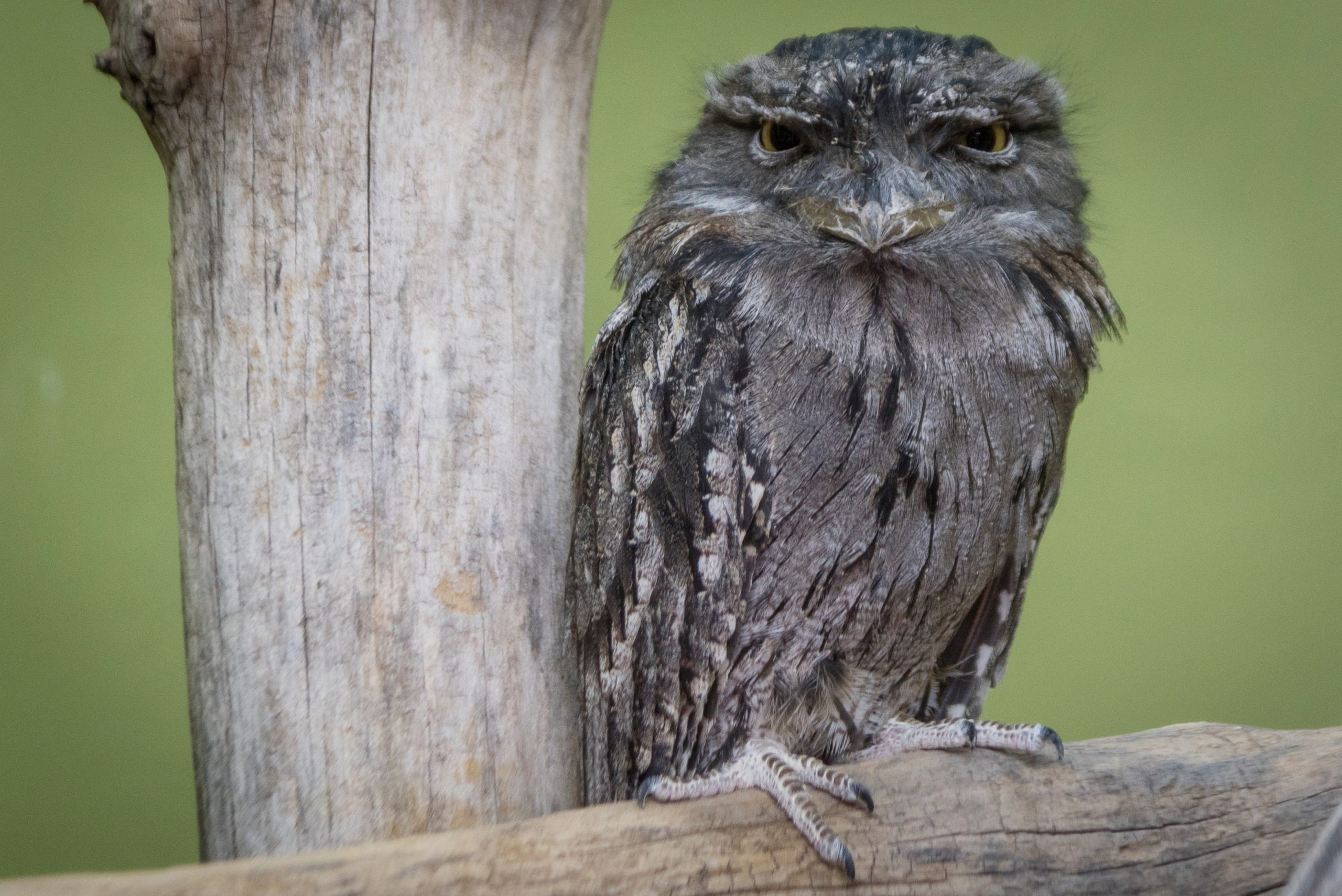
Tawny Frogmouths are comical looking birds with large eyes and wide mouths. They are found throughout Australia in a wide variety of habitats, from Eucalyptus forests to city parks. They inhabit areas with extreme temperature variation, with very cold nights and very hot days. To stay cool, Tawny Frogmouths engorge the blood vessels in the…
Read More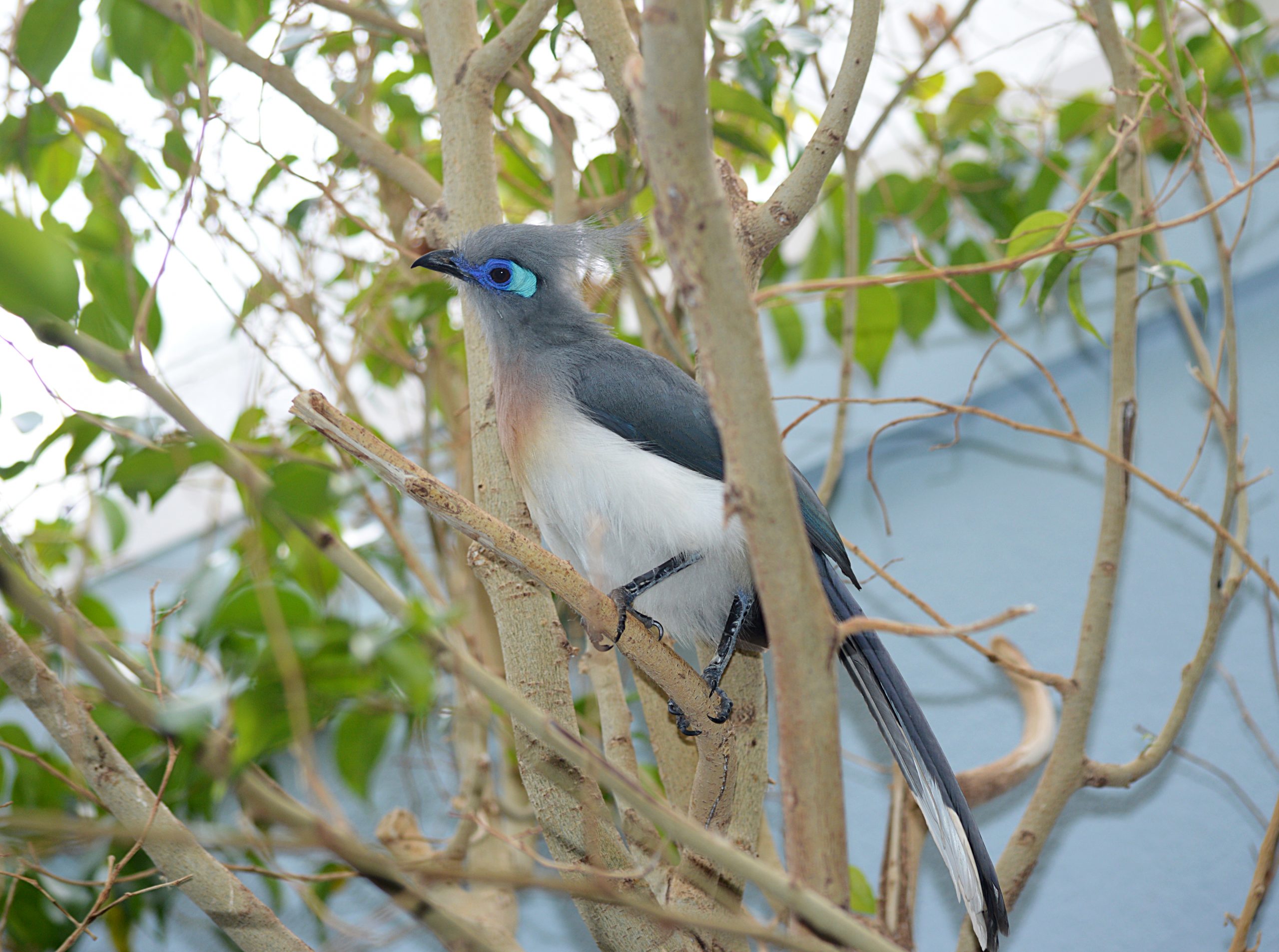
The Crested Coua is found in drier habitats of the Afrotropical region, including coastal deciduous forest, savanna, spiny brushland, palms, and mangroves. The Crested Coua eats large insects, snails, small lizards, and occasionally other birds’ eggs, but also some berries, seeds, and fruits. These are collected at higher levels of the forest, mostly by walking…
Read More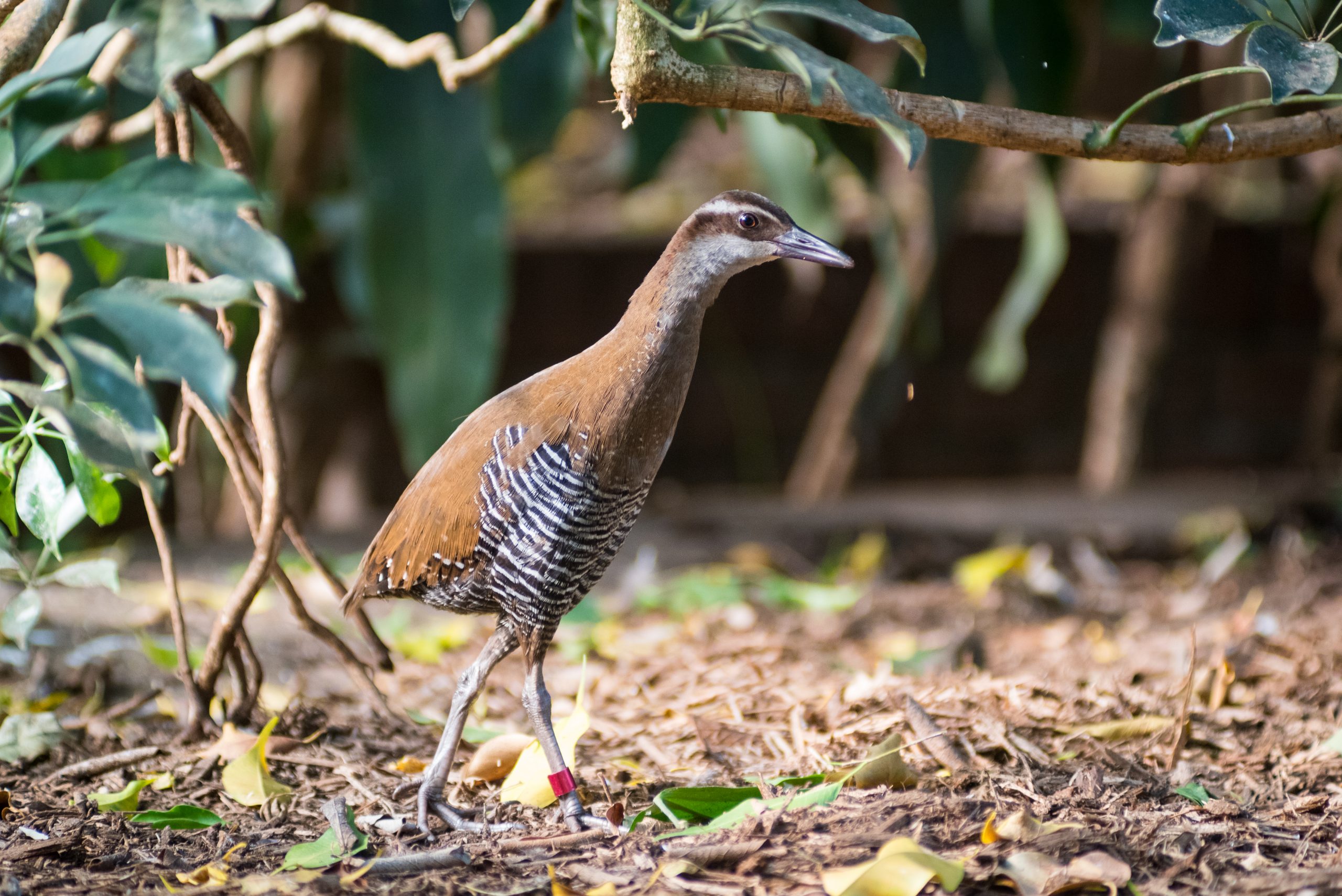
The Guam Rail is a small, ground-dwelling bird, inhabiting forests, mixed woodland and scrub, fern thickets, and grasslands. They move quickly through thickets and grasses. It is most active at dawn and dusk. In the late 1980s, the presence of an invasive species, the brown tree-snake threatened the survival of bird species on the island…
Read More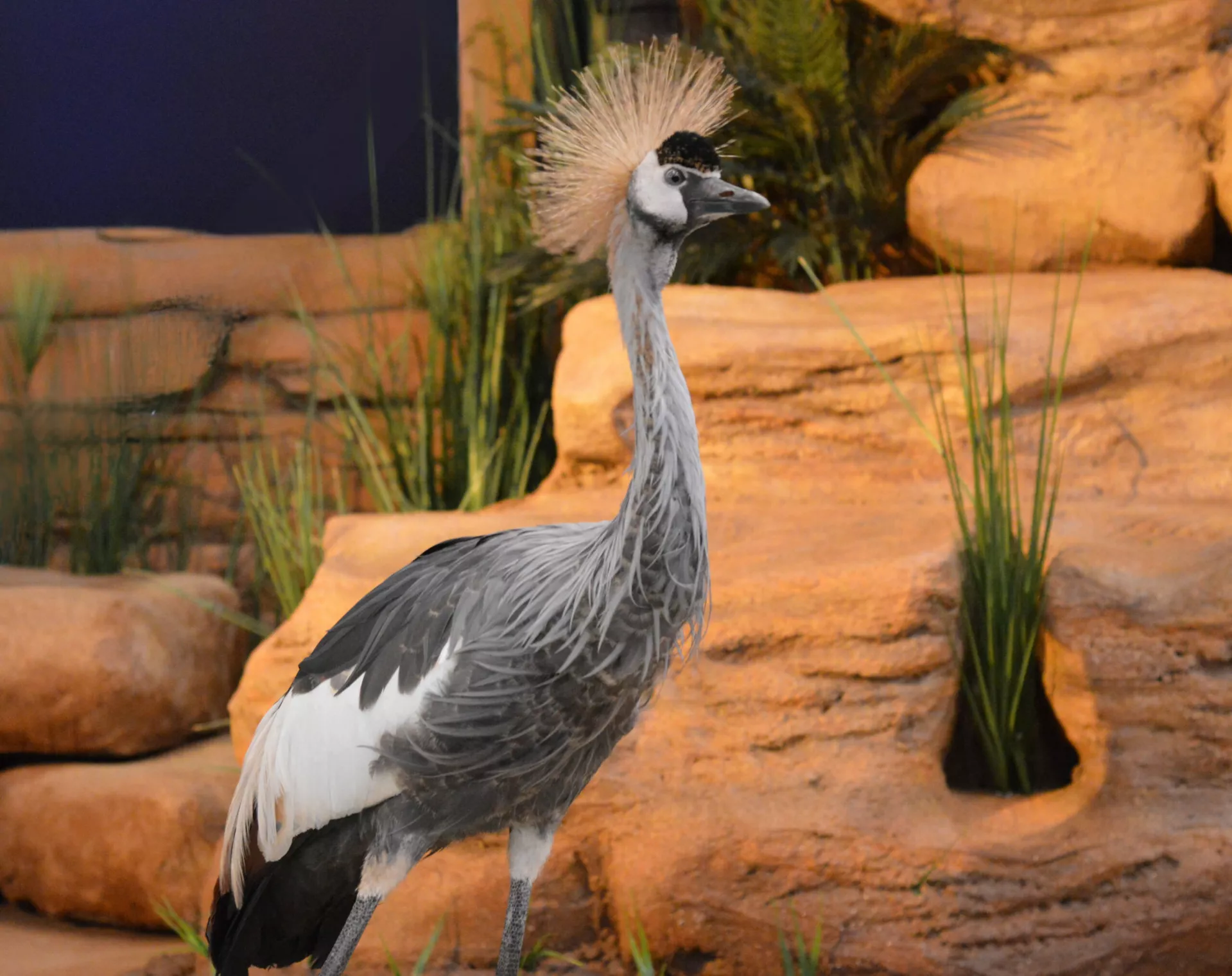
Native to East Africa, the Gray Crowned-Crane is featured on Uganda’s coat of arms and flag and is the country’s national bird; this bird also is a sacred symbol for Kenya, Namibia, Zambia and South Africa. The Gray Crowned-Crane is unique among the cranes in being one of only two species capable of perching in…
Read More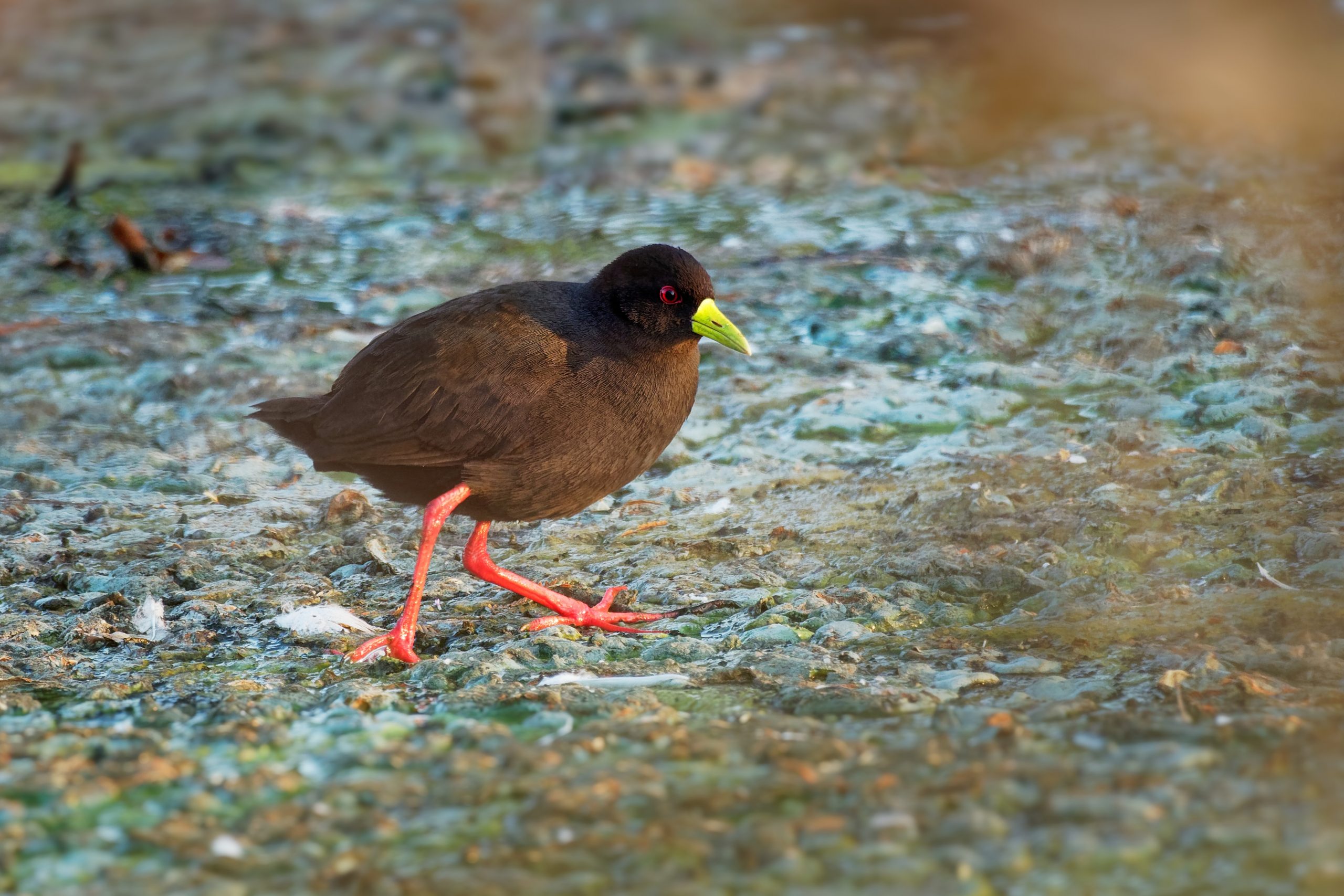
The Black Crake is a water bird found throughout sub-Saharan Africa. With its bright yellow bill, red legs, and sleek black body, this bird is among the most common and least secretive of Africa’s rail species. They are well-suited for life in a wetland habitat: their long toes help them move easily along floating vegetation,…
Read More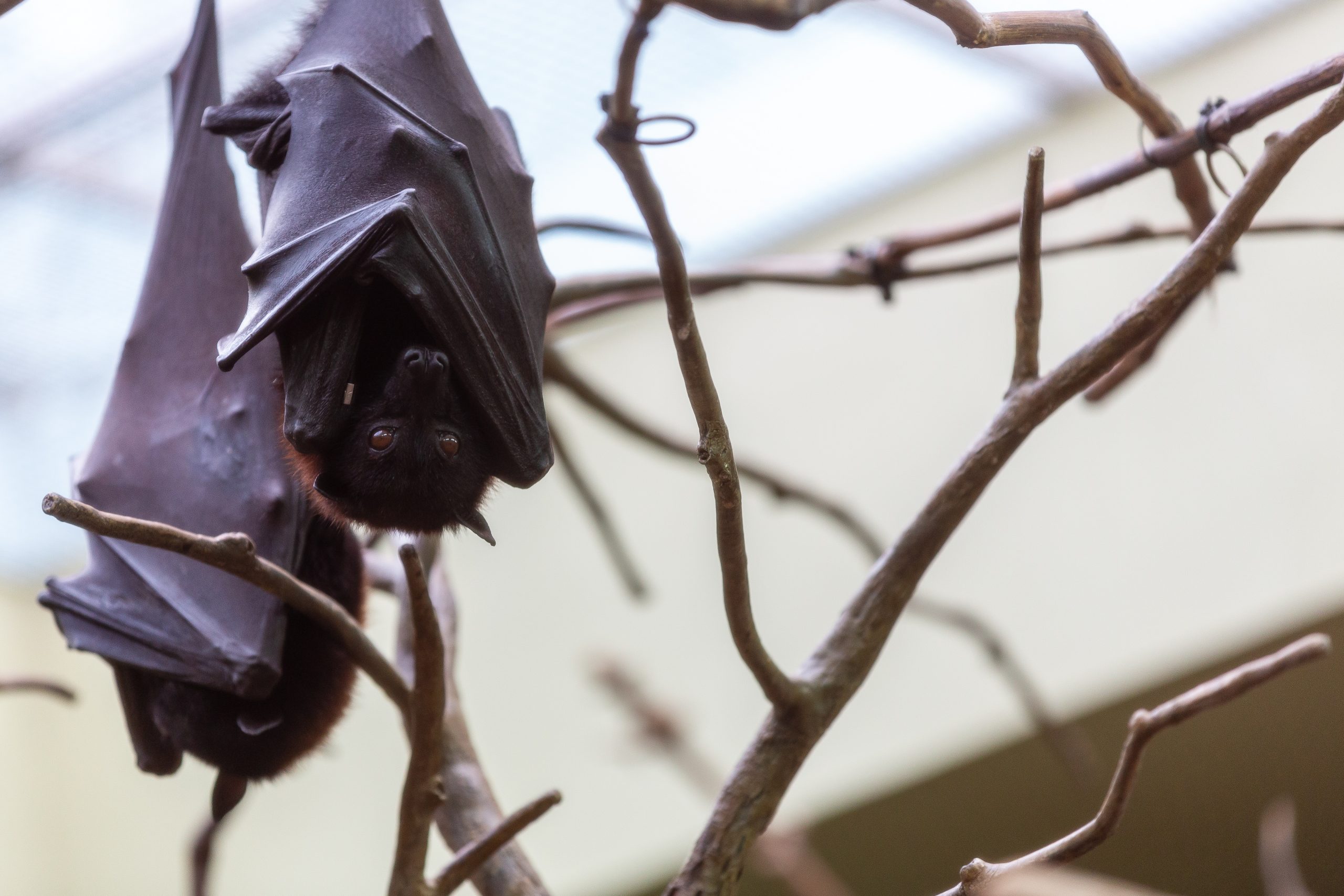
Malayan Flying Foxes are the largest member of Pteropus! With their striking red or russet heads that turn deep orange during breeding season, these bats are a true wonder of nature. They have large, well-developed eyes for flight navigation and form feeding groups of up to 50 and roosting colonies of up to 20,000 individuals….
Read More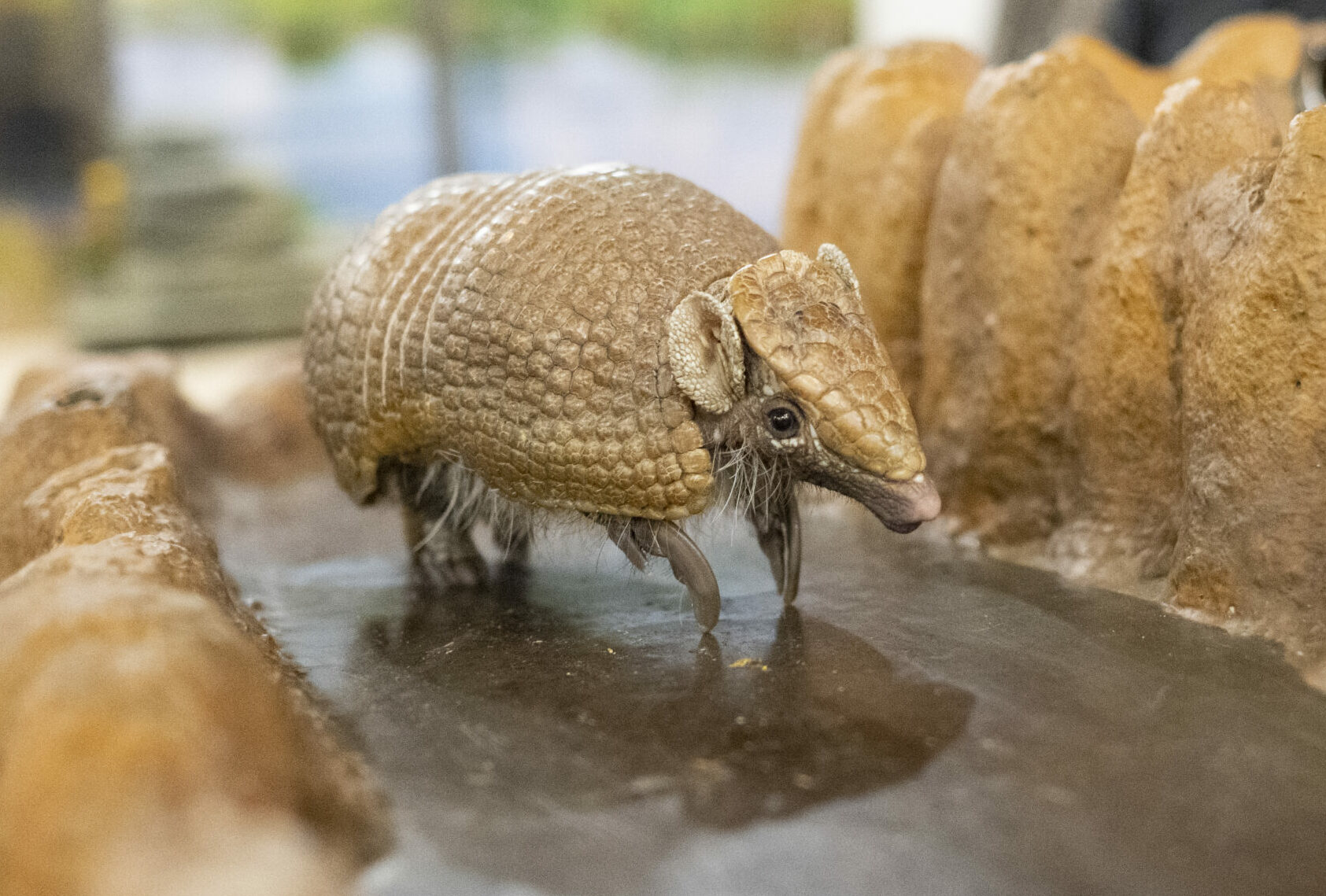
Southern Three-banded Armadillos are one of the mammal species living at the National Aviary. They are among the smaller of the armadillo species, and are native to grassy areas and forests throughout Argentina, Bolivia, Brazil, and Paraguay. Armadillos have very acute senses of hearing and smell, which helps them to find termites and ants and…
Read More Previous Posts