Jungle Creatures and Fantastic Features: Toucans
Phipps’ Summer Flower Show: Jungle Quest invites guests on a stunning safari bursting with terrific topiary animals, tropical foliage and beautiful blooms. With each room highlighting a show-stopping animal, let’s learn about how these creatures were constructed at Phipps and the actual creatures that inspired them!
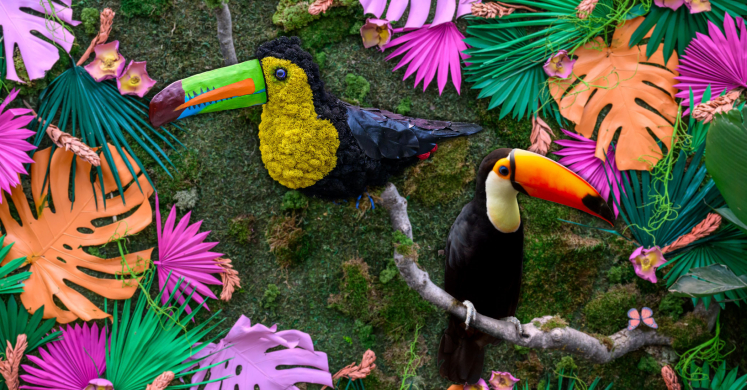
Welcoming you to Summer Flower Show: Jungle Quest, the toucan topiary is sure to catch your eye with its bright colors and special details! Just like the other topiaries seen throughout the show, the toucan started out with a metal frame. Since it holds dried plant material and not live plants, poultry netting was used as the base. The toucan’s head and body feature different dried and preserved plant material like magnolia leaves and colored reindeer moss. Its beak, which is considered one of toucan’s most distinct features, is made from paper mâché. Its eyes are custom made from glass, designed to look like a real toucan’s eyes!
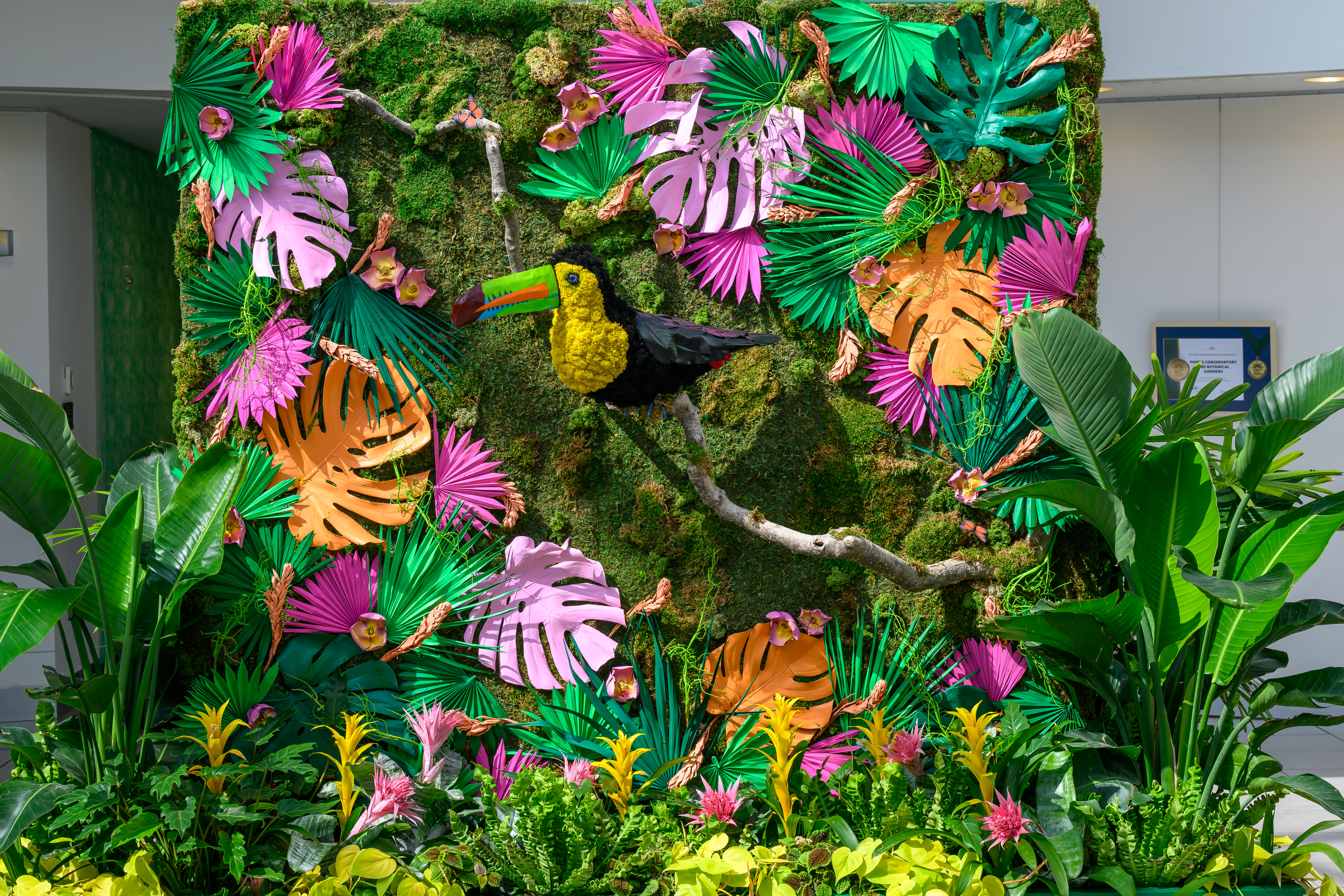
Our toucan was modeled off the keel-billed toucan which is a species native to tropical forests in Central America. Its bill makes up 1/3 of its whole length! Exhibit Associate Lauren Seiple shares that this topiary was particularly fun to make. “You don’t see a lot of animals with this much color and painting the beak was a welcome challenge. I love that this bird welcomes you to this year’s Summer Flower show and you can search for smaller toucans throughout the Conservatory,” she says. There is a toucan hidden in each of the display rooms as a part of our summer show scavenger hunt! Be sure to look for them the next time you visit our jungle journey.
The National Aviary has provided some fun facts to help us learn more about toucans! Believe it or not, toucans’ large beaks are rather lightweight. They are comprised of a honeycomb-like, semi-hollow network of bony fibers that allow for optimum strength and support without weighing the bird down. The toucan’s bright colors make it seem like it would stick out, but they actually blend into the colorful surroundings of their tropical rainforest homes.
_(2).jpg?v=1755785241019)
The National Aviary is home to two species of toucans: Toco Toucans and the Curl-crested Aracari, which can be seen in their immersive show Passport to Parks, presented by AAA Travel. Toco Toucans are the largest species of toucan, weighing up to two pounds! On the other end, Curl-crested Aracaris are one of the smallest species weighing about 10 oz. Toucans typically eat fruit but will also dine on insects, small frogs, lizards and eggs from other birds’ nests. They also have a unique toe arrangement with two toes in the front of the foot and two in the back, otherwise known as zygodactyl feet. This gives them outstanding gripping, perching and climbing abilities!
To learn more about toucans and other birds, visit the National Aviary’s brand-new show, Passport to Parks, presented by AAA Travel. Witness the awe-inspiring beauty of the world’s most iconic wonders, like the mesmerizing Aurora Borealis and waterfalls more than double the size of Niagara Falls, while learning about the incredible species that call those respective ecosystems home-without leaving Pittsburgh! You’ll “fly” to the Andes Mountains with Curl-Crested Aracaris’ (the world’s smallest toucan species), where a few lucky audience members will get the opportunity to hand-feed them blueberries!
Stay tuned as we highlight more of our jungle inspired topiaries and their real-life counterparts to share interesting facts about their unique characteristics!