Endangered African Penguin Chick, Now One Month Old, Makes Public Debut at National Aviary
The fluffy grey chick is now visible in the Avian Care Center twice a day, giving the public a chance to watch it grow and to guess: is it a boy or a girl?
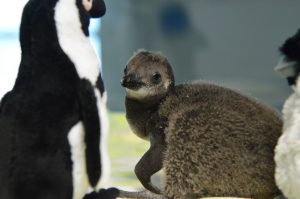 One month to the day since it made its way into the world, an endangered African Penguin chick made its public debut at the National Aviary. Visitors will be able to see the chick when it makes appearances in the Avian Care Center located in The Charity Randall Foundation Eagle Hall twice a day. The chick is the first for parents Buddy and Holly, and the eleventh of this endangered species to hatch at the National Aviary.
Only about the size of a golf ball when it hatched on January 3, the little chick, covered in downy grey feathers, is growing quickly—penguin chicks can gain about 10% of their body weight each day—and is now able to eat whole fish. This is the first chick hatched to Buddy and Holly, and the eleventh African Penguin to hatch at the National Aviary. The chick is snug in its climate controlled space in the Avian Care Center, where visitors can see it when it makes appearances twice a day. The viewing area is set up with physical distancing protocols in mind.
Thanks to a generous donor, names for the chick have already been chosen, but they will not be revealed until the sex is known. Once the chick’s juvenile feathers begin to grow in, a DNA test will determine the sex. Until then, the public can give their best guess if the chick is a boy or a girl when they visit the National Aviary, or online at aviary.org.
The National Aviary’s Penguin Point habitat is home to a colony of African Penguins. With only about 13,000 pairs remaining in the wild in South Africa, African Penguins are an endangered species, and have experienced a steep decline in recent years. Their decline is largely a result of human disturbance: over-fishing, human activity at nesting sites, and disasters like oil spills put pressure on African Penguin populations.
The National Aviary participates in the Species Survival Plan® (SSP) for African Penguins, a collaborative effort among Association of Zoos and Aquariums accredited institutions to enhance conservation of the species and ensure the entire population of African Penguins remains genetically diverse and demographically stable for the long-term future. The National Aviary is also the leader of the Saving Animals From Extinction (SAFE) program for African Penguins. SAFE is a collaborative, international effort to identify and address conservation challenges faced by African Penguins across their range.
The National Aviary has enhanced safety protocols in place that align with CDC and Allegheny County Health Department guidelines. Care for the more than 550 animals that call the National Aviary home has carried on uncompromised. The support of caring community members helps the National Aviary provide exceptional care for birds like this new African Penguin chick. Donations can be made at aviary.org.