2nd extinct-in-wild Guam kingfisher hatches at National Aviary

2nd extinct-in-wild Guam kingfisher hatches at National Aviary


For the second time this year, a bird that’s extinct in the wild hatched at the National Aviary.

The National Aviary on social media announced the arrival of the second Guam kingfisher of 2025. It’s the younger sibling of the other chick announced a few weeks ago. Both chicks come from parents Kel and Yomuk, who live in the Canary’s Call habitat.

The birds are being hand-raised in the aviary’s behind-the-scenes breeding center. The aviary says it will soon reveal the sex of the older sibling. 
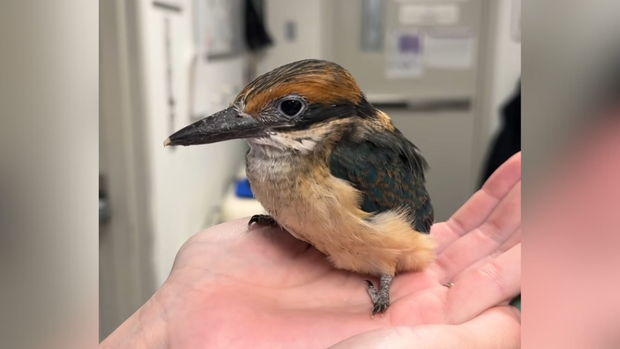
kdka-guam-kingfisher-2.png
(Photo: National Aviary/Facebook)

Guam kingfishers, known locally as sihek, haven’t been seen in the wild since 1988 after invasive brown tree snakes arrived and decimated the population. About 30 birds were captured and taken to U.S. zoos, where their population has grown. 

The aviary is working with the global Sihek Recovery Program to establish a wild population of Guam kingfishers with the hope of returning them home once the threat from brown tree snakes is addressed. 

Three Guam kingfishers that previously hatched at the National Aviary were released last year on the predator-free island of Palmyra Atoll, about 1,000 miles south of Honolulu, Hawaii, in the Pacific Ocean.  

Two of the birds that hatched in Pittsburgh, Mames and Långet, laid a second clutch of three eggs, which the aviary says is very rare in human care populations. It’s possible Mames and Långet become the first pair to hatch chicks of their own in the wild

In The News

See All News

The Invisible Clues Animals Leave Behind Are Helping Save Entire Ecosystems (featuring an interview with Dr. Steve Latta) | A-Z Animals

In this article, we speak with Dr. Steven Latta, Director of Conservation and Field Research at The National Aviary. In his own work, he collects eDNA samples from water, leaf litter, feathers, egg shells, and other substrates to identify species presence.

Read More »

Why Animals in Cold Climates Are Bigger: The Science Behind Bergmann’s Rule (featuring an interview with Bob Mulvihill) | A-Z Animals

“Large animals can conserve heat more efficiently than smaller animals in cold climates,” explains Bob Mulvihill, Lead Ornithologist for the National Aviary.

Read More »

Penguins To Hold ‘Penguins Pledge Night’ Presented by U. S. Steel | Pittsburgh Penguins

The Penguins Pledge will also raise funds and call attention to the National Aviary in Pittsburgh and their conservation leadership with African Penguins.

Read More »

Record Number of Peregrine Falcons Counted in Allegheny County | National Today

Conservation efforts have helped the raptor species rebound in the region.

Read More »

Why Are There No Birds in My Birdhouse? I Asked Expert Bob Mulvihill Who Told Me How to Attract Birds to Any Birdhouse | Gardening Know How

To help ensure your birdhouses are as appealing to birds as possible, [we] asked a National Aviary Ornithologist Bob Mulvihill for the most common reasons why houses remain vacant and how to make houses more attractive to garden birds.

Read More »