The hatching is a step forward for the species, which is critically endangered in Ecuador
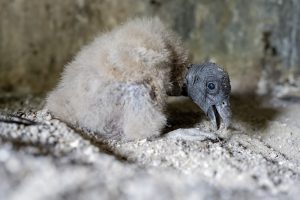 Lianni, a 38 year-old Andean Condor, laid the egg on April 5. Incubation for Andean Condors typically lasts about 60 days. The National Aviary’s thoughtfully designed Condor Court habitat features a pond for bathing and playing, natural foliage, and elements that mimic the craggy cliff sides used by Andean Condors for nesting in the wild. Lianni is now caring for her young chick in the habitat’s nesting cave. The chick lacks a caruncle, or ornamental comb, which is characteristic of male Andean Condors, and is thought to be a female.
“Our team takes a holistic approach to working to conserve this vitally important species,” says Kurt Hundgen, Director of Animal Care and Conservation Programs at the National Aviary. “We conduct research in the field to understand the behavior of wild Andean Condors and work collaboratively with other zoological institutions in Ecuador where the species is considered critically endangered. We provide the best possible care for the Andean Condors that call the National Aviary home and we play a very active role in the Species Survival Plan designed to enhance the conservation of the species.”
The chick hatched the evening of Tuesday, June 7. At hatching, an Andean Condor chick weighs about one-half pound and is about the size of a mango. Among the largest birds in the world, Andean Condors can grow to have a wingspan of over 10 feet and can weigh more than 30 pounds. It takes about six months for an Andean Condor to reach its full size.
“Chickhood is an incredibly delicate time for young birds, and the first days and weeks are critical. Our team is continually observing the chick and its parents, and all are doing well,” says Dr. Pilar Fish, Senior Director of Zoological Advancement and Avian Medicine at the National Aviary. “Lianni is an excellent and attentive mother. With her care and the support of the experts at the National Aviary, this Andean Condor chick, and the species it represents, has a hopeful future.”
Andean Condors face a number of pressures in the wild that have led to population declines in recent decades. The National Aviary works with partners on the ground in Ecuador on education initiatives to engage communities in supporting wild populations of Andean Condors, highlighting their important role as scavengers that help to maintain a healthy ecosystem.
Andean Condors produce only one egg every 12 to 18 months. Raising a chick is an intensive process—chicks mature slowly, requiring consistent care for several months. This very slow rate of reproduction is an added conservation challenge for Andean Condor populations, and each hatching is an important step in the recovery of the species.
“We’re thrilled to be celebrating the arrival of this new condor chick. In 2015, Condor Court was designed with naturalistic cliffs, nesting caves, pools, plants, and access to an indoor area. Every detail encourages natural behaviors and promotes the overall welfare for these very special birds,” says Cheryl Tracy, Executive Director. “The milestone we are celebrating today – a rare Andean Condor chick – is a testament to this beautiful habitat and to our dedicated team of animal care professionals. We are humbled to be able to contribute to the conservation of this remarkable species, and so hopeful for the bright future of this adorable new chick.”
The National Aviary participates in the Species Survival Plan® (SSP) for Andean Condors. A collaborative effort among Association of Zoos and Aquariums accredited institutions, SSPs work to enhance conservation of the species and ensure the entire population of Andean Condors remains genetically diverse and demographically stable for the long-term future.