!

Please Note

Please Note: The National Aviary is CLOSED Thurs., July 16 and Fri., July 17 for our largest annual fundraiser, Night in the Tropics! We will reopen at 12 pm on Sat., July 18; the parking lot reopens at 1 pm. Plan Your Next Visit

Close Announcement

Senior Care

Teaching Hospital: Senior and Special Needs Care

Birds are fragile creatures. Their hollow bones can easily fracture, and their delicate respiratory systems leave them prone to infection. Birds are also incredibly resilient, and with veterinary care and attention, they can thrive and live long lives. The National Aviary’s Teaching Hospital is home to birds who require extra nursing care for conditions related to age or a disability.

Just as humans face challenges as they get older, birds can also develop common age-related conditions, such as arthritis and cataracts. Female birds can become “egg-bound,” a condition that prevents them from passing eggs naturally and requires immediate medical assistance or surgery to save their life. Some birds develop kidney conditions as they age which can lead to gout, but can be treated successfully with human-grade prescriptions modified for each bird’s needs.

Each year, more than 50 pre-veterinary and veterinary technician students from around the world come to the National Aviary to train in the Teaching Hospital. In this setting, the students care directly for senior and special needs birds while gaining invaluable experience in avian medicine. Students learn to administer medications, prepare and feed meals to the birds, perform husbandry, and assist with check-ups.

The National Aviary’s Teaching Hospital strives to provide the best possible lifestyle to its residents, and to give them the habitats and nursing care that they need to continue thriving into old age, while training the next generation of avian veterinarians.
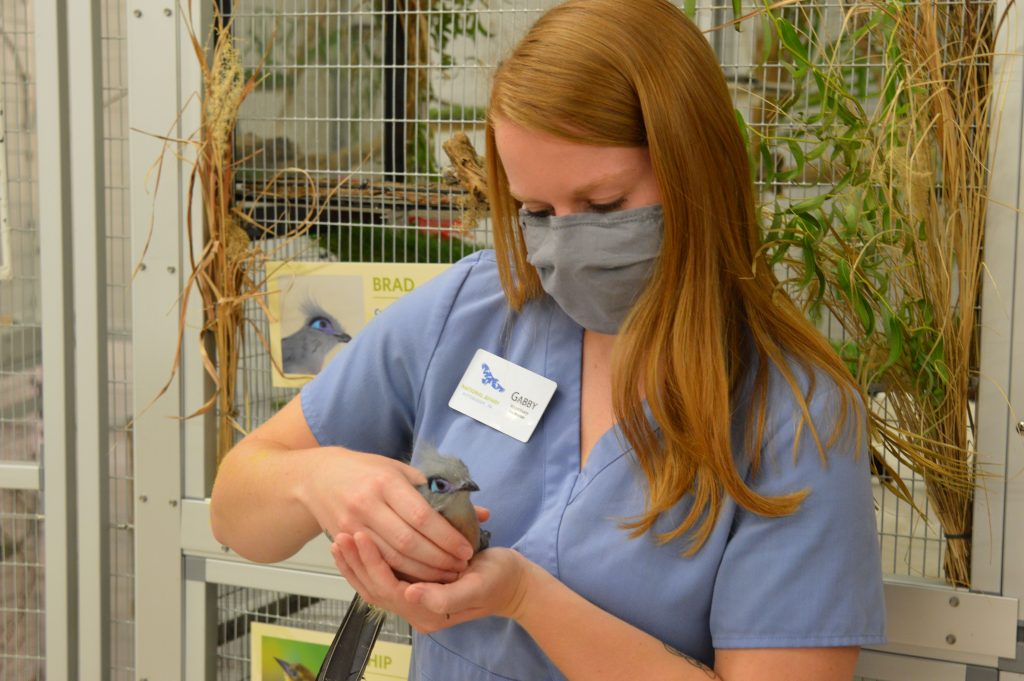
Brad, a Crested Cuoa, is one of the residents of the National Aviary’s Teaching Hospital.

In The News

See All News

Falcon from Pitt’s Cathedral of Learning nest recovering after collision and lead exposure | MSN

The National Aviary, which runs a livestream camera of the nest, says Red was admitted to the Humane Animal Rescue of Pittsburgh's Wildlife Center for treatment, where he was also diagnosed with elevated lead levels.

Read More »

Young falcon from Pitt’s Cathedral of Learning nest recovering after collision and lead exposure | CBS News

Red, a young peregrine falcon that hatched in the nest on top of Pitt's Cathedral of Learning this spring, is in the care of humans after he apparently suffered a collision and then tested positive for lead exposure.

Read More »

The first Andean condor in Ecuador is born in Cuenca under artificial incubation | Expreso

The Amaru Biopark announced the birth of Ecuador's first Andean condor through artificial incubation, a step forward for conservation.

Read More »

Forget the plane. Your tropical vacation can be found in Pittsburgh | Pittsburgh Today Live

The National Aviary is bringing the island vibes to Pittsburgh, with music, cocktails, and plenty of birds.

Read More »

Nearly extinct species coming back in wild thanks to Pittsburgh aviary | Yahoo News

The National Aviary has two baby Guam Kingfishers, known as sihek in the indigenous CHamoru language. The male Guam kingfisher hatched on April 19, while the female hatched on May 12. On May 27, the male chick took his first flight.

Read More »